
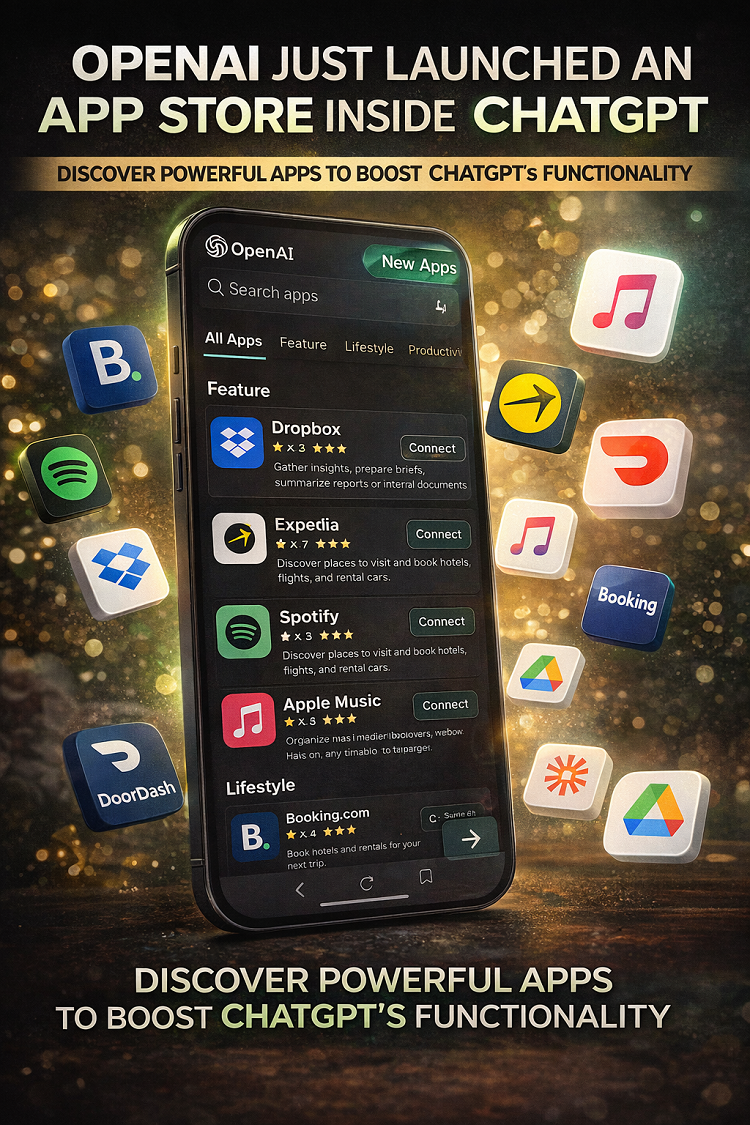
OpenAI has taken another major step toward transforming ChatGPT from a conversational tool into a full-fledged digital platform by launching an integrated app directory directly inside the ChatGPT interface. The new feature, which effectively functions as an app store within ChatGPT, is now available across iOS, Android, and the web, marking a significant evolution in how users can interact with both AI and third-party services.
According to OpenAI, the purpose of these apps is to extend what conversations inside ChatGPT can do. Rather than stopping at text-based answers or creative brainstorming, users can now connect external services that allow them to take concrete actions such as ordering food, organizing files, planning travel, or managing music libraries without leaving the chat environment. In a blog post announcing the launch, OpenAI explained that apps “bring in new context and let users take action,” turning ChatGPT into something closer to a universal digital assistant.
Notably, OpenAI has also simplified its terminology. Tools that were previously referred to as “connectors,” such as Google Drive integrations, are now officially called “apps.” This change reflects the company’s broader vision of positioning ChatGPT as a central hub where users can seamlessly interact with a wide range of services.
A New App Directory Inside ChatGPT
The new app directory is organized into three main categories: Featured, Lifestyle, and Productivity. This structure is designed to make discovery easier for users who may not know exactly what they’re looking for but want to explore what ChatGPT can now do beyond basic conversation.
Among the early participants are well-known platforms such as Booking.com, Spotify, Dropbox, and DoorDash. Once an app is selected, users simply click “Connect” and authorize it to interact with ChatGPT. After that initial setup, the app becomes part of the user’s ChatGPT experience and can be accessed directly within conversations.
For example, connecting Dropbox allows ChatGPT to analyze files stored in a user’s account. According to OpenAI’s description, users can ask ChatGPT to gather insights, summarize reports, prepare briefs, or extract key information from internal documents. Rather than manually searching through folders and opening files one by one, users can rely on conversational prompts to get what they need more quickly.
Once an app is connected, it can be summoned at any time by using an “@” mention within the chat. This interaction model reinforces OpenAI’s goal of keeping everything inside a single conversational flow, rather than forcing users to jump between different interfaces.
Apple Music, DoorDash, and Everyday Tasks
One of the more eye-catching additions to the app directory is the Apple Music app. Similar to existing Spotify functionality, the Apple Music integration allows users to search for songs, build playlists, and manage their music library using natural language. Rather than navigating menus or filters, users can simply describe what they’re in the mood for or ask ChatGPT to organize their music based on preferences, genres, or even specific activities.
Another notable addition is DoorDash. Through this app, ChatGPT can help users with meal planning, recipe adjustments, and grocery decisions, ultimately turning those conversations into a ready-to-go shopping cart. For example, a user could ask ChatGPT to modify a recipe for dietary needs, suggest complementary dishes, and then place the necessary ingredients into a DoorDash order—all within the same chat.
These integrations highlight OpenAI’s push to move ChatGPT beyond being an information tool and into the realm of execution. The goal is not just to help users think or plan, but to help them act.
Opening the Door for Developers
Alongside the launch of the app directory, OpenAI has officially opened the door for developers to submit their own apps for inclusion in ChatGPT. Developers can now apply for review and publication under OpenAI’s app submission guidelines, which outline requirements around functionality, privacy, and user experience.
To support this effort, OpenAI has released a suite of developer resources. These include best practices for building chat-native experiences, open-source example apps, a newly open-sourced UI library designed specifically for conversational interfaces, and a step-by-step quickstart guide. This builds on the software development kit (SDK) OpenAI introduced earlier in October, which was aimed at making it easier to integrate AI capabilities into third-party products.
By lowering the barrier to entry, OpenAI hopes to encourage a diverse ecosystem of apps that cater to both everyday users and professional workflows. From productivity tools to lifestyle enhancements, the company is positioning ChatGPT as a platform where developers can reach a massive and engaged audience.
Monetization and Privacy Considerations
For now, OpenAI is taking a cautious approach to monetization. Developers are currently limited to earning revenue by linking out from ChatGPT to their native apps or websites. In other words, there is no built-in payment system within ChatGPT itself at this stage. However, OpenAI has confirmed that it is actively exploring internal monetization options, suggesting that a more robust economic model may be introduced in the future.
Privacy has also been emphasized as a core requirement for participation in the app ecosystem. Companies submitting apps must provide clear and transparent privacy policies, outlining what data is accessed and how it is used. This focus comes at a time when AI platforms are under increasing scrutiny from regulators and the public alike, making trust a crucial factor in adoption.
OpenAI’s insistence on clarity and user consent reflects an understanding that deeper integrations—especially those involving personal files, music libraries, or shopping behavior require strong safeguards to maintain user confidence.
A Step Toward a More Versatile ChatGPT
The app directory represents a significant milestone in OpenAI CEO Sam Altman’s broader vision for ChatGPT. Over the past year, Altman has repeatedly spoken about making ChatGPT more versatile and more useful in everyday life, particularly through the introduction of custom “GPT” bots and personalized experiences.
In its announcement, OpenAI described apps as a natural extension of this strategy. Over time, the company wants interactions inside ChatGPT to feel less like isolated conversations and more like a continuous flow from idea to action. Whether that means turning an outline into a slide deck, finding and booking travel, organizing work documents, or curating a music playlist, the emphasis is on reducing friction and keeping users in one place.
At the same time, OpenAI hopes to foster a thriving developer ecosystem around ChatGPT, similar to what app stores have done for smartphones. If successful, this approach could redefine how people think about software—not as a collection of separate apps, but as services that are summoned and controlled through conversation.