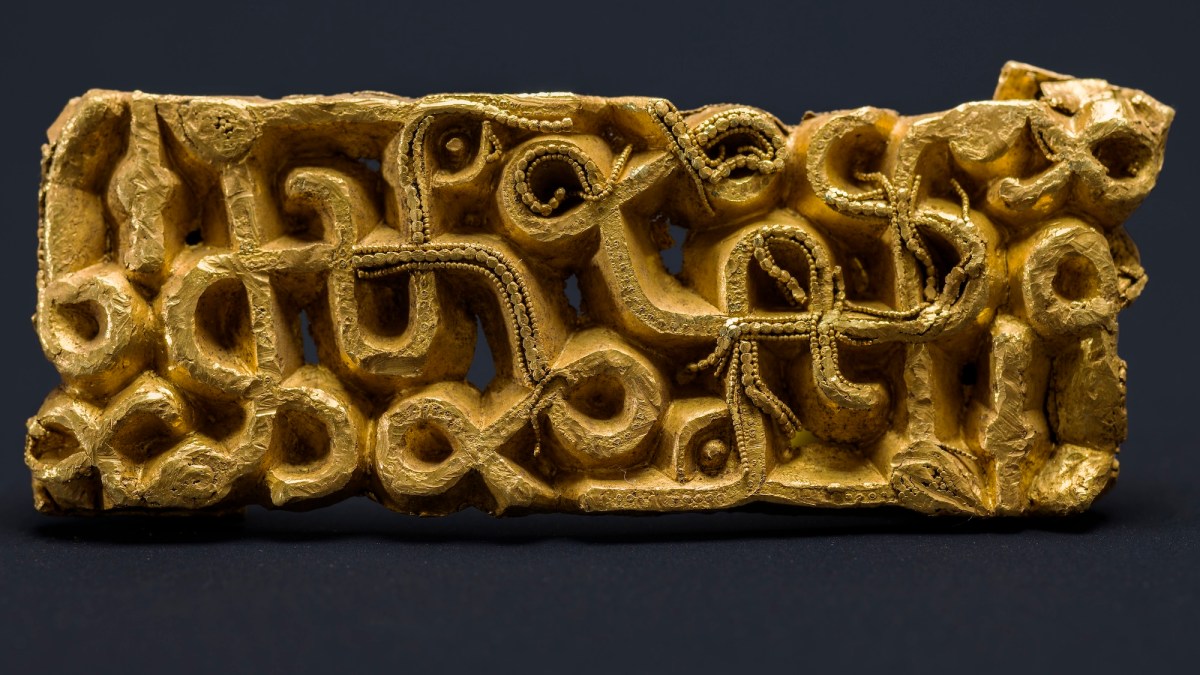

A hiker who paused to examine an old, uprooted tree found something much rarer than roots during a recent walk in the hills of Norway. According to a team of archaeologists from the University of Stavanger, the man’s morning stroll unexpectedly revealed a 1,500-year-old sword scabbard crafted from gold. Its owner likely wasn’t a lowly soldier, either. Based on the artistic skill and material, the embellishment’s original weapon probably belonged to a prominent leader or chieftain who ruled during the 6th century.
The remarkable find remained buried for centuries in the Norwegian district of Austrått, not far from the country’s southwest coast. The small adornment measures about 2.4 inches wide and less than one inch tall, while weighing around 1.15 ounces. Although tiny, the accessory signified immense authority and power. It’s also an incredibly rare artifact.Only 17 other similar pieces are known throughout northern Europe.
“The odds of finding something like this are minimal,” University of Stavanger archaeologist Håkon Reiersen said in a statement, translated from Norwegian.
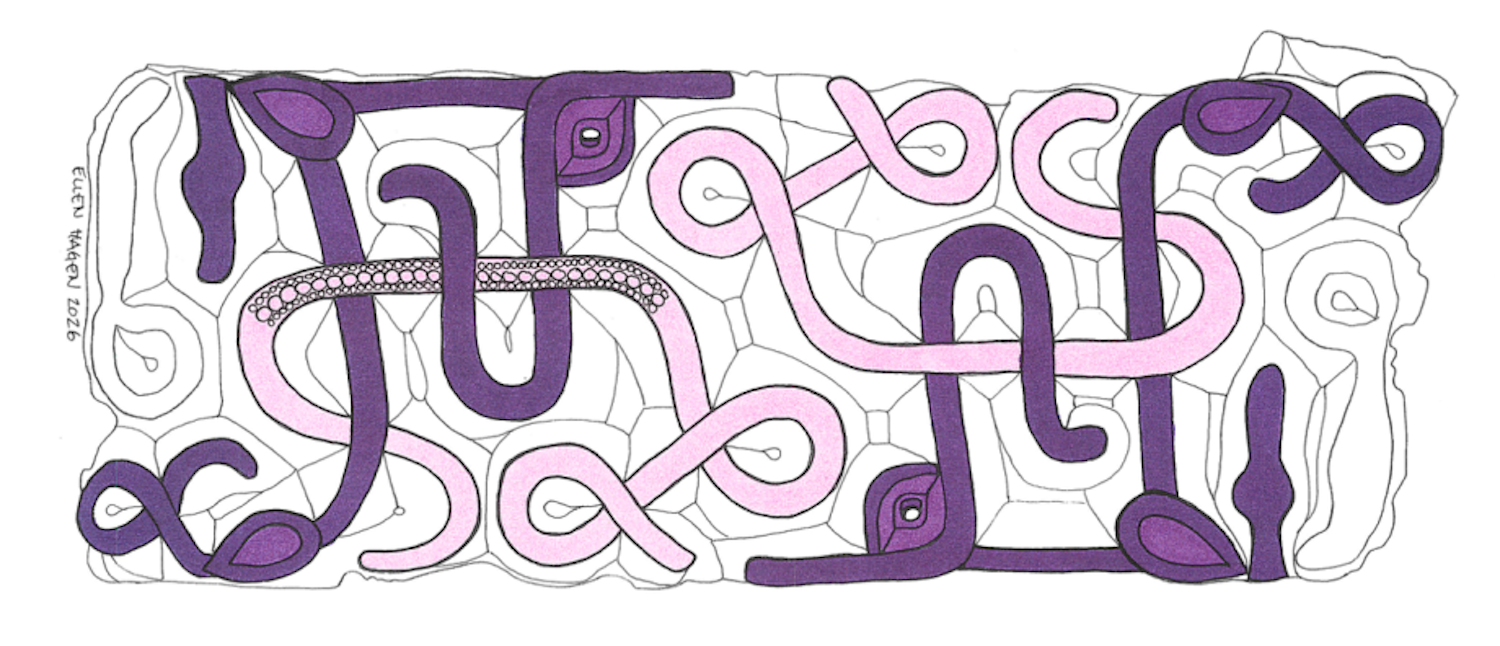
Even after generations underground, the scabbard retains much of its original design. Although somewhat difficult to discern now, researchers identified clear regional artistic stylings that match those seen during the Migration Period (300s–600s CE), an era known for its widespread shifting power dynamics across Europe and the fall of the Western Roman Empire. These decorations include animal and potential human-animal hybrid illustrations arranged symmetrically across the piece. There are even still remnants of filigree embellishments, and evidence of finely beaded gold wiring that helped create an overall shimmering effect.
Reiersen and his team believe the artifact belonged to a major leader or chief in Hove, a region along Norway’s western coast. This man probably oversaw many warrior followers, and relied on items like impressive weaponry to highlight his influence and power. But while similar relics exist, the Hove discovery is distinct for its clear evidence of heavy usage and wear. Many decorative swords of the era were purely ceremonial or intended only for display. In this case, it appears its owner actually wielded the weapon in battle. Or at the very least regularly carried it around with him in public.
The location of the find also tells its own story. After examining the site, archaeologists determined that the scabbard wasn’t accidentally deposited or discarded, but carefully placed inside a crack in the bedrock. This strongly suggests the ultimate fate of the gold accessory was a religious offering to the gods. Even this act would have been its own signifier of power and wealth. The 6th century was particularly difficult for communities living in the area, who faced many economic, agricultural, and cultural trials. Giving up such a rich adornment would have been a leader’s way of both reiterating his power while pleading for divine aid. Taken altogether, the discovery represents an extraordinary moment for archaeologists that will help them better understand the region’s social dynamics during the Migration Period.
“We just have to say a big thank you to a very attentive hiker for the fact that we now have a new puzzle piece linked to the power center at Hove,” added archaeologist and University of Stavanger museum director Kristin Armstrong-Oma.

2025 PopSci Best of What’s New