
Bullet point summary by AI
- The New York Mets have lost five straight games and fallen to last place in the NL East under current management.
- A nearby NL East rival recently changed coaches and has since launched an unexpected winning streak.
- The local manager now faces mounting pressure to shake up his approach before the team’s season slips beyond recovery.
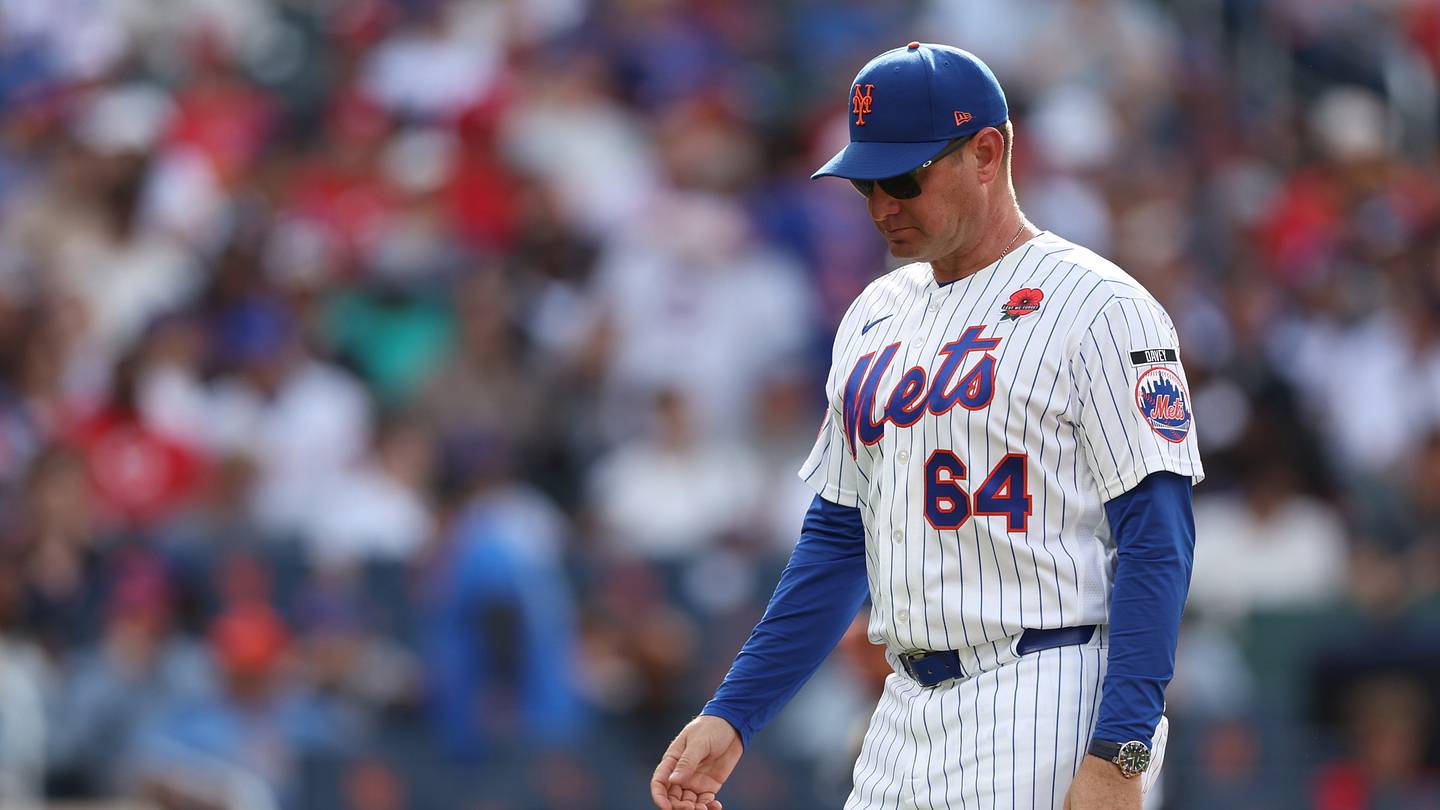
Carlos Mendoza isn’t the biggest reason why the New York Mets are where they are right now, losers of five in a row to fall back into last place in the NL East at 22-33. He’s not the reason why Francisco Lindor and a laundry list of other key contributors are on the Injured List, he’s not the reason why Bo Bichette has an OPS below .600 and he’s certainly not the one who went to great lengths to overhaul this roster over the offseason. No matter who was leading this clubhouse, it’s clear that the problems in Queens ran far deeper than previously thought.
And yet, it’s hard not to look just a bit down I-95 to Philadelphia, where the rival Phillies have experienced a May surge after replacing Rob Thomson with Don Mattingly. Their improved play is almost certainly a coincidence — Mattingly isn’t the reason why Bryce Harper is suddenly scorching hot — but sometimes you just find yourself in a situation where you need to change something.
If Mendoza doesn’t want that something to be him, he needs to figure out how to right this ship — and fast. No, he can’t pick up a bat or take the mound, but that doesn’t mean he’s helpless to fix this Mets malaise. Here are some great places to start.
Boot David Peterson from the rotation

Mendoza hinted this was coming after Tuesday night’s loss, in which Peterson got lit up to the tune of six runs on 11 hits and three walks in five innings of work — running his ERA to 5.57 on the season. Sean Manaea doesn’t inspire all that much more confidence, but he’s the only other viable option right now with both Clay Holmes and Kodai Senga on the IL, and it’s hard to get much worse than Peterson’s been of late.
Will Manaea be the cure to what’s ailed this starting rotation? Of course not (at least not unless he can recapture whatever magic he managed to bottle in 2024). But the Mets are clearly cautious of putting too much on top prospects Jonah Tong and Jack Wenninger too soon, and Peterson has been straight-up non-competitive. If nothing else, Mendoza needs to prove that this team is still a meritocracy. And speaking of which …
Make clear that mental mistakes will not be tolerated

Peterson’s performance on the mound was bad enough. But his failure to back up home plate after giving up an RBI double, allowing a runner to advance to third when shortstop Bo Bichette’s throw made it all the way to the backstop, is something else entirely. Physical mistakes happen; mental mistakes cannot, especially when you’re struggling the way the Mets are — and yet they’ve been way too common for New York this year.
From Francisco Lindor flat-out forgetting how many outs there are to misplays and poor positioning, this team has not played clean baseball, which would seem to be the foundation for being competitive at the highest level. And yet, through it all, Mendoza has remained about as even-keel as always, refusing to put players on blast publicly or start taking away playing time. He’s developed a reputation as a player’s manager over the years, but at a certain point you’re doing your players a disservice when you fail to hold them accountable. Eventually, calm becomes complacency.
Operate with much more urgency

We saw it during last September’s collapse, when Mendoza managed critical late series as though he were still in the middle of May. And we’ve seen it in his bullpen management this year, in his willingness to extend too much grace to his starters and his refusal to aggressively play matchups. An ability to not overreact or operated too short-sightedly is undoubtedly a good quality for a big-league manager to have as he navigates a 162-game season (especially in a hothouse like New York). But you do need to balance that instinct with an ability to, you know, actually win games — wins that might finally generate some momentum and belief.
And it goes beyond on-field tactics. “Sleepy” is never a word you want to use lightly, and yet it’s hard to think of anything else to describe Mendoza’s demeanor at times — like when he’s left his own players to plead their case to umpires, as he did with Carson Benge during his phantom ABS challenge incident on May 13 and with Mark Vientos after a controversial called strike against the Nats late last September. I’m sure players appreciate his cool demeanor in most circumstances, but now is the time to try and inspire some sort of faith and confidence.
 Add us as a preferred source on Google