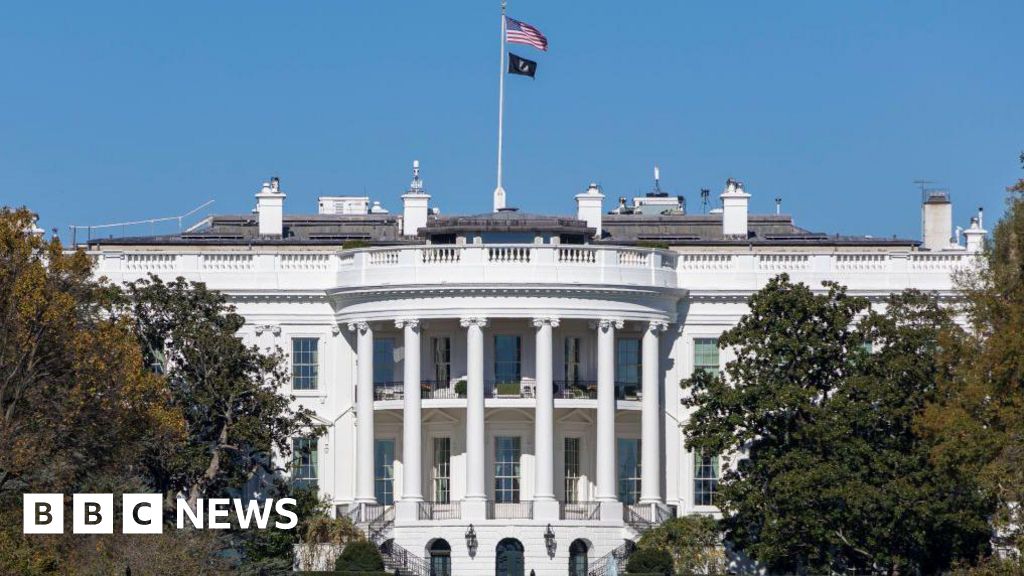
CAIRO — As Egyptian mediators pressed Palestinian factions this week to endorse a technocratic committee that would run Gaza without Hamas, the party they are trying to sideline shut down the territory’s streets in a single afternoon.
The Board of Peace, the post-war Gaza authority set up by U.S. President Trump, opened a closed-door meeting in Cyprus on Tuesday to weigh a strategy it has been unable to enforce.
From the island of Cyprus, 242 miles from the Gaza Strip, Mr. Trump’s U.S.-led board sounded a familiar refrain: The process of installing new leaders and a new government to replace Hamas is on track.
But on the bombed-out streets of Gaza’s ruined cities, Hamas was sending a different message.
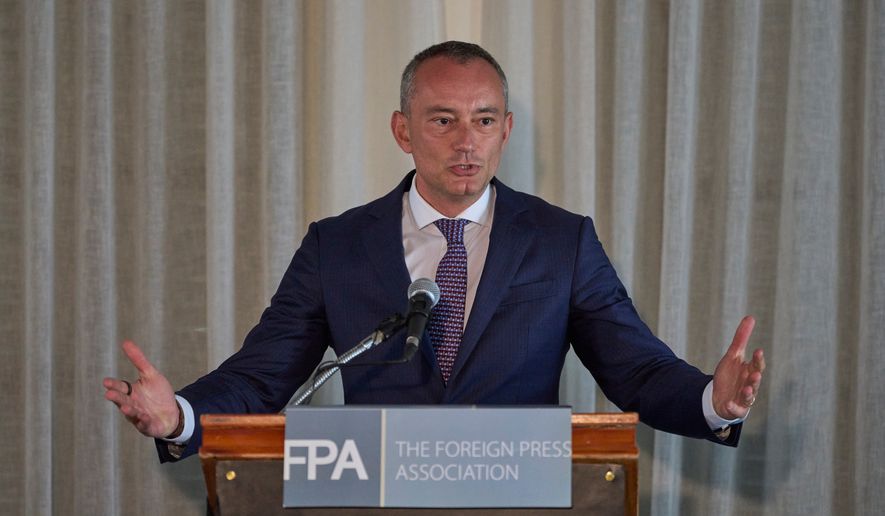
The high representative for President Donald …
more >
When Palestinian activists called for pro-peace demonstrations in 18 locations across Gaza on June 26, the rallies largely failed to materialize. Hamas deployed armed militants to key intersections and launched an intimidation campaign to undermine the protests.
“The people were afraid of Hamas, and Hamas was afraid of the people,” said Abdel Hamid Abdel Ati, a Cairo-based Palestinian journalist who was one of the key organizers. “For the first time, we saw an extensive security cordon across Gaza without any official announcement.”
Six months after the Board of Peace was created, the new Gaza authority has not entered the strip — or stripped Hamas of a single power.
Mr. Abdel Ati and a group of activists and journalists built what they called the June 26 Movement through online groups and set strict rules. Peaceful assembly. Palestinian flags only. No slogans against any single faction.
Their demands included medical evacuation for the wounded, an end to the taxes Hamas continues to collect and broader calls for dignity, basic services and freedom of expression.
“We have emerged from a devastating war. How can the authorities reopen the land registry and demand fees and taxes from people at a time like this?” Mr. Abdel Ati told The Washington Times.
Organizers presented the June 26 protests as a demand for basic services, not an attempt to bring down Hamas.
In the weeks beforehand, hundreds of wounded Gazans gathered outside Nasser and Al-Shifa hospitals to demand evacuation abroad for treatment, Mr. Abdel Ati said.
“Seeking dignity and a decent life is not an act of betrayal,” he said.
Organizers said Hamas responded to the call for demonstrations with threats, fabricated statements and clerical condemnation. Tribal leaders were pressured to disown the effort. Hamas warned that joining the rallies would cost people their tents or aid.
“Threats came by phone from numbers using SIM cards discarded after a single call,” said Shadi Nabhan, 39, of Jabalia.
They also came through fake Facebook accounts and intermediaries known to be close to Hamas. Residents measured the risk against the 2019 “We Want to Live” crackdown, when Hamas beat and detained demonstrators.
“Hamas does not believe in democracy, freedom or justice unless people support it,” Mr. Nabhan said. “If you are not with them, they consider you against them.”
Mr. Abdel Ati said he feared Israeli Prime Minister Benjamin Netanyahu would read the empty streets as evidence that Hamas remained in control and use it to justify expanding military operations. Hamas, he said, would likely draw the same conclusion.
“If there had been guarantees for freedom of expression, people might have come out,” he said. “But after losing their homes, their land and their loved ones, they were not prepared to take another risk without anyone to protect them.”
The Board of Peace plan is to install a body of Palestinian technocrats to administer Gaza, draw Gulf reconstruction money and stand up an international stabilization force, displacing Hamas from government without a battlefield surrender.
The U.N. Security Council endorsed the architecture in Resolution 2803.
Nickolay Mladenov, the former U.N. envoy, leads the diplomacy effort alongside former British Prime Minister Tony Blair, whose institute trained the technocrats.
A few countries have offered troops, and Egypt has agreed to train a Palestinian police force, but the stabilization force has not deployed.
The National Committee for the Administration of Gaza, or NCAG, has worked from Cairo since January under Ali Shaath, a former Palestinian minister.
Three of its 15 members are seen as close to the Democratic Reform Current, the faction Mohammed Dahlan leads from exile in the United Arab Emirates. Its pick to run Gaza’s police and oversee the disarmament of Hamas is Sami Nasman, a retired intelligence general and lifelong foe of the group whom a Hamas court convicted in absentia.
Palestinian Authority President Mahmoud Abbas expelled Mr. Dahlan from Fatah in 2011; he has run a rival to the Ramallah leadership since and runs a team inside Gaza.
With disarmament talks stalled, the board has turned to a provision its drafters call Section 17, letting the plan proceed in Hamas-free zones without the group’s consent. The $17 billion pledged by donors would flow only to biometrically screened districts in eastern Gaza that the plan calls for Israel to vacate.
Israel holds those areas now, part of the roughly 70% of the strip it controls behind the Yellow Line, and has tied any further pullback to Hamas disarmament. The framework would push residents toward those districts, once rebuilt, or toward the aid-restricted west.
Kan, Israel’s public broadcaster, reported this week that Washington has handed the Israeli government a document proposing reconstruction begin before Hamas disarms, with the administration awaiting Israel’s written approval. It would relocate residents from Hamas-held areas into board-run zones by the end of 2026 and route Gaza’s tax revenues to the board. Neither government has confirmed that the document exists.
Reham Owda, a Palestinian political analyst, said the June 26 demonstrations showed how firmly Hamas still controls Gaza after nearly two years of war.
“The June 26 movement demonstrated Hamas’ ability to maintain effective security control over the Gaza Strip,” Ms. Owda said. “It also showed the strength of its supporters in organizing broad incitement campaigns against both the organizers and supporters of the protests.”
Accusations of treason, amplified through Hamas media networks, kept many home, she said. “The last thing a civilian who has endured the devastation of war wants is to be accused of treason for taking part in demonstrations against Hamas.”
Ms. Owda said the proposed governance model would face steep political and security challenges. Internationally administered zones would gain public confidence only if security came from international forces working alongside a newly trained Palestinian police force rather than armed factions, she said, and property rights held.
“If the Board of Peace wants to encourage residents to relocate to the green zone, it should keep militias out of these areas. Direct responsibility should instead rest with international forces working alongside a newly trained Palestinian police force,” she said.
Hamas, she said, appears to be pursuing a long-term strategy, betting it can preserve enough political and security influence to remain relevant despite international efforts to isolate it. Gaza’s population, she added, has been so exhausted by hunger, disease and displacement that it has little capacity left for another mass uprising.
A former Israeli negotiator in talks with the Palestinians told The Washington Times on background that Mr. Netanyahu, with elections due in the autumn, has little reason to ease military operations. Should Washington deny him further moves against Iran or Lebanon, the former negotiator said, Gaza and the West Bank are where Mr. Netanyahu retains room to act.
For now, Hamas continues to administer much of the strip.
When Israeli forces pulled back under the October truce, Hamas sent its security forces back into the streets and moved against rivals, executing dozens in the days after the cease-fire took hold. It runs the ministries, collects taxes and operates its own courts, now strained by the war:
Gaza’s Health Ministry said Monday that 1,045 Palestinians have been killed and 3,380 wounded since the truce took effect on Oct. 11, while the bodies of another 786 people were recovered during the same period. It put the overall death toll in Gaza since Oct. 7, 2023, at 73,058, with 173,488 wounded.
Israeli military intelligence, meanwhile, warned last week that Hamas is rebuilding for another war.