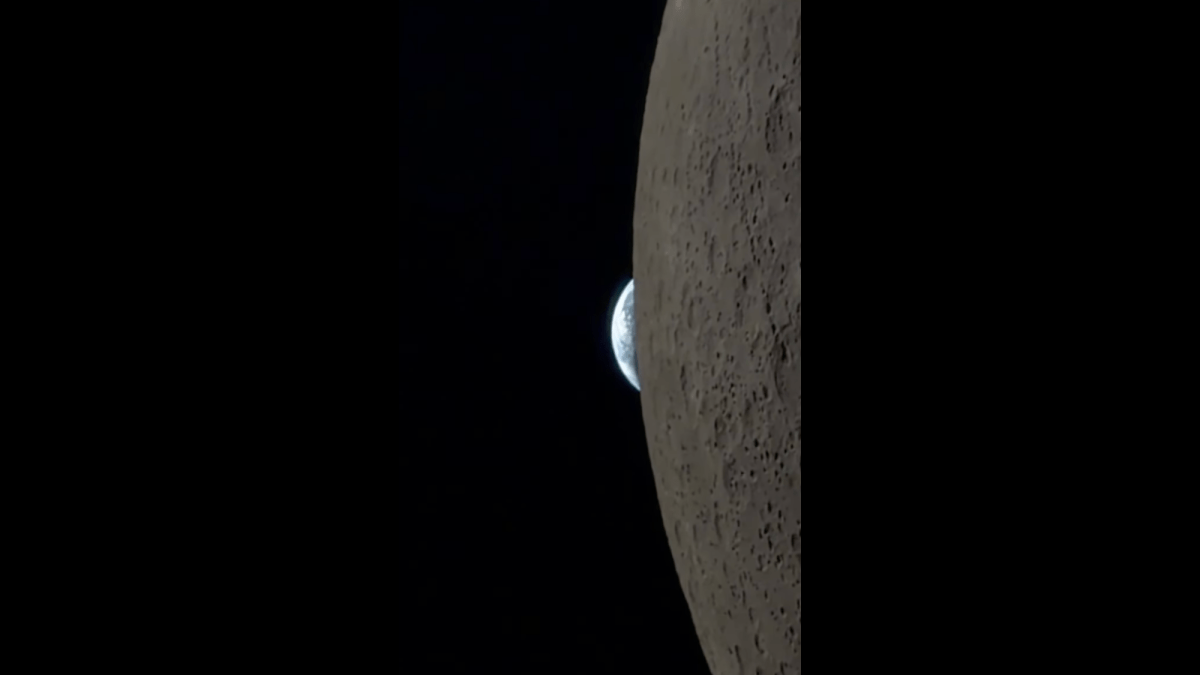

The moon joy continues in another stunning video from the Artemis II crew. Commander Reid Wiseman posted a new video of Earthset to Instagram, taken with the NASA astronaut’s own iPhone. In the video, planet Earth gradually disappears behind the moon as if it were the sun setting over the Pacific Ocean.
According to Wiseman, the video is uncut with 8x zoom, comparable to what the human eye can see and was taken on an iPhone 17 Pro Max.
The new video is another angle of the four-person crew’s iconic Earthset photos and the other inspiring images taken during their 10-day mission. On April 6, Commander Wiseman, pilot Victor Glover, and mission specialists Christina Koch and Jeremy Hansen completed a historic hour-long lunar flyby. The team photographed the moon’s dark side and its rugged terrain, including ancient lava flows, surface cracks and ridges all formed as the moon slowly evolved. The Artemis II crew also set a new record for human spaceflight, flying 4,111 miles farther from Earth than the Apollo 13 mission in 1970.
During the flyby, the crew also watched a solar eclipse from orbit, wearing the paper glasses familiar to anyone who has watched the celestial event here on Earth.
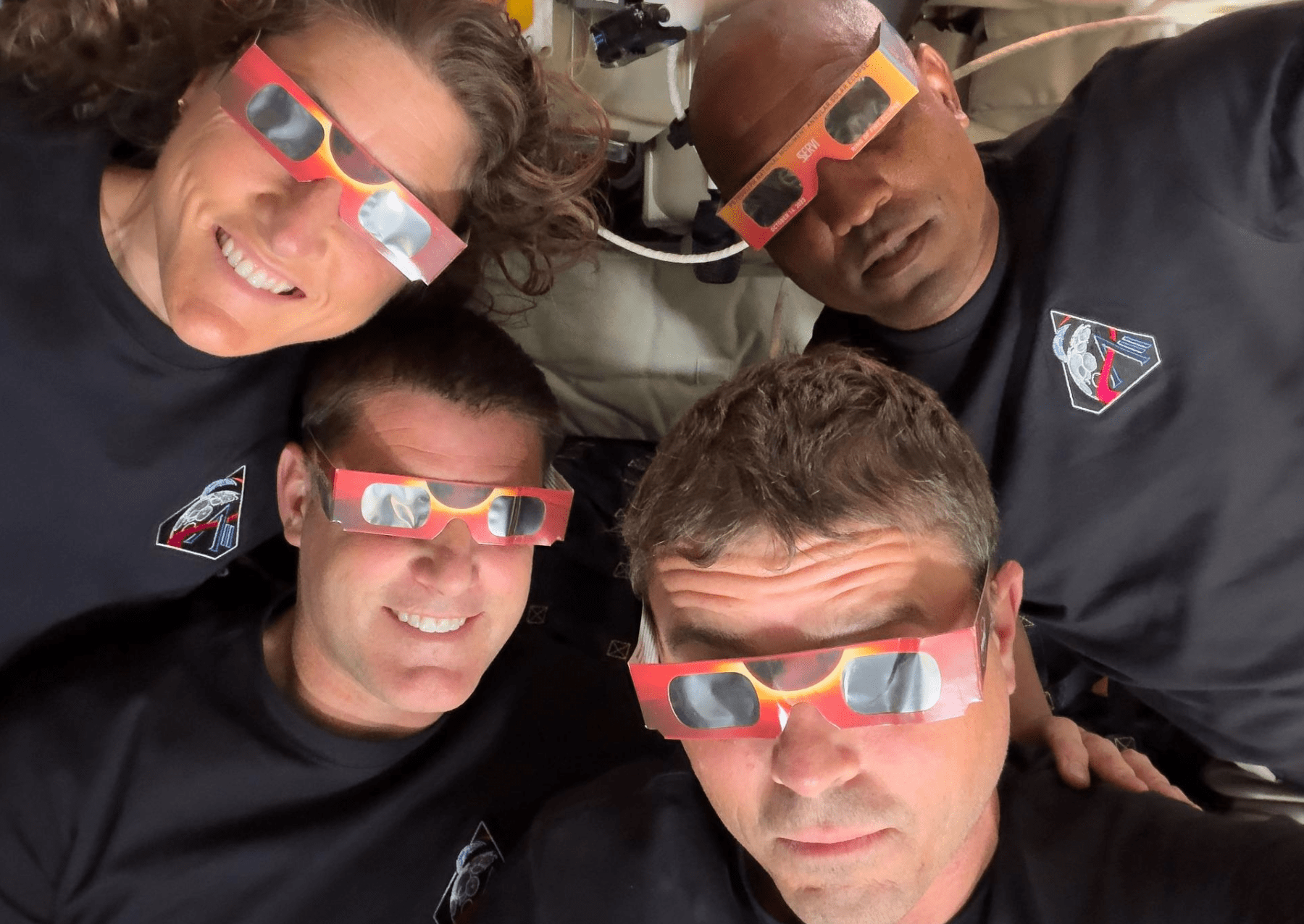
During the hour-long eclipse, the team studied how the sun’s outermost atmosphere—or corona—as it glowed around the moon’s edge. They kept an eye out for flashes of light from meteoroids striking the lunar surface. Understanding these strikes can offer insight into potential hazards on the moon ahead of establishing a future moon base.
After eating a lot of hot sauce, troubleshooting relatable toilet troubles, and nearly 700,000 miles, the Artemis II crew officially splashed down at 8:07 p.m. EDT on April 10, 2026. NASA’s Artemis III mission is scheduled for launch in 2027. The mission launch crew in the Orion spacecraft on top of the SLS (Space Launch System) rocket will test rendezvous and docking capabilities between Orion and the commercial spacecraft needed to land astronauts on the moon.

2025 PopSci Best of What’s New