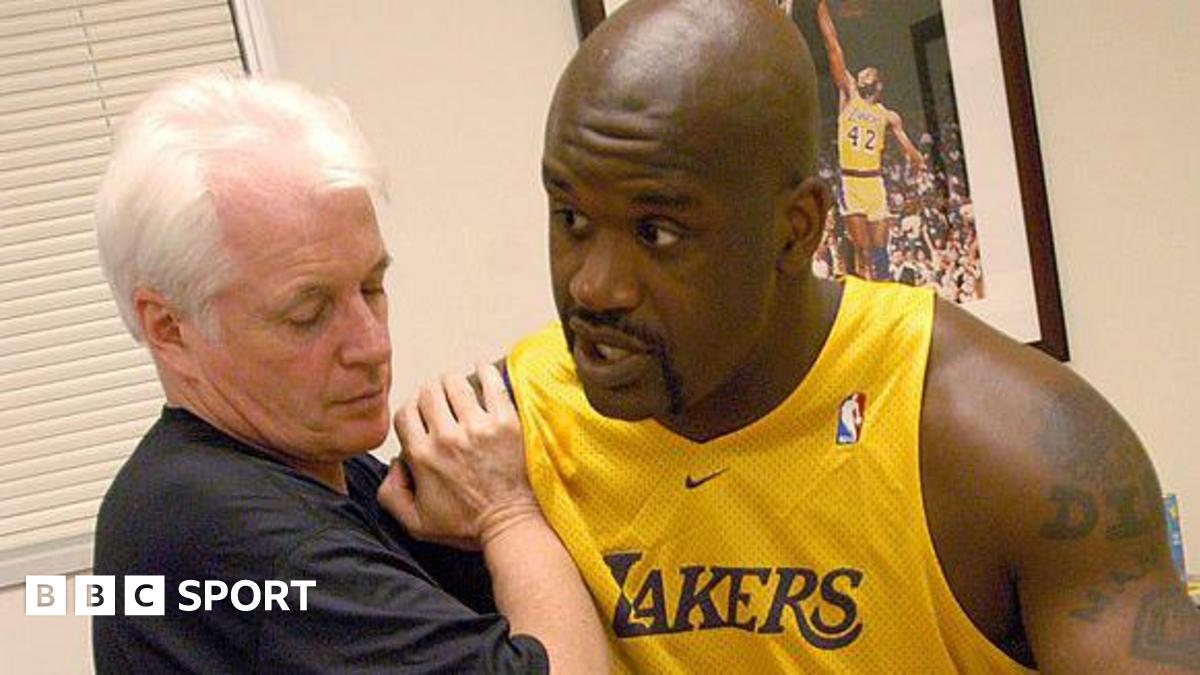

O’Neal, their prize asset, was despatched to McKechnie’s clinic in Vancouver for an expert opinion.
Patience, it transpired, was not O’Neal’s virtue.
“I get this call from the limo driver, from his security people, saying ‘we’re coming’,” recalls McKechnie. “I go, ‘sorry, I can’t see you until 1.30’. They go, ‘we’d like to come now’.
“I said, ‘you have to sit and wait. I’ve got people here I’m working with. I can’t just walk away’.”
They hung up. 1.30 came and went. O’Neal’s party had pivoted and flown back to Los Angeles.
The next day, LA Lakers orthopaedic surgeon Steve Lombardo rang McKechnie to apologise and asked if he would see O’Neal the following week, and whether he would come into downtown Vancouver for the consultation.
The response was terse. “No, Shaq can see me at my clinic. End of story.”
It turned out they felt it was worth the effort.
“In comes Shaquille with bodyguards, friends, coaches, trainers – I was just inundated with people,” says McKechnie.
“The big fella came in and we sat down. I’m thinking this could go any way, in any direction, at this point.”
The prescribed Core-X treatment programme – based on ensuring alignment between muscles in different parts of the body – was unconventional at the time.
But it worked wonders. O’Neal was soon back in action for the Lakers without having surgery.
“He brought me back,” the grateful O’Neal said. “I was dead, and he brought me back.”
A mere four days after the initial consultation, McKechnie was flown to Los Angeles and a pitch delivered to retain his exclusive use throughout the demanding NBA season.
Accepting the job offer meant a change of pace – but all-areas access within one of global sport’s most famous and glamourous clubs.