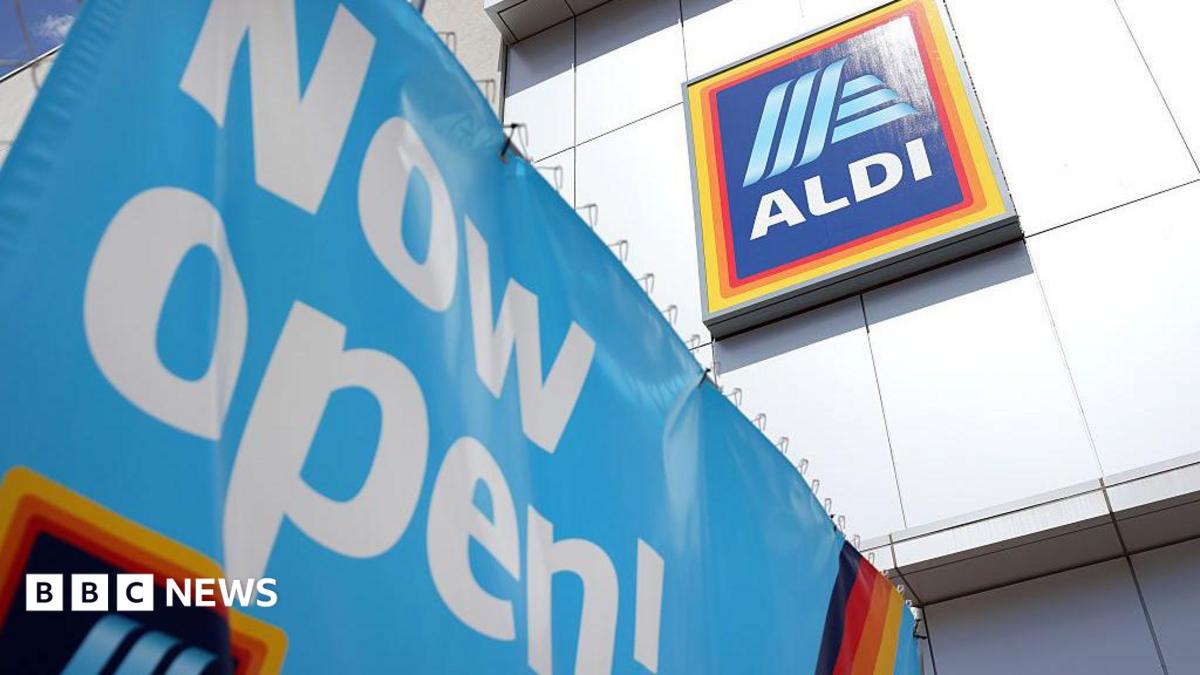

For some urban commuters, the new city location offers a better experience than older formats. Kelvin Dozier, who usually shops at an Aldi in Brooklyn, recently started visiting the Manhattan location right across from his office for convenience.
“The one here – it’s brighter,” Dozier told the BBC, noting the fresh sweet navel oranges in his basket. “The one in Brooklyn is a little smaller. It almost seems temporary, but here it looks like a permanent location.”
Still, winning over city slickers accustomed to premium brands remains an uphill battle. Ralph Montenegro, visiting Aldi for the first time, remained fiercely loyal to competitors.
“It has more variety than say Target,” Montenegro said, praising the prices on staples like flour and fruit, though he noted he still prefers Trader Joe’s. He added that Aldi’s heavy reliance on packaged, private-label processed foods was a detractor compared to the natural organic options he prefers.
This strict reliance on limited, private labels is exactly what keeps Aldi’s overheads low, according to Dustin York, an associate professor of communication at Maryville University.
He says that Aldi targets a lean, highly efficient model that provides about 80% of what a traditional big-box retailer carries, but at a much lower cost.
Still, York argues it is unlikely that Aldi will take dramatic market share from Walmart, because the retail giant is simply too massive. “I call Walmart the battleship, and I call Aldi a kind of submarine.”
But navigating those crowded waters can bring a distinct financial hazard.
“Their biggest kryptonite is real estate cost,” York warned, pointing to a brutal Manhattan retail landscape where average asking rents are between $350 and $700 per square foot.