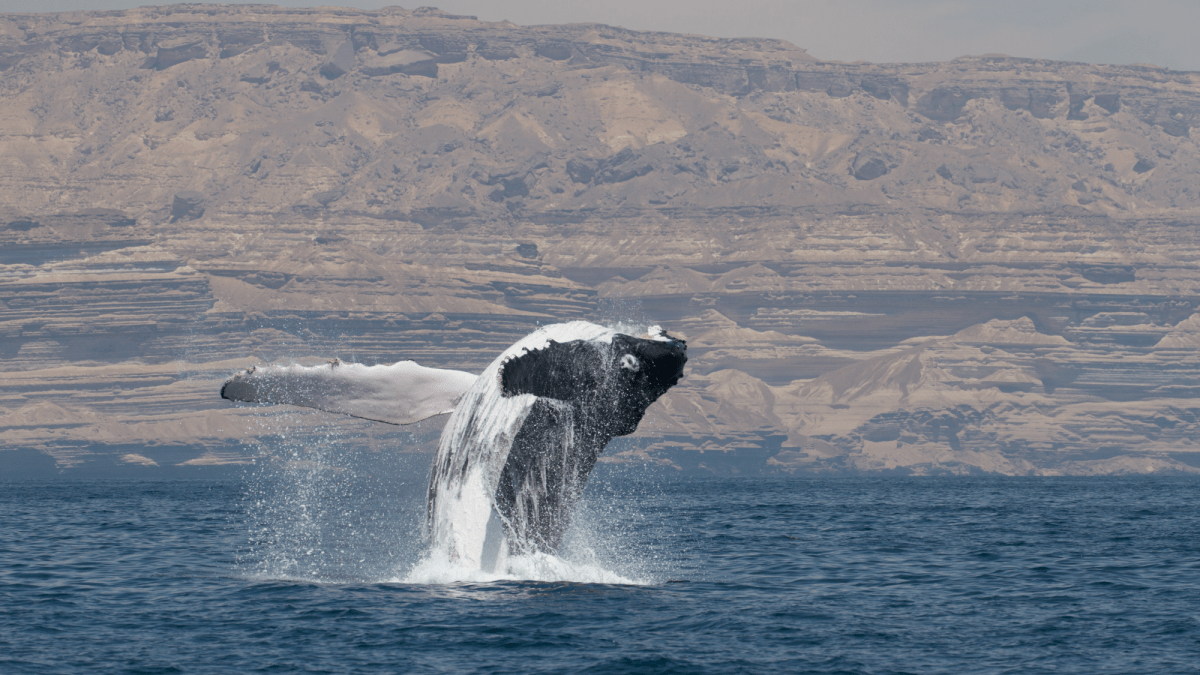
For the first time, biologists observe a humpback whale crossing the Arabian Sea

Though more commonly associated with their long migrations from Alaska to Hawaii or showing off for whale watchers off the coast of New England, a unique population of humpback whales call the Arabian Sea home. About 80 endangered Arabian Sea humpback whales (ASHWs) live off the coast of Oman, and they are believed to be the only humpbacks that do not migrate seasonally. That does not mean that they don’t get around. A study published today in the journal Frontiers in Marine Science documented their first long-distance movement across the Arabian Sea.
“The Arabian Sea provides unique conditions allowing a once-migratory species to completely change its ecology,” Suaad Al Harthi, a study co-author and the executive director of the Environment Society of Oman, said in a statement. “It’s a testament to how extraordinary the region is.”
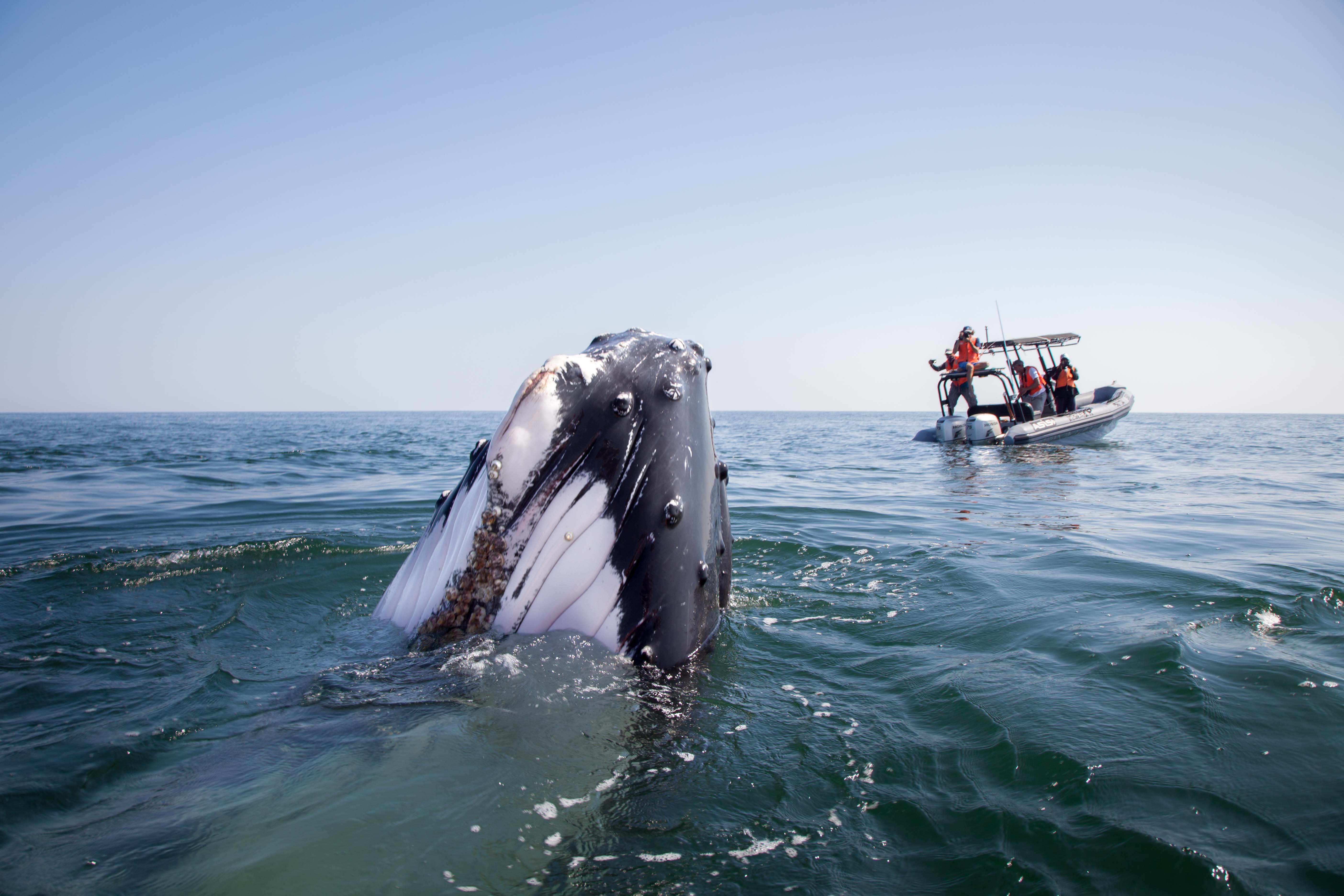
A divergent whale
Previous studies suggest that ASHWs diverged from southern hemisphere humpback whales about 70,000 years ago. Unlike their relatives, ASHWs typically only move within the Arabian Sea in the southwestern portion of the Indian Ocean. This new research points to the possibility that they have other critical habitats.
The team used 14 satellite tags to monitor whales’ dives. The tags were deployed at Hallaniyat Bay in the north and the Gulf of Masirah to the south. They transmitted data for 53 days on average, sending just over 1,800 locations for all tagged whales.
“Leading into this study we had so many questions about the daily life of the mysterious humpback whales found in the Arabian Sea, of which we would only get fleeting glimpses during long hot hours of boat surveys,” said Dr. Andrew Willson, a study co-author and marine scientist and founding director of Future Seas Global SPC. “Tagging these whales allowed us to peel back the lid of the sea and check in online to see where they were each day.”
For the whales that stuck to the Gulf of Masirah, five stayed in the area while the tags transmitted their locations, and two traveled south to Hallaniyat Bay. All six whales tagged in Hallaniyat Bay moved between the bay, Gulf of Masirah, and northern Yemen.
The Gulf of Masirah was also the most important ASWH habitat. Roughly 57 percent of locations were transmitted from there, followed by 18 percent transmitted from Hallaniyat Bay. The home and core ranges reflected strong loyalty between these areas less than 258 miles apart. The monsoons in the western Arabian Sea makes it a productive upwelling zone, giving the whales food all year.
“We think the movements of the whales in our study relate to their tracking of inshore prey, likely sardines, over the continental shelf,” explained Willson. “Deeper dives off the continental shelf could be related to searching for other food found in deeper water, such as krill.”
Luban’s unexpected journey
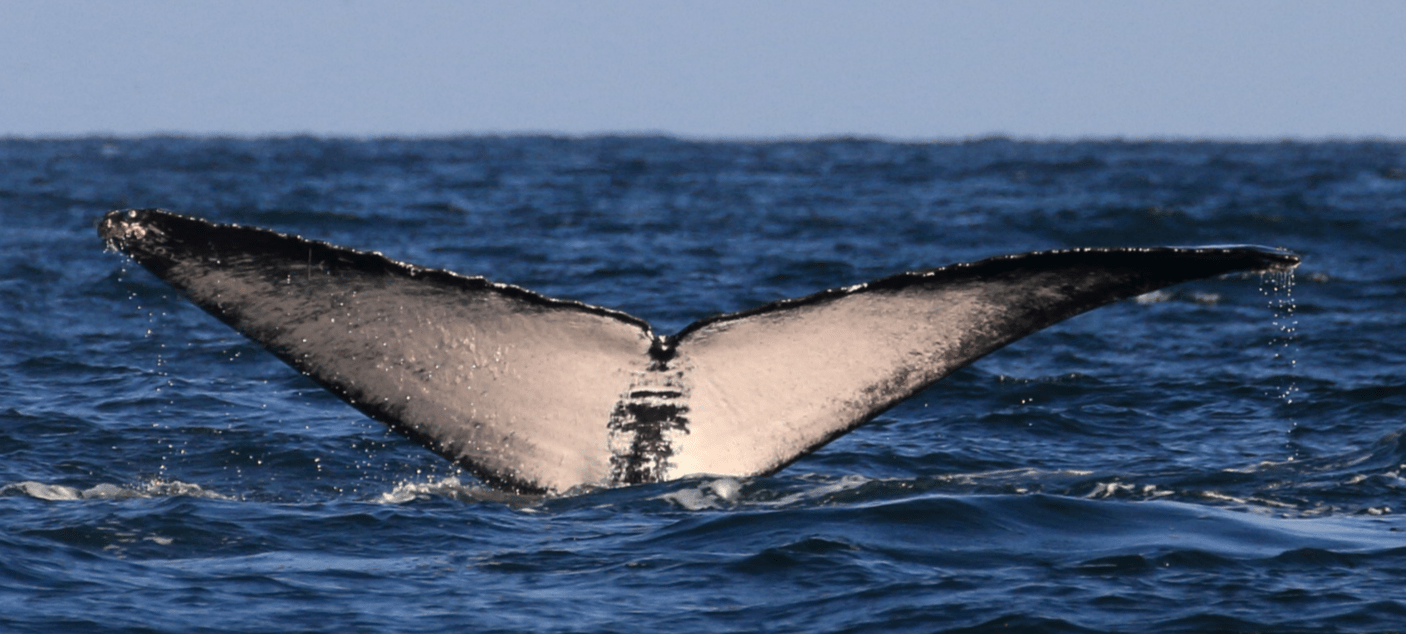
Only one female whale stuck out from the pod. Researchers call her Luban, the Arabic name for the frankincense-shaped pattern on her tail fluke. Luban traveled east across the Arabian Sea and was also detected off the western coast of the Indian state of Goa. On her return journey, Luban covered about 4,350 miles.
Humpback whale song has previously been connected between whales between Omani and Indian coasts, Luban’s long journey is first direct evidence of an ASHW crossing the Arabian Sea.
For up to a month, Luban remained in a spot off the southern coast of India that is known for high food productivity. The team believes that finding food or reproducing may have been simultaneous drivers for her journey. Both food and mating motivate humpback journeys in the Atlantic and Pacific Oceans.
Scientists also spotted Luban swimming in the Gulf of Masirah recently.
“It’s always a relief when we make resightings of these amazing whales given the limited size of the population,” said Willson.
The team hopes that this research will help protect a small and isolated population of whales. These whales face increasing threats from climate change and human activity. Parts of the Arabian Sea are warming roughly 1.5 times faster than the global ocean average.
Data collected in this study could also help keep fishing activities away from these whales.
“Coastal fishing communities in Oman have revered and respected these whales for many generations,” said Aida Al Jabri, a marine expert supporting the study with the Oman Environment Authority. “For rapidly modernizing societies in this region the study puts these whales more into view. This is critical to supporting their conservation.”
The team pointed out that tracking data alone cannot answer all of our questions about these unique whales. Future vessel surveys are needed to confirm how ASHWs use this habitat and how they respond to climate change and other threats.
“We hope their adaptability will help ASHWs in uncertain times when their domain is influenced by accelerated climate change,” Al Harthi concluded.

2025 PopSci Best of What’s New