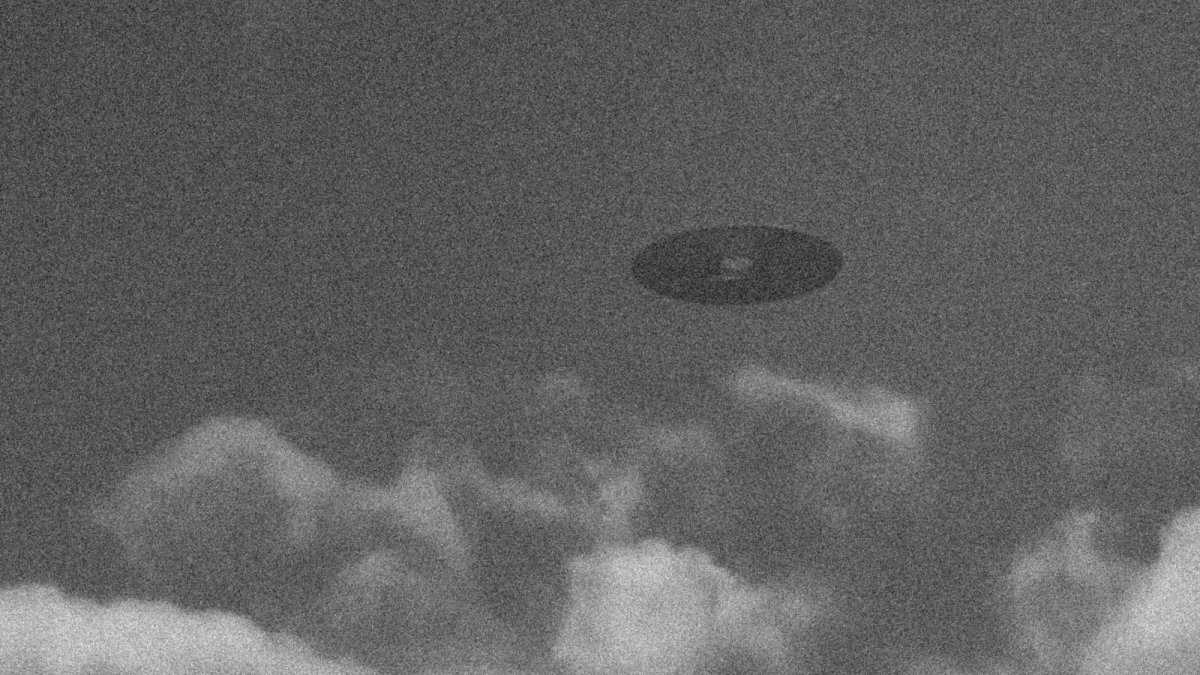

Don’t expect a dramatic, AI-assisted sci-fi encounter if humanity ever definitively detects evidence of intelligent extraterrestrial life. Scouring the stars for signs of aliens is less about waiting for giant unidentified aerial phenomena (UAPs) to fly into view, and more about pouring through mountains of complex data looking for delicate biosignatures.
In recent years, many researchers—including some at NASA—have advocated incorporating machine learning and artificial intelligence in their search for organisms beyond Earth. Some of these approaches may show promise, but new research indicates much of today’s AI is even more easily duped by false positives than their human operators.
“No matter what sequence of commands we started with, we were able to fool the AI 100 percent of the time,” Ankit Gupta, a Michigan State University (MSU) computer science engineer, said in a statement.
Gupta and colleague Christoph Adami recently ran an experiment to assess a specially designed AI program’s ability to identify hypothetical signs of biosignatures. To do this, they relied on a computer program developed at MSU called Avida, which simulates evolutionary processes with digital organisms. Avida treats replicating biological molecules like DNA as computer code, then uses these command strings to repeatedly copy themselves inside a “virtual Petri dish.” Importantly, each coding iteration is imperfect or contains fundamental changes—similar to how biological organisms reproduce.
Gupta and Adami then trained a neural network on tens of thousands of digital organisms inside Avida, some of which included the command to copy itself while others did not. After tasking their AI to classify the two organism types, the program achieved a nearly perfect accuracy rate. However, the AI quickly met its match once the researchers presented new examples it hadn’t previously encountered. In as few as 150 tiny shifts in organisms’ computer code, the AI began mistakenly identifying signs of life.
“AI has an Achilles’ heel. It can see a pattern and completely misclassify it,” Adami explained. “It’s a very serious vulnerability.”
Unlike here on Earth, it could be much harder to ensure a second set of (human) eyes on AI’s work aboard the next Mars rover or planetary probe. But similar AI false positives already affect far more than future space missions. Facial recognition software, self-driving cars, and medical scanners all rely on various machine learning programs to make their decisions. Putting too much faith in the technology’s reliability goes beyond misidentifying new lifeforms—it undermines existing life.
According to Adami, their findings aren’t an indictment of AI, but a reminder that people are still vital to any new field of scientific discovery.
“You need an independent way of checking [AI’s] work,” said Adami. “There needs to be a human in the loop.”

2025 PopSci Best of What’s New