
We’ve all heard the old adage: Cats hate water. But is that really true? In a new episode of Popular Science’s Ask Us Anything podcast, we explore if our feline friends really have an aversion to water or are just wary of the unfamiliar.
Ask Us Anything answers your most outlandish, mind-burning questions—from the everyday things you’ve always wondered to the bizarre things you never thought to ask. So, yes, there’s a reason cats love boxes and no, hot workout classes usually aren’t better. If you have a question for us, send us a note. Nothing is too silly or simple.
This episode is based on the Popular Science article “Why do cats hate water? An expert explains,” written by features editor Sarah Durn.
Subscribe to Ask Us Anything
Listen and follow Ask Us Anything on your favorite podcast platform:
Spotify | Apple Podcasts | YouTube | Or wherever you get your podcasts.
Full Episode Transcript
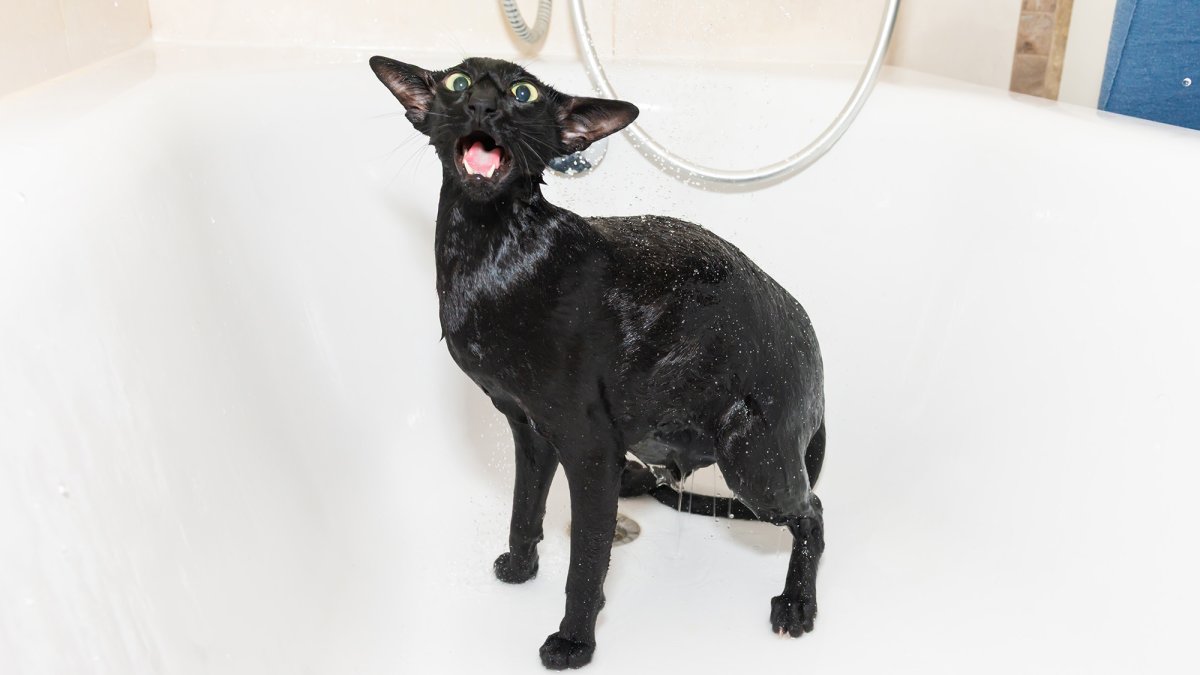
Sarah Durn: It can happen in an instant. You’re in the shower. Your kitty walks the edge of the bathtub like a balance beam, curious what you’re doing behind the shower curtain. Then a paw slips. They fall in. Water goes everywhere. You’re stunned. They’re horrified, and as quickly as they fell in, they zoom away—embarrassed the way only a cat can be.
But why do cats hate water so much? The answer begins a thousand years ago.
Welcome to Ask Us Anything from the editors of Popular Science, where we answer your questions about our weird world from “What’s a false memory” to “Why do elephants have such big ears.” No question is too outlandish or mundane. I’m Sarah Durn, features editor at PopSci.
Annie Colbert: And I’m editor in chief Annie Colbert.
SD: Here at Popular Science, we love obsessing over zany questions,
AC: And this week we asked: Why do cats hate water?
This is something I’ve thought about a lot as a cat owner and something Sarah actually wrote a story about. So Sarah, why do cats hate getting wet?
SD: Yeah, well, we can mostly blame evolution, early life experiences, and biology for cats aversion to anything that splashes.
AC: Okay, that makes sense. But I’ve also seen a lot of TikToks of cats showering or swimming or rafting. I mean, my cats would never, but what gives.
SD: Yeah. Even though most cats aren’t big water fans, a rare few don’t mind a dip with, you know, hilarious results.
AC: It is hilarious. All right. I can’t wait to dive in. Um, or maybe, should I say paw in? I’m so, so sorry for that.
SD: You gotta love a cat pun,
AC: But before we start scratching the surface. Ugh sorry again. We want to know what questions are you thinking about. If there’s something that’s always bothered you or something you’ve just thought about during a long boring drive, submit your questions by clicking the “Ask Us” link at popsci.com/ask. Again, that’s popsci.com/ask, and click that “Ask Us” link.
SD: We can’t wait to hear your questions.
And with that, we’ll be back with all the details of why cats hate and occasionally love water, after this short break.
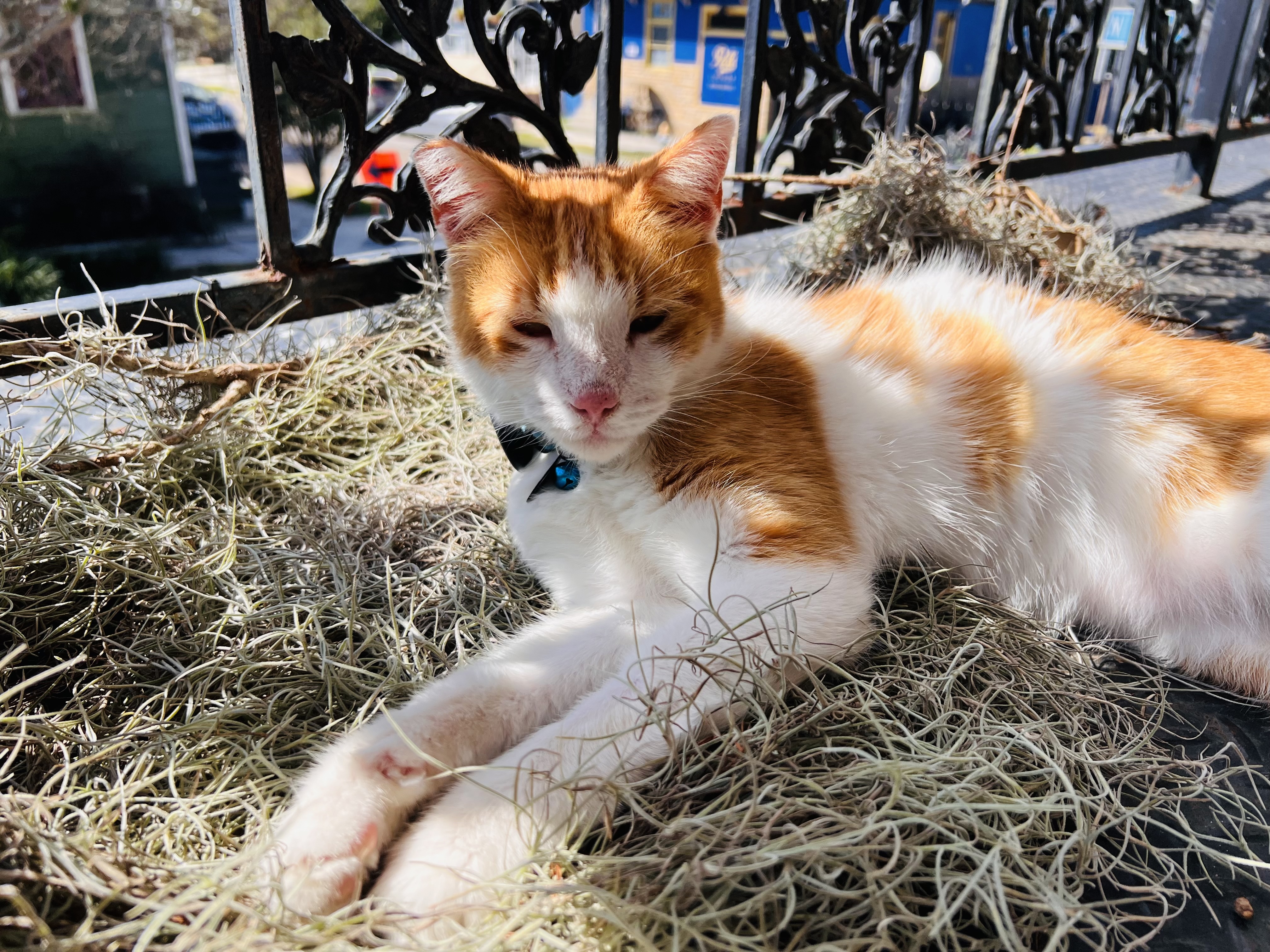
SD: Welcome back. Now, this episode is extra special because Annie and I have actually paid out big bucks to get furry co-hosts to talk firsthand about their feelings on water, making his podcast debut all the way from the New Orleans streets, my elderly orange and white Tabby George. George, say hello.
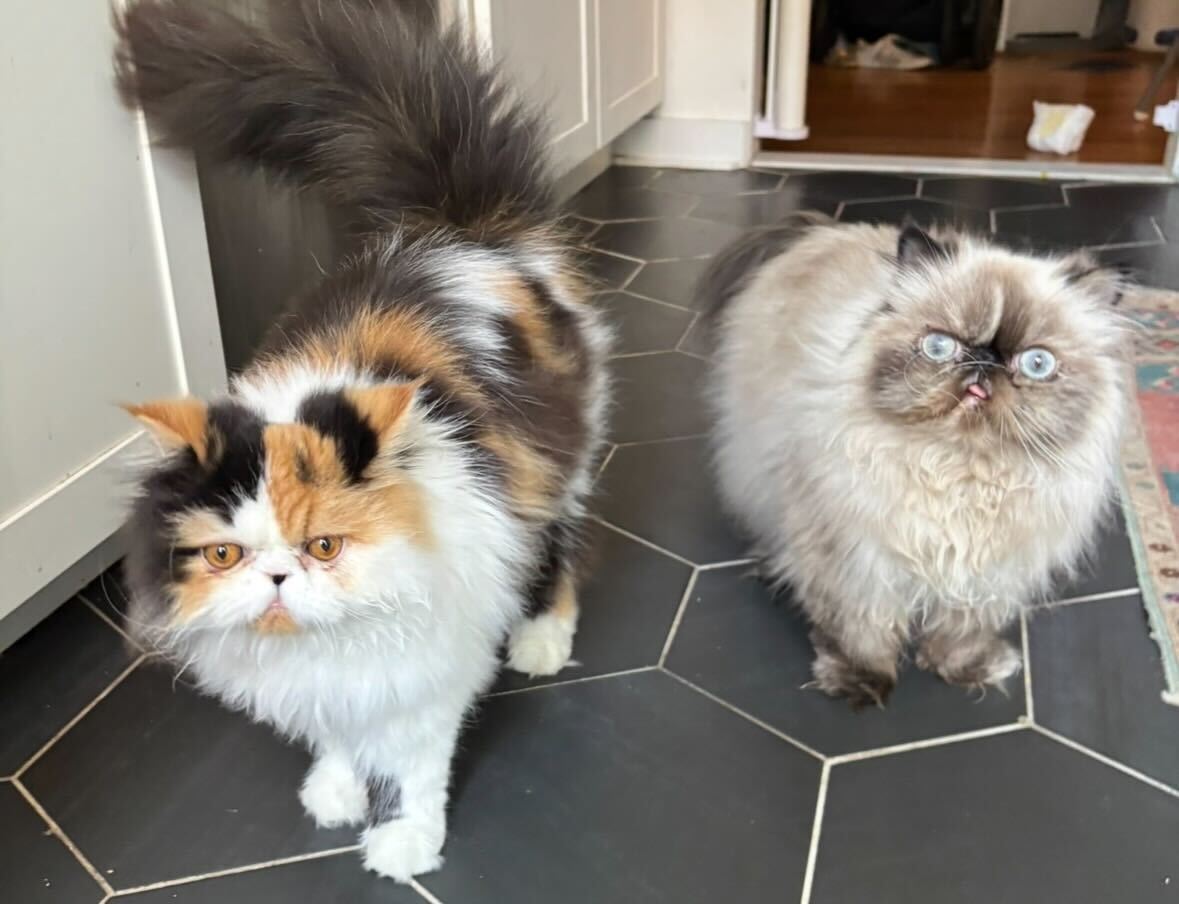
AC: Hi George! And joining sweet George are my two squishy faced weirdos, Potato and Freyja.
SD: Hi Potato and Freyja! Meows all around. So what are Potato and Freyja’s feelings on water? Have they had any encounters?
AC: So Freyja, like George, is a senior kitty, and I adopted her when she was already 10, so she was already full of wisdom. So she wants nothing to do with water, just avoids it at all costs. She knows better.
But Potato is a little bit of the opposite. She was rescued as a baby and I affectionately refer to her as the least bright cat that I’ve ever shared a house with. So she has fallen into the bathtub multiple times.
She doesn’t mind her face getting like a little wet during a shower. How does George feel?
SD: Yeah. George has a particular fondness for drinking out of my watering can.
AC: Mm.
SD: Yeah. He likes it more than his normal bowl, and he’ll ask to go outside to drink out of the watering can. So now I fill it with filtered water and just leave it for him.
AC: Oh.
SD: But luckily I’ve never had to give him a bath or anything, but I imagine if I did, he’d be, yeah, not into it.
AC: Yeah, I think Potato and Freyja would agree with George there. Like no baths please. But I do think it’s important to note, as we are saying cats hate water, that we are mostly talking about domestic house cats.
SD: Yes, right.
AC: Yes. So cats, aka, the family Felidae in scientific taxonomy is a really diverse group,
SD: Right? So there must be some wild cats who actually love water.
AC: Oh, definitely. There are wild cats that swim to hunt, to travel, or even just for fun, like tigers for instance are famously strong swimmers and they’ll take a dip to cool off on hot days.
SD: Aw, just like us.
AC: Exactly. They even have partially webbed paws to help them paddle around.
SD: Whoa, that’s adorable and important.
AC: Yes. Can you imagine encountering a tiger in a pool?
SD: Ah!
AC: Yeah, I don’t wanna think about that. I will say probably the best kitty swimmers are species named, appropriately enough, fishing cats.
They’re native to south and southeast Asia, and apparently have webbed feet and powerful tails that they use as a rudder.
Sarah Durn: Oh.
AC: They can also bark like dogs and even swim underwater while holding their breath. Potato is definitely not doing that.
SD: Oh my God. I would love to see one in the wild one day.
AC: Okay, now all of this raises the question: If tigers, fishing cats, and other wild cats like splashing around, why don’t domestic cats?
SD: Yeah, so I touch on this a bit before the break, but a lot of this really comes down to evolution. All domestic cats, George, Freyja, Potato, they all descended from the African wildcat some 10,000 years ago, and African wildcats lived and still live (they’re still around in Africa) in very dry environments.
AC: Oh, so like deserts, savannahs, not exactly poolside living.
SD: Right. African wildcats didn’t evolve around water and probably would be just as wary of a bathtub as our domestic kitties.
AC: It’s kind of hard to imagine Freyja hunting anything in the wild or even really existing in the wild.
SD: Same. When George is all curled up in croissant mode, it’s kind of hard to imagine the predator just under the surface.
But nonetheless domestic cats have a lot in common with their African wildcat ancestors. Unlike dogs, which were bred for thousands of years to perform very specific tasks, you know like herding, pointing, hauling, cats are mostly self domesticated; i.e. they moved into human houses to hunt rodents and grain stores. Because of that, cats’ predatory instincts and behaviors are still very close to their wild ancestors.
AC: Whoa. So they’re basically running the same software they were thousands of years ago when bodies of water were still rare in their environments.
SD: Yeah, pretty much. And that software says water is unfamiliar, unnecessary, and potentially risky.
AC: Got it. I love the idea of cats running software. Now I’m thinking of little robot cats.
SD: I know.
AC: But evolution isn’t the only reason cats don’t like water, right?
SD: Right. How humans treat their feline friends plays a huge role too. And this is another place where cats and dogs diverge.
AC: Because dog owners tend to introduce dogs to water early with baths, hoses, beaches lakes, et cetera.
SD: Totally. Dogs often learn from a young age that water isn’t scary. But most cats, they’re not getting routine baths (which PSA you shouldn’t bathe your cat). But that also means when cats do encounter water, it’s often during stressful moments like falling into a tub or after getting sprayed by a skunk.
AC: It’s not a great first impression to water.
SD: No, no, not at all. And those negative experiences can reinforce an aversion to water. On the flip side though, young cats that have neutral or even positive experiences with water may be more open to it later on.
AC: Which explains why sometimes you see cats happily drinking from sinks or occasionally, you know, maybe joining their human in the shower. Very much Potato’s case, I think.
SD: I want to see Potato do this! But yes, for most cats, water isn’t very fun and it actually can interfere with how they experience the world around them.
AC: How so?
SD: Well, cats really rely a lot on their whiskers. And whiskers pick up on things like vibrations and air movement and can help cats with their spatial awareness.
AC: And I imagine getting their faces wet doesn’t help with their whisker spidey sense?
SD: Right. Wet whiskers might not pick up sensations in the same way, which could potentially disorient your kitty. Bath time can also mess with a cat’s sense of smell.
AC: And sense of smell is really important for cats.
SD: For sure. Cats feel safest when they can smell their own scent. And bathing a cat, especially with scented soaps, can mask that scent, which can cause stress and anxiety.
AC: Oh yeah. That would make water not just uncomfortable, but also emotionally upsetting.
SD: Exactly. And that’s why most experts recommend not bathing cats unless it’s absolutely necessary. Cats, after all, are excellent self cleaners.
AC: Oh yeah. Those tongues are basically built-in grooming kits.
SD: That said, if you’ve just adopted a kitten or a young cat, you can introduce them slowly to water. A water fountain or letting them dip a paw in a shallow water dish can really help them get comfortable with the unfamiliar.
AC: Yes, like Potato and her love of sinks and showers. And you know, we’re trying to build some of those experiences with water because, you know, that can make a cat less afraid later in life.
SD: And it’s also important to remember that, you know, just like people, cats are individuals. Some love water. Some tolerate it. Some absolutely will not stand for it,
AC: And none of them are wrong.
SD: So if your cat hates water, that’s not a flaw. It’s a combination of evolution, experience, and biology all working together.
AC: And if your cat loves water?
SD: Congrats! You have a very weird, very special cat.
AC: Honestly, you know what? Cherish that unicorn.
SD: Cherish them. And with that, we’ll be right back to wrap up this episode with the story of a very brave kitty named Simon, who actually served in the British Navy.
AC: Who was so beloved, he had his own cat officer to deal with all of his fan mail.
SD: It’s true! That’s coming up next, after this short break.
AC: All right, Sarah, as promised, let’s talk about Simon, a very handsome tuxedo cat and a proud member of the British Navy.
SD: I’m so obsessed with him already.
AC: Ugh, completely. Let’s start at the beginning.
SD: So the year is 1948 and 17-year-old British sailor George Hickinbottom finds a skinny little black and white kitten on the Hong Kong docks. Hickinbottom smuggles the little kitten aboard his ship, the HMS Amethyst, and the crew obviously immediately falls in love with him and names the little tuxedo cat Simon.
AC: Oh, of course. Who wouldn’t take in a cat?
SD: Of course.
AC: Cat distribution system in action. And immediately Simon gets to work, right?
SD: Oh yeah. Simon has a job to do. It’s part of the reason he was allowed to stay on board because, very practically, ships have rats. And Simon immediately proved he was an excellent rat hunter.
AC: Ugh. We love a kitty with a job.
SD: Always. Then a year later, the HMS Amethyst gets trapped in the middle of an international crisis. On the morning of April 20th, 1949, artillery fire rained down on the Amethyst. The ship ran aground in the middle of the Yangzi River. Dozens of men on board were killed or severely injured.
Even Simon was injured with shrapnel damage and burns on his back and face.
AC: Oh no.
SD: I know. The ship was effectively under siege for months as the Chinese Civil War between communist and nationalist forces raged on.
AC: Uh, was Simon okay?
SD: He was, thank goodness. He took some serious hits though. But after literally licking his wounds, he was back to work.
He hunted rats that threatened the crew’s dwindling food supplies, left dead rodents in sailor shoes as gifts, and even (I love this) he slept in officer’s hats.
AC: Oh, let him sleep in my hat. Ugh. What a star
SD: I know. For his service, Simon became the only cat ever awarded the PDSA Dickin Medal. It’s like the animal equivalent of the Victoria Cross.
AC: The only cat ever?
SD: Ever. I know, what a star!
When the ship finally made it back to England, he was a full on celebrity. He got mountains of fan mail. They literally assigned a cat officer, as you mentioned, to handle it all.
AC: As they should.
SD: But then just weeks later, Simon died in quarantine.
AC: No.
SD: He received his medal after he died and was buried with full military honors. Even his tiny coffin was draped with a union jack.
AC: Oh, I did not expect to cry about a cat today.
SD: I know, me neither.
AC: Oh.
SD: RIP Simon, we love you.
AC: To Simon!
SD: To Simon! And if you want to see photos of this brave little kitty.
AC: Yes.
SD: And read more about his story, click on the link in the show notes. I promise you will not be disappointed.
AC: And that’s it for this episode. But don’t worry, we’ve got more wonderful Ask Us Anythings live in our feed right now. You can follow or subscribe to Ask Us Anything by Popular Science wherever you enjoy your podcasts. And if you like the show, leave a rating and review.
SD: We care what you think! Our theme music is from Kenneth Michael Regan, and our producer is Alan Haberchak.
AC: This week’s episode was based on an article written for Popular Science by our very own, Sarah. Yay!
SD: Thanks Annie. And thanks to everyone listening. And one more time. If you want something you’ve always wondered about, explained on a future episode, go to popsci.com/ask and click the “Ask Us” link. Until next time, keep the questions coming!
AC: Stay dry everyone.

2025 PopSci Best of What’s New