
Bullet point summary by AI
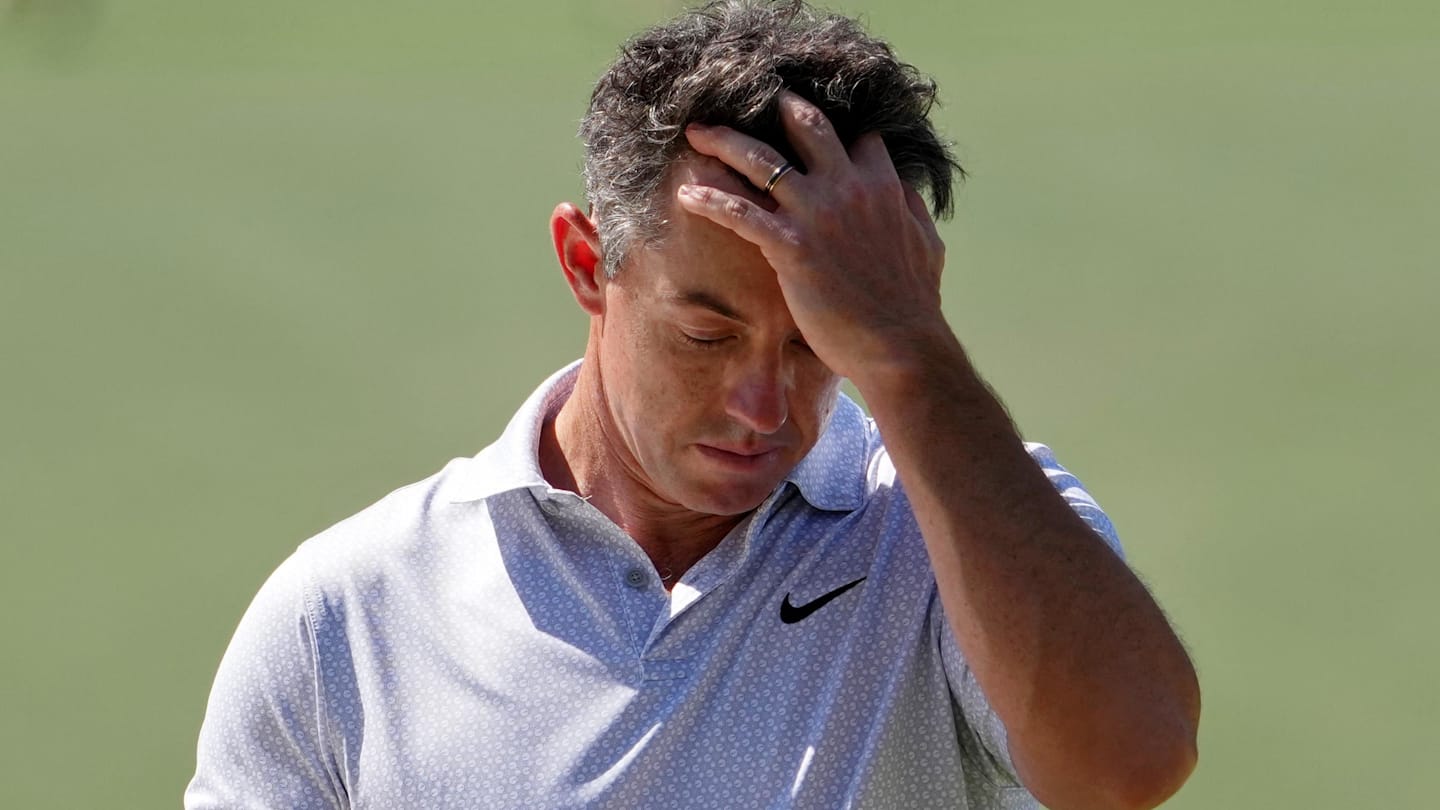
- Rory McIlroy faces a historic crossroads at Augusta National after seeing his record-breaking six-shot lead evaporate during a challenging third round.
- The collapse allowed Cameron Young to pull into a tie for the lead at 11-under par, evoking memories of Greg Norman’s infamous 1996 Sunday stumble.
- McIlroy now battles to avoid the wrong side of Masters history as he chases a second consecutive green jacket and attempts to silence past demons.
Fresh off a Masters win in 2025, it looked as if Rory McIlroy was heading towards making history by joining an exclusive group of golfers who have won back-to-back green jackets in Augusta. By shooting 12 under par through Round 2, McIlroy held a whopping six-shot lead — the largest after 36 holes in Masters history — over Patrick Reed and Sam Burns. All McIlroy had to do was not collapse in the latter two rounds to wrap up another Masters win.
Sure enough, though, collapse is what he did. McIlroy ended Round 3 with a score of 11 under par, meaning he shot one over par on Saturday. This poor showing allowed Cameron Young to tie him for first place, and Burns is only one shot back. The fact that McIlroy might end up blowing a six-shot lead has some wondering what the worst collapse in Masters history is. Let’s dive in.
Biggest leads after 36 holes in Masters history

- Rory McIlroy (2025): 6 strokes
- Harry Cooper (1936): 5 strokes
- Herman Keiser (1946): 5 strokes
- Jack Nicklaus (1975): 5 strokes
- Raymond Floyd (1976): 5 strokes
- Jordan Spieth (2015): 5 strokes
- Scottie Scheffler (2022): 5 strokes
McIlroy’s lead after two rounds is the largest in Masters history, but not by much. Six golfers have led by five strokes after two rounds, most recently Scottie Scheffler in 2022. Five of those six golfers wound up winning the Masters, with Harry Cooper as the lone exception.
Cooper held a five-shot lead through two rounds in the 1936 Masters and was even up by a somewhat comfortable three shots after Round 3. He was attempting to be the first wire-to-wire winner in Masters history. All he had to do in the final round was not collapse, but he bogeyed three of his first five holes and the final hole, finishing the day with a +4 score. This allowed Horton Smith to complete a miraculous comeback for the win.
If McIlroy were to finish this collapse, his fall from grace might end up being the worst in Masters history.
Biggest collapses in Masters history

Again, McIlroy’s six-shot lead after 36 holes was the largest in Masters history, so to see that be fully blown not even 18 holes later was rather shocking. Fortunately for McIlroy, he has another day to rebound and ensure fans won’t remember this ever happened. These other golfers, though, have to live with regret.
- Greg Norman (1996): 6-shot lead entering final round
- Ed Sneed (1979): 5-shot lead entering final round
- Ken Venturi (1956): 4-shot lead entering final round
- Rory McIlroy (2011): 4-shot lead entering final round
What’s worse: blowing a six-shot lead after Round 2 or a four-shot lead after Round 3? That is a debate that Rory McIlroy and his fans would love to avoid on Sunday. It’s only fitting that the golfer responsible for blowing the largest lead ever after 36 holes already has one of the biggest collapses on his resume.
Fortunately for McIlroy, it wasn’t the worst collapse ever. That title belongs to Greg Norman, whose blown six-shot lead after three rounds remains incomprehensible to this day. Yes, we just saw McIlroy blow the same lead on just one day, but it’s different when it’s the final round. Making matters worse, Norman didn’t just lose the Masters, he lost by five strokes. Yes, he lost 11 strokes in one day.
Nothing McIlroy can do on Sunday will be as bad as that. But again, knowing that he’s already on a list of the biggest collapses in Masters history, it’d behoove McIlroy to find a way to bounce back and avoid the wrong side of history.
More Masters news and analysis: