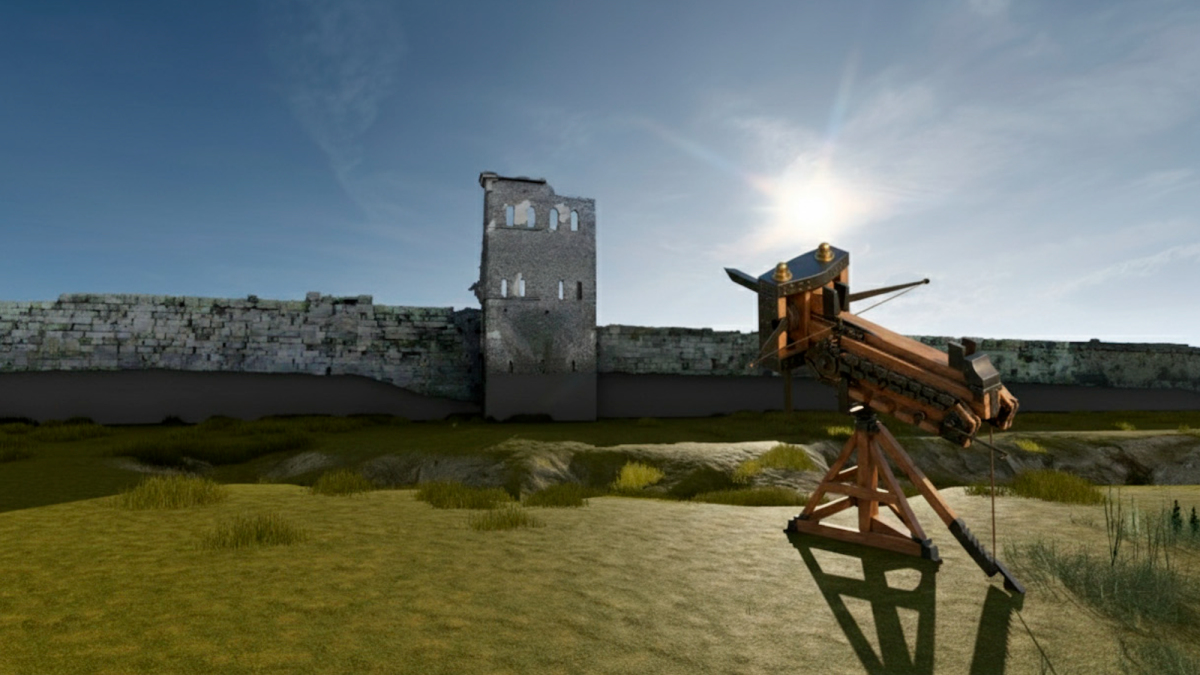

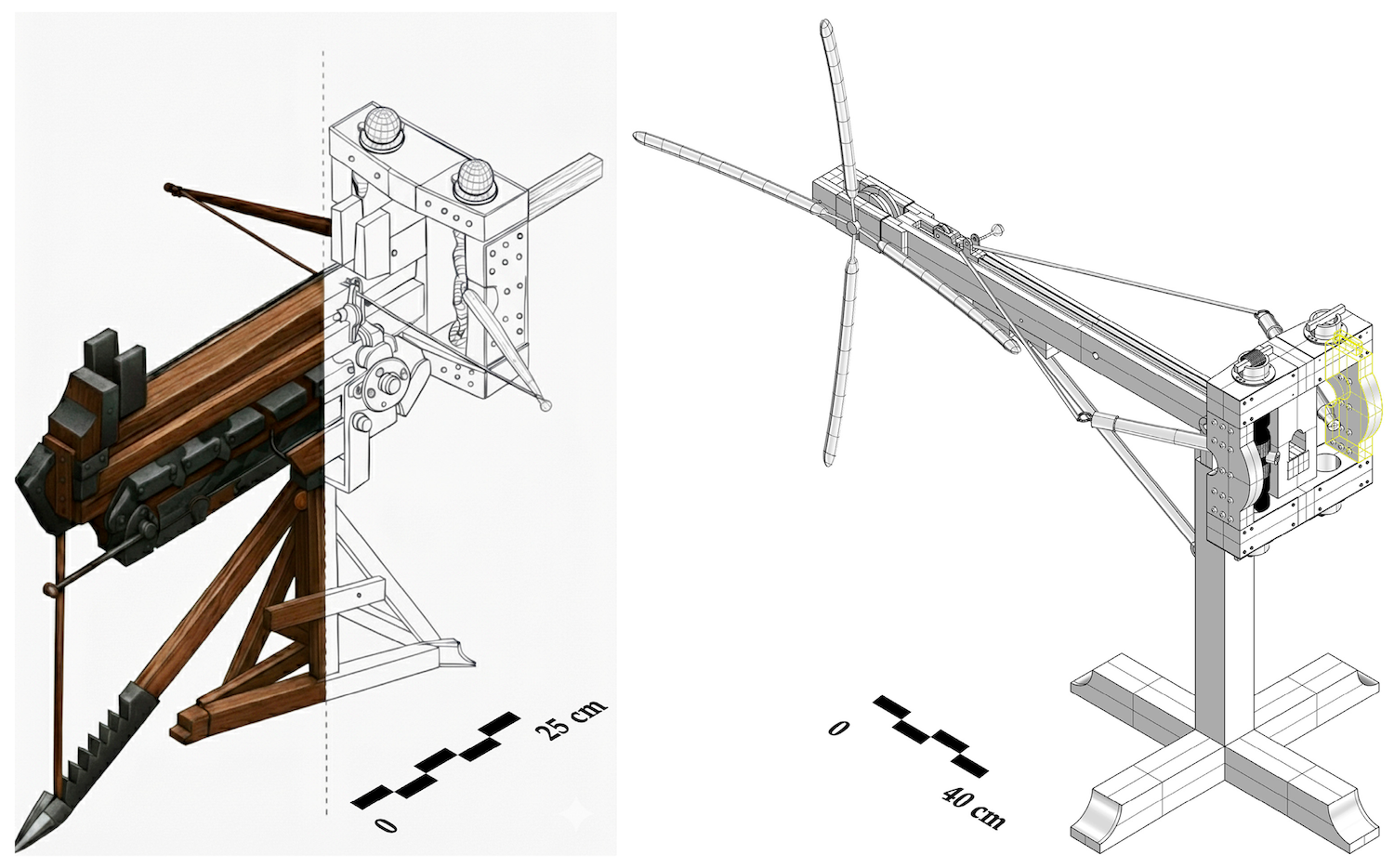
Battlescars etched into the stone walls of Pompeii may offer the first known evidence of a mechanical weapon that was thousands of years ahead of its time. Archaeologists at Italy’s University of Campania believe Roman soldiers utilized a polybolos—a machine designed to fire multiple metal-tipped bolt projectiles in quick succession. Essentially, an ancient machine gun. Their argument is detailed in a recent study published in the journal Heritage.
Pompeii is most famous for its destruction in the wake of the Mount Vesuvius eruption in 79 CE. Nearly 170 years earlier, however, its residents weathered another cataclysm.
In 89 BCE, Rome dispatched forces under the command of general Lucius Cornelius Sulla to lay siege to the city. It was one of multiple campaigns amid the Social Wars (91–87 BCE), a conflict that saw multiple autonomous allies in Italy pushing back against Roman rule.
In the battle, Sulla directed troops to specifically target Pompeii’s northern walls near the Herculaneum and Vesuvio gates, where they proceeded to inundate the city’s resistance with heavy artillery fire.
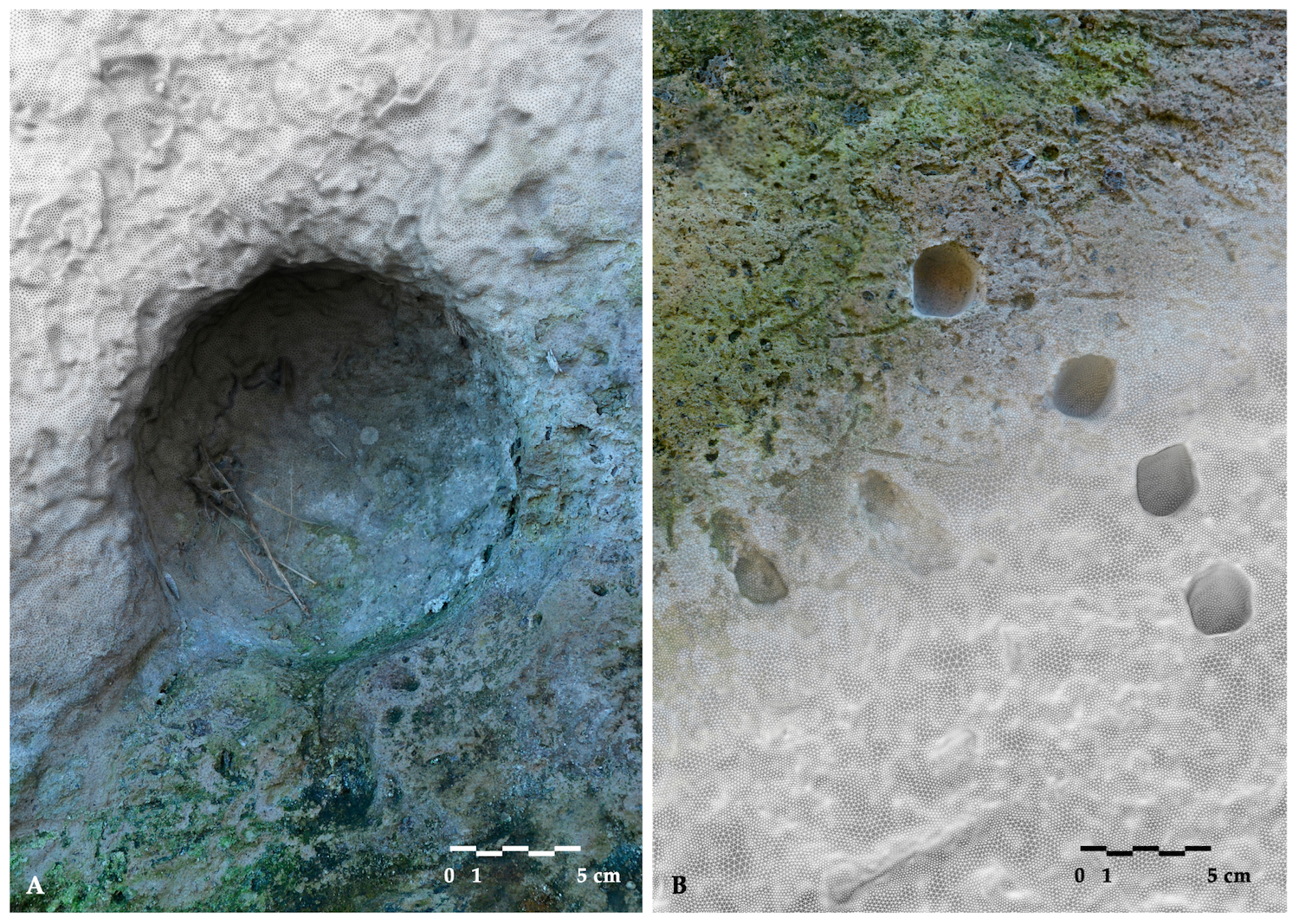
The city ultimately surrendered and was annexed under Roman rule, but evidence of the battery is still visible in some of the remaining stone walls. Ballistae—large machines resembling oversized crossbows—provided most of the force. Aside from human casualties, ballistae projectiles also left behind circular dents and chips in the damaged fortifications.
But some areas of the walls tell a different story. Instead of ballistae markings, certain sections feature small, four-sided pits grouped near one another. Researchers recognized these as the telltale signs of a wholly different type of weapon: the polybolos.
Invented by the Greek engineer Dionysius of Alexandria during the 3rd century BCE, writings describe the polybolos as vastly different from other contemporary siege tools. Instead of the torque-power used by ballistrae, the polybolos relied on mechanical chains and gears. Operators could then load a magazine with multiple bolts and fire them in quick succession. Philo of Byzantium even described the weapon as a “repeating catapult,” a precursor to machine gun technology not seen for another 2,000 years.
Unfortunately, the polybolos has always posed a problem for archaeologists—there was no physical evidence of its existence, only textual accounts.
However, researchers at the University of Campania now believe they finally identified direct effects of the weapons at Pompeii. They reached their conclusions after employing high-resolution laser scans, detailed imaging analysis, and 3D modeling to examine the stone wall impact clusters. Next, they used this information to determine the ammunition’s size, shape, and force of firing.
In most cases, the damage was only a few centimeters deep. This indicates that metal-tipped bolts, not stone ballistics, caused the indentations.
The regular, close-spacing, and fan-shaped distribution further indicates the use of a repeating weapon instead of individual shots. So while archaeologists don’t have the polybolos itself, they can point to evidence of its destructive capabilities.
If true, the discovery helps recontextualize not only the siege at Pompeii, but the history of military technology. The first mentions of the polybolos trace back to the Greek city of Rhodes, which predated Rome by more than 300 years.
Meanwhile, the general Sulla is known to have studied advanced technological breakthroughs from the eastern Mediterranean. Taken together, it seems that Roman forces likely incorporated these mechanical Greek designs into their own military campaigns—designs that would not reemerge in warfare for hundreds, if not thousands, of years.

2025 PopSci Best of What’s New