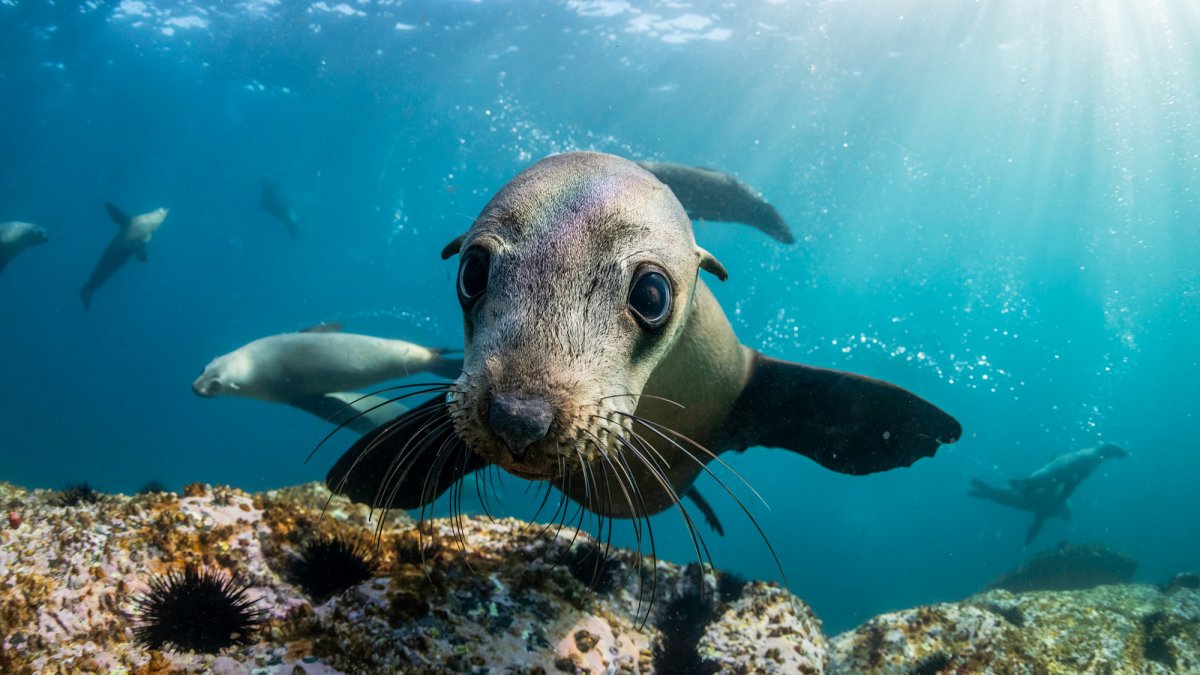

Over the long and complicated course of evolutionary history, mammals independently turned towards water to make a home multiple times. While many of the warm-blooded animals that abandoned dry land for a watery habitat no longer exist, we still have plenty of stunning examples: Think dolphins, whales, manatees, porpoises. There’s even a whole suborder of carnivores called the pinnipeds, which includes seals, sea lions, and walruses who move between land and water.
But, just like all animals, marine mammals need water to stay hydrated to survive. The trouble is that salt water, which makes up some 97 percent of the water on earth and is home to mammals like orcas and bottlenose dolphins, is dehydrating by nature. “We have salt in our body fluids, but a lot less salt than in sea water,” Martin Grosell, an aquatic organisms researcher at the University of Miami, tells Popular Science. “This means that the high salt concentration in sea water, by osmosis, drags water out of the animal.”
Despite the fact that you get wet when you enter the ocean, living in the sea is physiologically similar to living in a desert, Grosell adds. To live in any tough scenario, on land or otherwise, animals must adapt. To understand how mammals can survive and hydrate in the sea, we must dive in the evolutionary deep end.
The difference between invertebrates and vertebrates
While scientists still can’t pinpoint the exact origin of life, many scientists believe it actually started deep in the ocean. But these early creatures hardly resemble what we think of as today’s sea beasts—they were invertebrates, meaning they didn’t have backbones.
“Most of the invertebrates do not control their internal salt content, so they have the same salt content as the sea water,” says Grosell. “What that means is they are not dehydrating, they’re not losing water.” This strategy for survival, called osmoconforming, appears in all sorts of animals we are familiar with today: starfish, jellyfish, lobsters, mollusks, and more.
But things get complicated when you throw in a backbone. Fish, sea reptiles (think sea snakes and saltwater crocodiles), sea mammals, and even sea birds all require specialized body parts to remove the salt from the water they consume.
“The big challenge for animals that drink sea water is the salt they’re getting with that water, ” Grosell says. “If they cannot get rid of that salt, there’s no benefit to taking in that water.”
For fish, drinking salt water is just part of the day-to-day. The water gets absorbed into their intestines, but the salt is transported from their blood to cells in the gills, which then push that salt back into the sea.
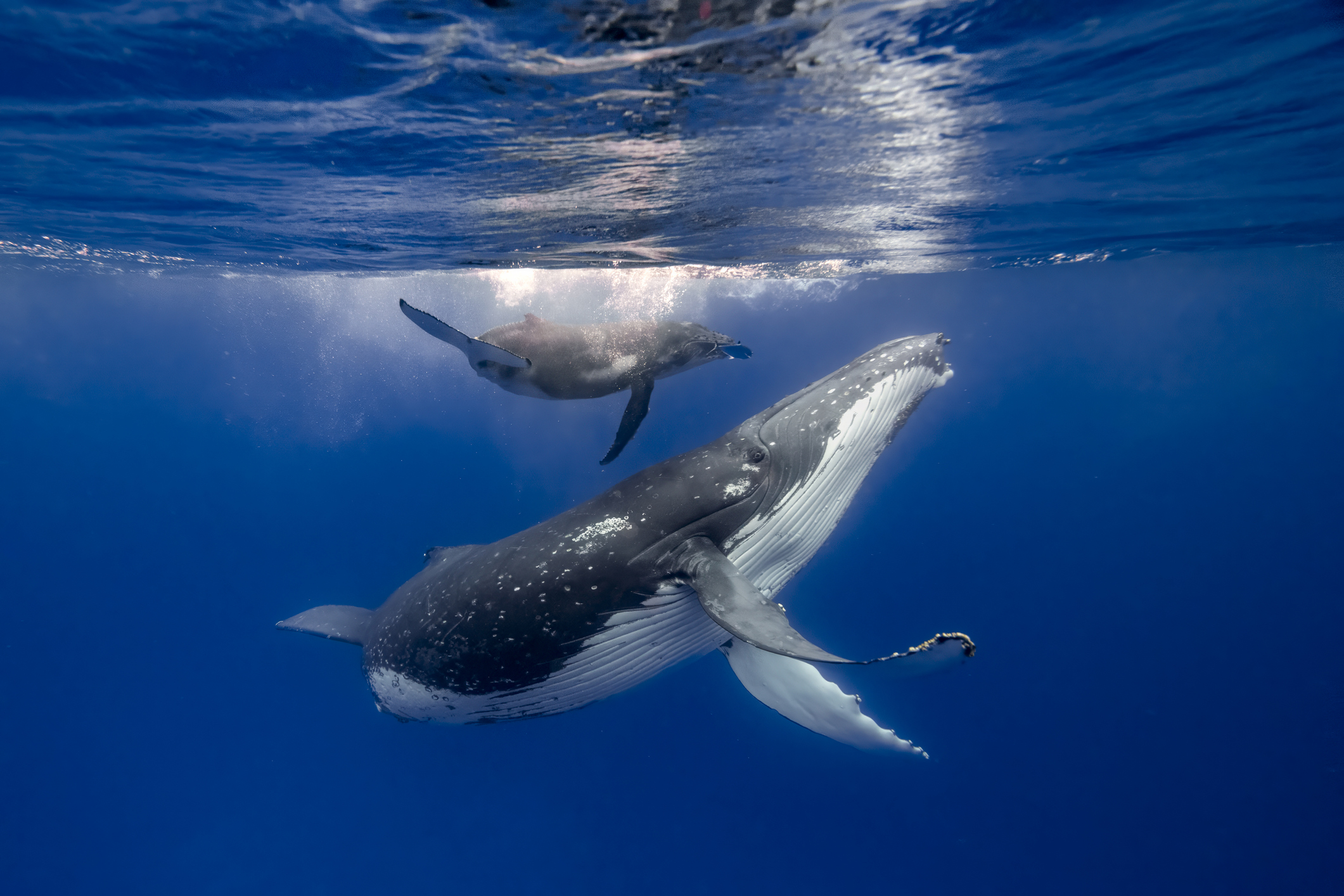
But for animals without gills, like mammals, reptiles, and birds, the story is more complex. These creatures need to expel the extra salt somehow, which for mammals is via the kidneys. While it’s exceptionally difficult to measure, say, the saltiness of whale urine, what we do know is that the kidneys of marine mammals can “produce a urine that’s really concentrated,” Grosell adds. Some marine animals even have what are called reniculate kidneys. These organs are divided into hundreds of tiny filtering units that help expel a ton of salt.
Birds, on the other hand, have glands above their eyes that secrete high-salinity fluid like a mammal’s kidney would. This comes in handy for feathered friends who spend swaths of the year with only access to saltwater, and research has demonstrated that salt gland masses of different birds may even vary seasonally.
For reptiles, the process is quite similar. Sea turtles have salt glands behind their eyes (which makes them look like they are crying when above the water), marine iguanas have salt glands connected to their nose (which makes for some very salty sneezes), and sea snakes and crocodiles have salt glands on their tongues.
To drink or not to drink
While some animals certainly do, purposefully or otherwise, drink salt water and then deal with the consequences, this is a very metabolically expensive way to live. “If they can get water in other ways, they’re gonna prefer that,” Grosell adds. “And some of those ways, of course, are the water that’s contained in whatever prey they eat.”
Almost all marine mammals are carnivores: Think orcas, whales, dolphins, and even walruses and otters. Even baleen whales eat swarms of tiny animals known as krill. Chowing down on fish and other marine creatures means eating animals with a similar water content as themselves, and it turns out to be a solid hydration strategy.
For instance, one study from the 1970s demonstrated that this kind of lifestyle, merely chowing down on fish, allows for enough hydration that elephant seal pups don’t even need a sip of fresh water to stay healthy. In fact, they can fast on land for up to three months without drinking thanks to their unique combination of behavioral and physiological water conservation mechanisms.
Related ‘Ask Us Anything’ Stories
Still, some marine mammals can’t resist a mouthful of unsalted goodness. This is especially true of manatees, which will seek fresh water sources near the shore or low-salinity river mouths, adds Grosell.
Floridians may attest to this, he says, as manatees will sometimes approach boaters for a tasty sip. “They have a very strong ability to find water,” he says. “Water is a commodity for them, and it’s one they will work hard for.”
On the other side of North America, hooded seal pups found off the Davis Strait, the coasts of Labrador and Newfoundland, and the Gulf of St Lawrence have been recorded slurping up sea water as well as snow. Snow, even when it falls over the ocean, is freshwater thanks to the tricks of evaporation.
The key to remaining a hydrated mammal while thriving in sea water is threefold: eat watery food, find freshwater as needed, and pee out any extra salt that gets in the way. It’s a tried-and-true method that’s lasted millions of years. But humans don’t have these adaptations. So next time you hit the beach, remember to pack a water bottle if you don’t want to dehydrate.
In Ask Us Anything, Popular Science answers your most outlandish, mind-burning questions, from the everyday things you’ve always wondered to the bizarre things you never thought to ask. Have something you’ve always wanted to know? Ask us.

2025 PopSci Best of What’s New