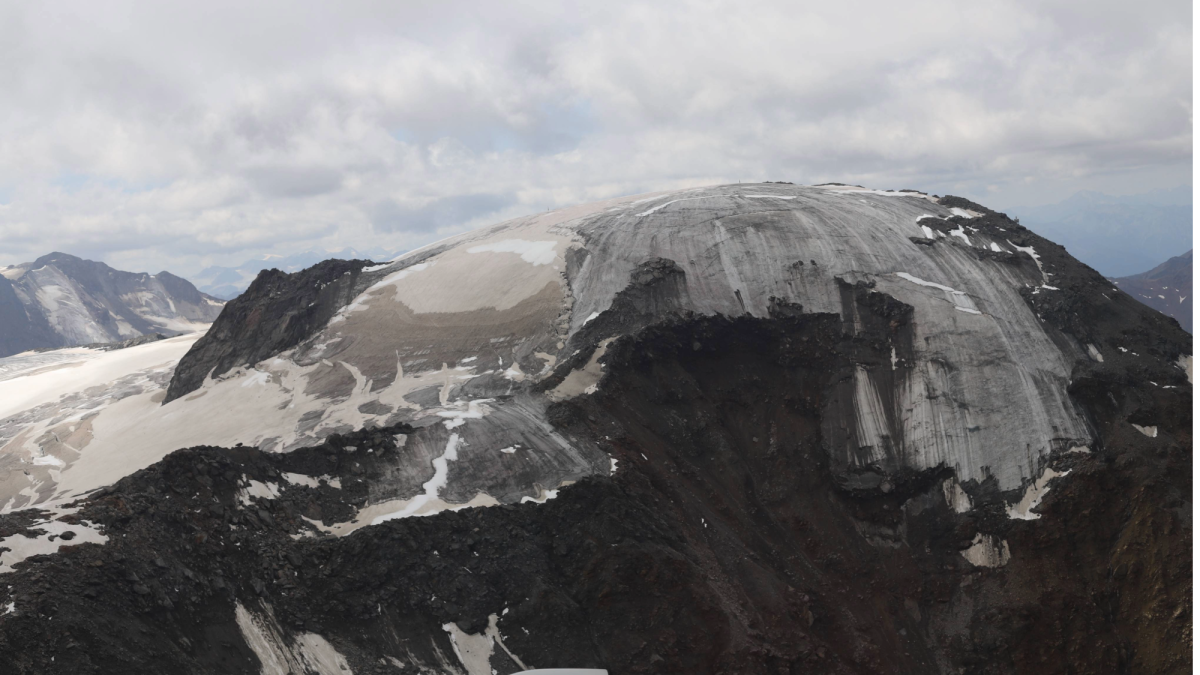
Alpine glacier holds history dating back to the Romans. And it’s melting—fast.

Deep inside the frozen Eastern Alps, the Weißseespitze ice cap (pronounced VICE-zay-shpitt-suh) sits at almost 11,482 feet (3,500 meters) above sea level. Overlooking the mountainous border between Austria and Italy, Weißseespitze is an alpine glacier. It formed as layers of snowfall gradually compacted into dense glacial ice, trapping airborne particles that hold important clues about Earth’s past atmosphere.
The oldest ice contained in Weißseespitze dates back roughly 6,000 years to the mid-Holocene, a warm period following the close of the last global ice age. Scientists say the ice cap is an extraordinary trove of data about pre-industrial human activity and environmental change. But rising global temperatures due to climate change are rapidly melting the glacier’s surface, forcing researchers to move quickly to capture the critical information frozen inside Weißseespitze.
Atmosphere frozen in time
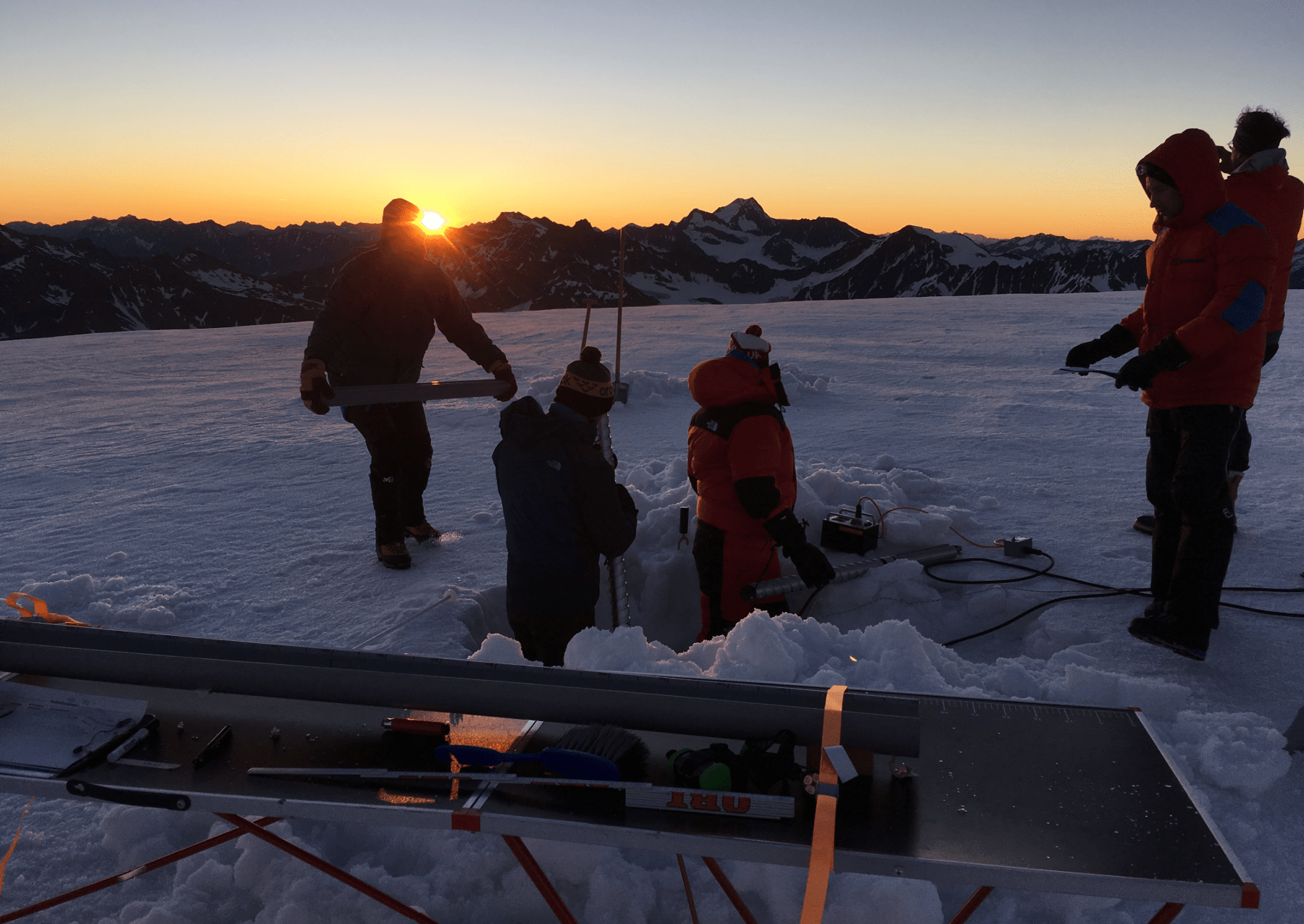
From 2019 to 2024, an international team of scientists embarked on a series of research expeditions at the dome-shaped ice cap, drilling down to the bedrock to extract meters-long ice cores. These long cylinders of glacial ice packed with layers of dust, pollutants, and smoke are frozen time capsules that scientists can use to recreate past environmental conditions.
In a study published today in Frontiers in Earth Science, the researchers analyzed a nearly 32-feet-long (10 meters) ice core containing atmospheric records spanning the Roman empire up to the mid-17th century. Chemical analysis of the ice revealed traces of medieval mining and agricultural fires from nearby human settlements, and even signs of volcanic activity across the Northern Hemisphere.
“With this ice core, we have thousands of years compressed in just 10 meters of ice,” Azzurra Spagnesi, a study co-author and paleoclimatologist at the Ca’ Foscari University of Venice in Italy, tells Popular Science. “It’s a bit like reading a very dense book – it’s small in size, but it’s full of information.”
Paleoclimatologists like Spagnesi typically “read” ice cores from top to bottom, with the surface layer containing the most recent atmospheric data. In the laboratory, Spagnesi and her team melted the frozen cylinder from the top, collecting the liquid sample as it thawed. Then, they searched for traces of natural and human activity: Chemical markers including lead, zinc, and manganese, as well as concentrations of levoglucosan, a biomass burning signal released when wood ignites during wildfires or agricultural fires. These are signs of human and natural activity that made it into the atmosphere and were stored in ice cores.
The team found a major levoglucosan peak centered around 1128 CE, coinciding with a similar peak recorded from the Schwarzboden mire peat core, another important reservoir of atmospheric history sampled about 12 miles southeast of Weißseespitze.
Spagnesi says the data could indicate recurring fire events, likely tied to the Medieval Warm Period, which lasted from approximately 900-1300 CE. The data matches records of episodic droughts in Europe that may have triggered local wildfires. There may have also been increased forest burning from human settlements in the region looking to expand farmland at the time.
The researchers also found pronounced arsenic peaks between the 11th and 14th centuries, and again through the 15th and 17th centuries, likely corresponding with periods of intensified silver and copper mining and smelting across present-day Germany, Austria, and Italy. Other prominent arsenic peaks, alongside major sulfate peaks, likely indicate major volcanic events that align with records of 13th century eruptions recorded in Greenland and Antarctic ice cores.
Our planet’s memory
According to Spagnesi, these findings provide essential insight into our ancient atmosphere, helping us understand how much human pollution has increased since the Industrial Revolution. But she remains concerned about the remarkable melting pace of Weißseespitze. In 2025, the researchers visited the ice cap and found approximately 14.7 feet (4.5 meters) of ice had melted from the glacier since their initial visit only six years earlier.
Spagnesi says that losing this much ice means the team has likely already lost several centuries of anthropogenic history. Across the Eastern Alps, scientists estimate that 30 percent of glaciers could disappear completely by 2030.
The scientists plan to return to the Weißseespitze at least one more time to try and retrieve what’s left of the ice for further insight into how atmospheric pollution has changed in the rapidly warming, post-industrial world.
“Glaciers preserve the memory of our planet,” Spagnesi says. “When they disappear, we don’t only lose the ice, we lose the irreplaceable knowledge of how Earth’s climate has evolved and how human activity has influenced it. We need to save the memory of these glaciers, so that future generations of scientists can help us understand the climate changes we are currently undergoing.”

2025 PopSci Best of What’s New