Iran’s Supreme Leader Ali Khamenei, confirmed dead Saturday after a joint U.S.-Israeli military strike on Tehran, was one of the world’s longest-serving authoritarian rulers — a cleric who held near-absolute power over the Islamic republic for more than three decades.
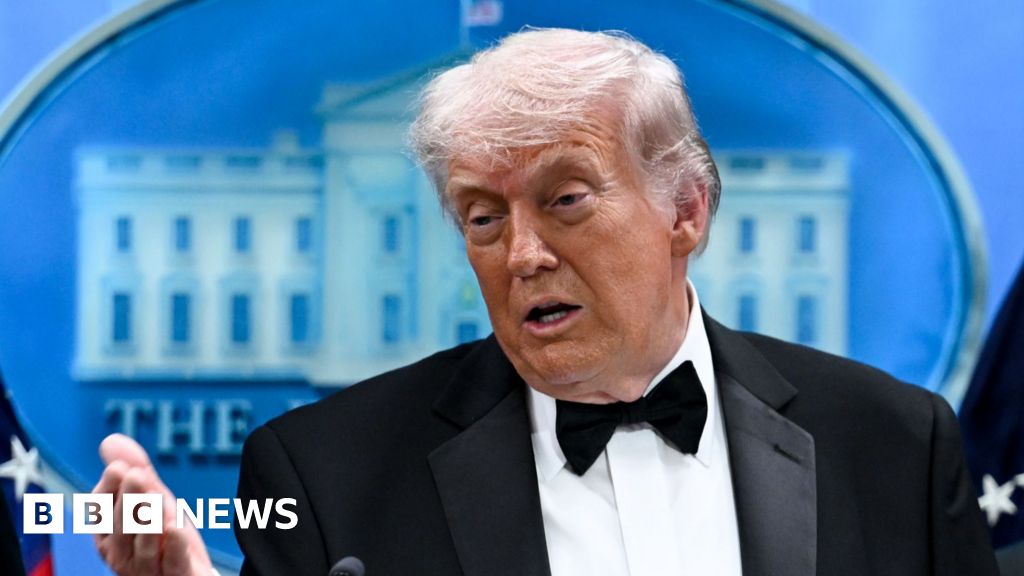
President Trump announced his death on Truth Social, writing that Mr. Khamenei “is dead.”
A revolutionary from the start
Mr. Khamenei’s rise to power began with the 1979 Iranian Revolution. He served as defense minister and supervised the Islamic Revolutionary Guard Corps before being elected president in 1981 — a campaign he waged despite an assassination attempt that left his right arm permanently immobilized.
He ascended to the position of supreme leader in 1989 following the death of revolutionary founder Ayatollah Ruhollah Khomeini and would hold that title for the next 37 years.
Consolidating control
As supreme leader, Mr. Khamenei commanded the armed forces, the elite Revolutionary Guard and state-run media. He oversaw Iran’s judiciary, effectively controlled the council that vetted electoral candidates and held veto power over parliamentary decisions, according to the U.S. Institute of Peace. He also had broad discretion over how the country spent revenue from some of the world’s largest oil reserves.
He used that authority to suppress dissent. In 1999, he cracked down on student demonstrations, resulting in at least one death and 1,500 arrests. He suppressed protests over the disputed 2009 presidential election and the 2022 uprising following the death of Mahsa Amini, who had been accused of wearing a headscarf incorrectly. Most recently, reports indicate regime forces may have killed between 7,000 and 30,000 Iranians protesting economic conditions — though exact figures remain unclear. He also ordered internet blackouts during periods of unrest.
Foreign policy stance
Mr. Khamenei made opposition to the United States and Israel central pillars of his foreign policy. He backed the region’s so-called “axis of resistance,” supporting proxy groups throughout the Middle East, and was described as a longtime U.S. adversary in a congressional report.
When the Trump administration struck Iran’s nuclear facilities, Mr. Khamenei responded by launching missiles at a U.S. military base in Qatar. There were no casualties. He later posted a photo of a burning American flag on X with the caption: “We will not surrender to anyone’s aggression. This is the logic of the Iranian nation.”
He had warned Mr. Trump that any American military aggression would trigger “a regional war,” stating that “the Iranian nation will deal a heavy blow” to any attacker.
What comes next?
Mr. Khamenei’s death throws Iran’s succession into immediate question. The Iranian Foreign Ministry initially claimed the 86-year-old leader was “safe and sound,” but Reuters reported his body had been found, citing a senior Israeli official. Mr. Trump subsequently confirmed his death.
Israeli Prime Minister Benjamin Netanyahu called on the Iranian people to seize a “once-in-a-generation opportunity” to overthrow the regime. Iran’s exiled former Crown Prince Reza Pahlavi echoed that call, urging Iranian security forces to facilitate a stable transition.
Iranian Foreign Ministry spokesperson Esmail Baghaei said the government remains functional, stating, “It is not a one-man ruler. Everything is being done in accordance with our plans.”
This article is written with the assistance of generative artificial intelligence based solely on Washington Times original reporting and wire services. For more information, please read our AI policy or contact Steve Fink, Director of Artificial Intelligence, at sfink@washingtontimes.com
The Washington Times AI Ethics Newsroom Committee can be reached at aispotlight@washingtontimes.com.