
Some of the most impactful players in the nation found new homes this season via the transfer portal. From Ta’Niya Latson at South Carolina to Gianna Kneepkens at UCLA, the shape of the title battle is being shaped by transfers.
Not every portal addition has actually worked out, however. Across the women’s college basketball landscape, key players that teams expected they’d be able to count on have instead faltered in their new homes. It happens — not every player is a great fit in every scheme — but it’s difficult for a team to be a true contender when it strikes out on its transfer portal additions.
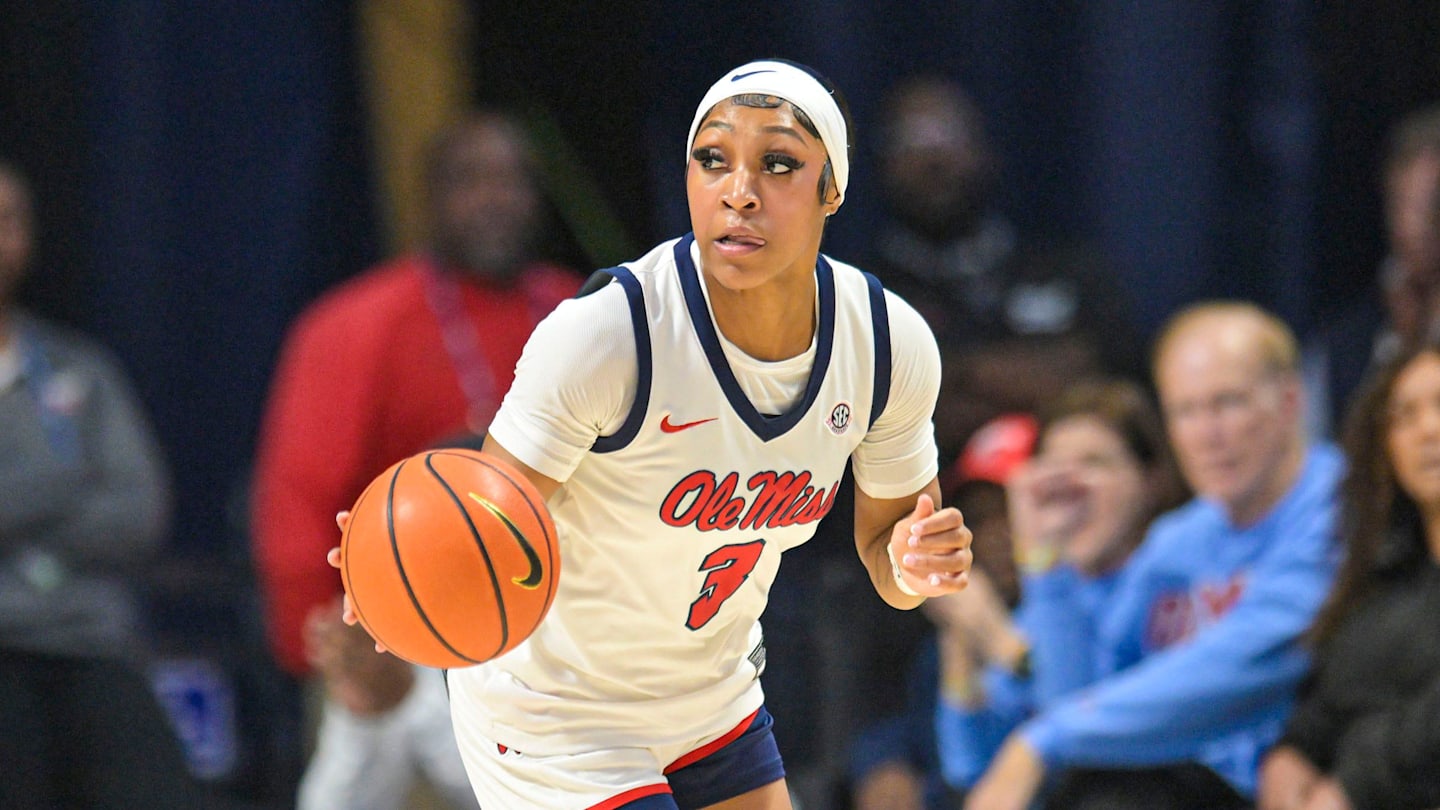
Kaitlin Peterson: Ole Miss
I loved what Ole Miss did in the transfer portal this past offseason, in large part because I viewed the addition of UCF guard Kaitlin Peterson as one of the most underrated moves in college basketball. Peterson was a high-volume scorer for the Knights, and I really thought she’d thrive in a lower-usage role. The numbers speak for themselves, though.
|
MPG |
PPG |
FGA |
|
|---|---|---|---|
|
2024-25 (UCF) |
36.2 |
21.4 |
18.6 |
|
2025-26 (Ole Miss) |
16.1 |
4.4 |
4.1 |
This goes beyond being, like, a bad scheme fit or something. Peterson has been a complete disaster as far as scoring goes. She averaged 21.4 points per game last season, her second consecutive season over the 20-point mark. This season, her season-high is 12 points, and she’s scored in double figures just twice in conference play while scoring zero points in four conference games.
So, what’s going on? Part of it is attributable to the fact that Peterson just can’t be a ball-dominant player on a roster like this. UCF had no one else, so Peterson ended up second in the nation in field goal attempts per game last season. Volume hid the fact that she was also one of the nation’s worst shooters, connecting on just 39.8 percent of her looks. The idea that she’d be more efficient in a different role was a good idea in theory, but the reality is simply that Peterson isn’t a consistent shooter, and it actually had nothing to do with her role at UCF. On a roster with so many other scoring options, it makes sense that the Rebels aren’t putting the ball in Peterson’s hands.
Sa’Myah Smith: Virginia
Recovery from a knee injury cost Sa’Myah Smith most of Virginia’s non-conference games, but the former LSU Tiger has returned to the court now, playing 14 games for the Cavaliers. Her on-court production, though, has been very off.
Smith is averaging the most minutes and field goal attempts of her career, but a 45.7 percent mark from the floor and 21.4 percent mark from 3-point range has led to her only averaging 8.5 points per game for Virginia.
What’s more, the Cavaliers have been worse on both ends of the floor with Smith on the court. The team’s net rating drops 7.5 points when Smith is out there.
Yuting Deng: Baylor
There have been some good moments from Yuting Deng this season, like when she put up 22 points in a one-point loss to Texas Tech. Unfortunately, those good moments are growing further and further apart.
Deng has now gone nine games in a row without scoring in double figures. She’s barely even in the rotation right now, much less playing a key role in it. In a six-point win over Cincinnati, for example, Deng played just three minutes, going 0-for-2 from the floor.
|
PPG |
RPG |
|
|---|---|---|
|
2024-25 (Auburn) |
11.8 |
2.5 |
|
2025-26 (Baylor) |
6.9 |
1.7 |
Looking at her numbers from her 12-game sample with Auburn last season, Deng seemed like a player who definitely possessed the ability to break out this season, but that hasn’t come close to materializing.
Jersey Wolfenbarger: Tennessee
It’s been a long journey for Jersey Wolfenbarger, the No. 7 overall player in ESPN’s 2021 recruiting class. But while players ahead of her like Azzi Fudd and Saniya Rivers have found success, Wolfenbarger has bounced around, failing at any stop to find success.
As a freshman at Arkansas, Wolfenbarger averaged 7.5 points per game. She hasn’t matched that since, and this latest stop at Tennessee has been particularly rough, with Wolfenbarger averaging just 1.4 points and 1.9 rebounds per game. She returned against Missouri after being out for about a month, and promptly delivered her seventh scoreless game of the season.
Josie Gilvin: Kentucky
Josie Gilvin succeeding at Kentucky would have been one of the best stories in the nation. After making All-State First Team twice in high school, the Louisville native committed to Western Kentucky. After two uneven seasons, Gilvin made massive strides last season, averaging 13.1 points, 6.3 rebounds and 2.6 steals per game on 53.2 percent shooting. That caught the attention of the Wildcats.
But mid-major players aren’t always able to adjust to the big leagues, and that’s been the case of Gilvin as she’s struggled to even get minutes, averaging just 6.8 of them per contest. She hasn’t shot the ball well when she’s been on the floor, which has prevented her from getting additional looks. It also doesn’t help that her steal and block rates have plummeted.
Jayla Murray: Ole Miss
Ole Miss heavily invested in the transfer portal this past offseason, so while there were some definite hits, there were also multiple misses.
One of those misses is Jayla Murray, whose struggles highlight how hard it is to go from the American to the SEC. Murray averaged 12.5 points and 5.1 rebounds last season for Wichita State, but she’s struggled to see the floor in a crowded Rebels lineup this season, averaging 2.3 points in 7.4 minutes per game of action.
The thing that makes this one particularly disappointing is that Murray’s per 40 minute stats are actually a little better than they were last season in everything but scoring. She’s still a talented basketball player; it’s simply that her landing spot in the portal wasn’t a landing spot that best equipped her to be successful at a higher level. She would have been better served going to a team closer to the bottom of the SEC that could have afforded to give her the necessary minutes.
More women’s college basketball news and analysis: