
Major League Baseball takes a peculiar approach to the Home Run Derby. It always has, going back to not even staging an annual Derby until 1985, and then not showing it on live TV until 1998.
More recently, revisions to the rules — including changing the Derby format entirely multiple times — have sown more confusion and frustration among fans and participants than they have improved the event. Not to mention MLB’s inability to ensure the top sluggers always participate. As a result, as with lots of MLB things, the Derby is not as popular as it could be.
Now, in the wake of MLB modifying its association with ESPN, the Derby is moving to a different channel for the next three years starting Monday night. And it’s an odd choice of networks.
Home run derby moves to Netflix for 2026
It’s blackout time for anyone who doesn’t subscribe to the Netflix streaming service. Viewers can no longer just flip on ESPN to watch the Derby, as they could in some form since 1993. That is, unless they’re among the roughly 81 million in the U.S. who already subscribe to Netflix.
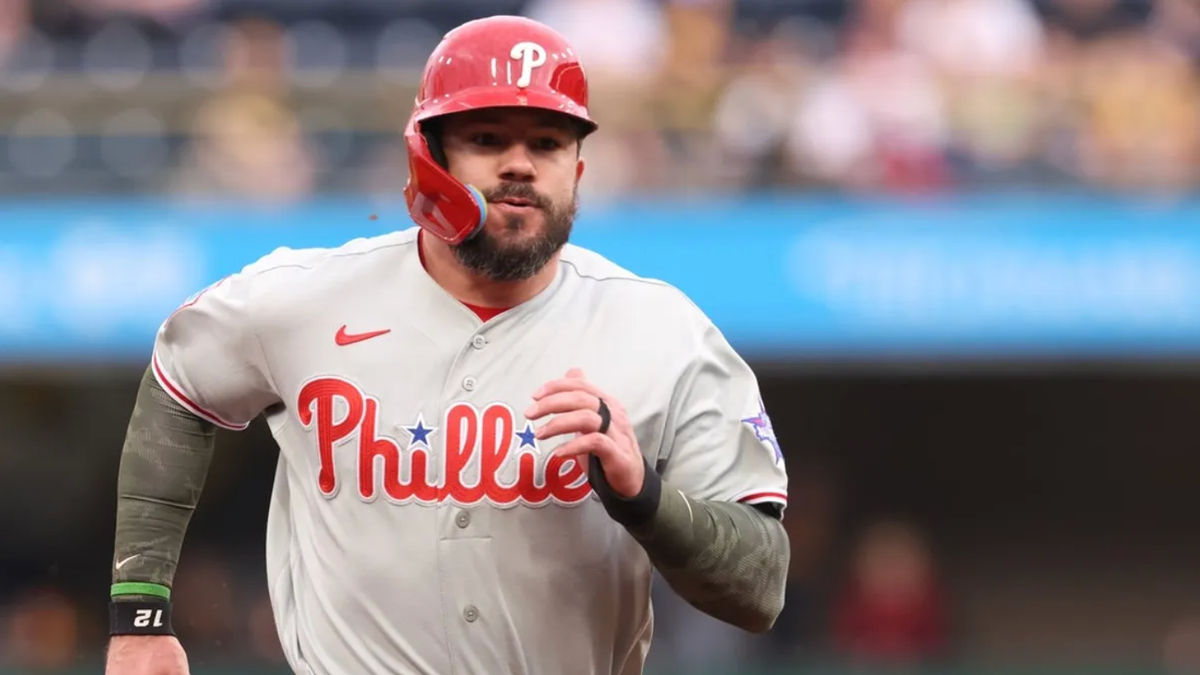
That’s right: Netflix. Home of the “Kissing Booth” trilogy. In order to watch Bryce Harper and Kyle Schwarber go deep at Citizens Bank Park, fans also have to wade into the morass of Netflix’s Hallmark Channel-inspired movies and the like. Titles which, for all we know, include “The Unlovable Archduke,” and “Slipping into a Coma for Christmas.”
While it’s true that Netflix reaches about 10 million more viewers than ESPN potentially could, they show very little in the live sports genre. Netflix could improve on ESPN’s broadcast aesthetic, we’ll see. The Derby show has needed a makeover. Regardless, most Netflixers watch for the Adam Sandler and Millie Bobby Brown content, not to see dudes launch dingers.
The cheapest Netflix subscription costs $8.99 a month, which isn’t prohibitively expensive for most customers, but that’s not the entire point. In addition to the expense, no matter how nominal, it’s the presumption and imposition of being made to add yet another streaming service. TV watchers in general, and sports fans in particular, understand how things work nowadays with streaming. You need, like, six subscriptions to cover the entire MLB season. Making all of that happen is part of the cost of being able to watch.
And before anyone says “free trial,” those do not exist with Netflix in the U.S., aside from a deal cut with T-Mobile — which, oh my gosh, happens to be an MLB “broadcast partner,” how fortunate. MLB has a similar deal with T-Mobile for fans to watch MLB.tv for free. That’s great, and not insignificant, as long as that’s how you want to use the phone.
The Derby is a relatively big draw compared to nationally televised regular-season games, but it ranks a distant third in ratings behind the World Series and the All-Star Game. Regardless, recent viewership of any all-star event, in every U.S. sport, is trending downward. Stagnating ratings is one reason MLB seems willing to experiment here — for the short-term Netflix investment. Raising short-term cash at the expense of everything else is a recurring tactic in commissioner Rob Manfred’s league.
Adding a new channel in this case is not like Peacock and Apple TV, which include recurring MLB programming. It’s hard to imagine even hardcore MLB fans without Netflix scratching that itch one more time and hitting “subscribe” just for a one-off Derby. How many will do it? Thousands? Hundreds? Dozens? A few Munetaka Murakami fans in Japan who let their Netflix subscriptions lapse once the World Baseball Classic ended in March?
With moves like this, MLB seems neither to be growing the game with new viewers nor doing its best to retain current ones.