
TORONTO — The limitations on the Toronto Blue Jays resulting from their World Series run in 2025 and subsequent signing of Dylan Cease in free agency will test their creativity in this year’s MLB draft, which begins Saturday and runs through Sunday.
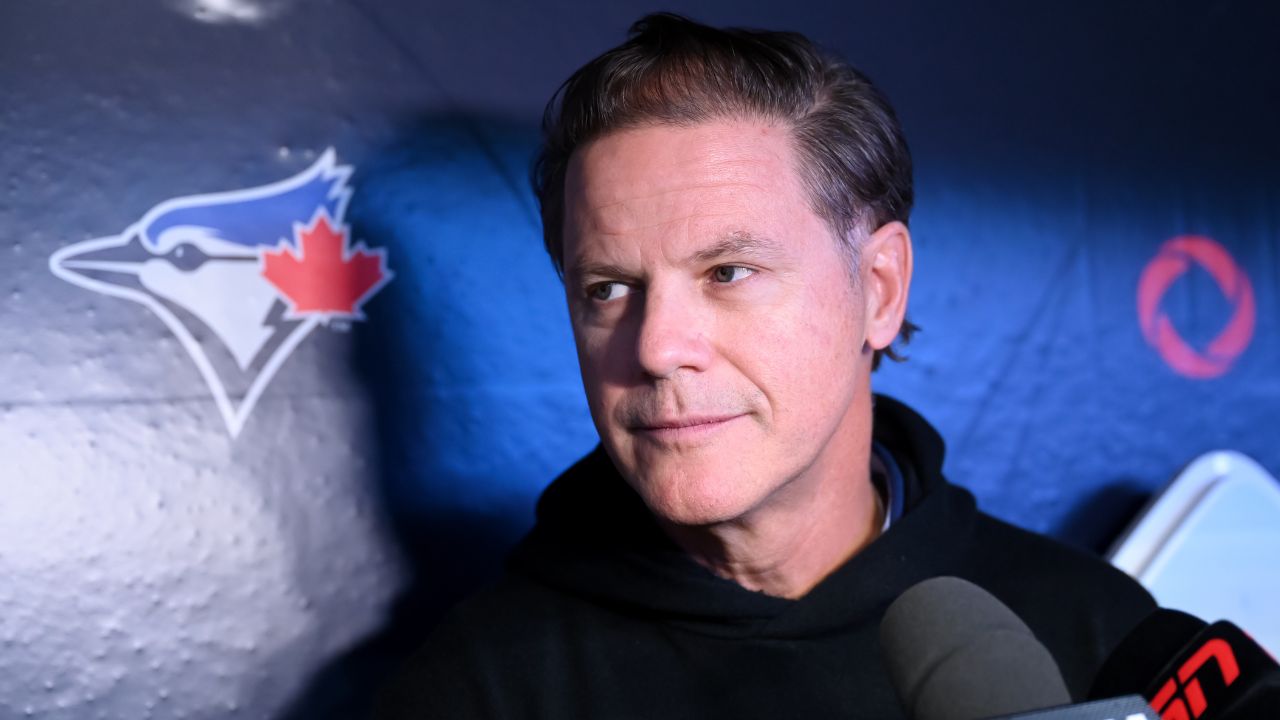
Amateur scouting director Marc Tramuta’s first selection comes at No. 39, as the club’s first-rounder was dropped 10 spots because last year’s payroll exceeded the Competitive Balance Tax’s second spending threshold.
Due to the qualifying offer extended by the San Diego Padres, Cease’s addition on a $210-million, seven-year deal also cost the Blue Jays both their second-round pick and the compensation pick after the fourth round they would have received for Bo Bichette’s departure, slated to have been their fifth-highest selection. (They also forfeit $1 million from their international bonus pool next January.)
As a result, the Blue Jays are working with the second-smallest signing bonus pool in the draft at $5,543,100 — only the Los Angeles Dodgers have less at $3,951,900 — while they have only four picks in the first five rounds: 39, 103, 131 and 164.
That matters because the odds of selecting a future big-leaguer fall off dramatically beyond the first five rounds — of the 722 players on opening-day rosters selected in the draft this season, 445 (or 61.6 per cent of players) were taken within the first 150 selections.
With the Pittsburgh Pirates ($19,130,700), Tampa Bay Rays ($19,009,300) and Chicago White Sox ($17,592,100) armed with bonus pools three to four times larger, the Blue Jays must decide whether to load up for one or two big swings or spread the wealth.
“Because they have a little, so to speak, leverage, and they can go to school and there’s NIL money now, the challenge is in how many bullets do you have for high-school players,” said Tramuta. “Generally, they’re going to ask for a minimum of seven figures, sometimes two million, sometimes three million. … So how do you manoeuvre around that first pick? Is it a college player? Is it someone that you are saving money on and you can spend the money later in the draft? We’re trying to go through strategies right now on how we want to balance that process, if we go college or go high school. …
“I don’t want to give away a strategy, but it’s probably difficult to say I’m going to take more than a couple high-school players, just given the size of the bonus pool,” Tramuta continued. “Now, we can do that. But that’s all part of the strategy. But is it going to be five of the elite high school players? We just don’t have the money for what they’re asking. … That’s not going to take us out of the market on anybody. It just might not be the volume that we did last year.”
With the No. 8 pick last year, the Blue Jays gave first-rounder JoJo Parker nearly $6.2 million and made another seven-figure play for Blaine Bullard at just under $1.7 million after he slipped to the 12th round.
Both are starring at low-A Dunedin right now, while the Blue Jays added a third pricey prep player in Canadian infielder Tim Piasentin at nearly $750,000 in the fifth round.
Tramuta will be forced to try and do more with less this time around.
Other things to know heading into the draft:
The White Sox hold the first overall pick, followed by the Rays, Minnesota Twins, San Francisco Giants and Pirates, and because the Blue Jays don’t pick until 39, they didn’t spend too much time scouting the very top of this year’s class.
Instead, they locked in on a group of 10-12 players they expect to be available when their first turn comes up, feeling there’s depth in both college and high school arms as well as college bats, but less so among prep position players.
“We’ve really dug in to the pitching class, because there’s numbers, there’s volume, there’s depth there,” said Marc Tramuta. “That doesn’t mean that’s what we’re going to pick. But I think that has turned out to be somewhat of the strength of the class. And there are always college hitters that come on as they did this year and rise from maybe a pre-season fifth-rounder to now a second-rounder and so on. But that’s generally what we think are the strengths and weaknesses of the class.”
A focus for the Blue Jays in recent drafts has been utilizing player-development staff more in the pre-draft process, and for the first time this season, farm director Joe Sclafani, pitching director Justin Lehr and hitting director Craig Parry joined scouting staff at the recent MLB draft combine and helped interview roughly 50 candidates.
The idea is to factor in how staff would approach developing a player’s skills into the evaluation process. That helps both with how players are ranked and what happens once they get into the system.
“We’ve gotten better year over year over year, but this is the most exciting, the most advanced approach we’ve had to it so far,” said Sclafani. “That connection is a big part of us making a difference, and those guys are doing an incredible job of giving us a head start with the opportunities we have in development.”
Several of the college pitchers the Blue Jays interviewed at the combine asked about the unique progression of Trey Yesavage, something the right-hander selected 20th overall in 2024 was excited to hear.
“I hope a lot of future big-leaguers can do the same thing I did,” said Yesavage. “I had a conversation about (getting to the big leagues so quickly) and was asked if I got moved too fast or whatever. I said no. You get thrown in the situation and either come out on top or you adjust to be at your best in the situation. So I think it’s not a bad thing to move too fast if the guys go out and play.”
The Blue Jays obviously agree, but told the pitchers they met with that “obviously what he did, to only throw so many innings in the minor leagues and then get to the big leagues and start in the World Series, that’s certainly an outlier,” said Tramuta.
“They want to get there as quickly as they can, but we want to make sure they’re ready,” he continued. “It seems as though Major League Baseball and farm systems are being a little bit more aggressive in pushing players up levels, so they’re getting there a little bit quicker than maybe they used to. … But I think what they’re more concerned with is how are we going to develop them from the start of their career, not necessarily when they’re going to get there.”
The Blue Jays met with lefty Sean Duncan of Port Coquitlam, B.C., and infielder Elliot Lascelles of Toronto — two of the top Canadians available in the draft — during the combine, and both were described as impressive.
They’re part of a strong Canadian class that also includes Indiana State outfielder Carter Beck of Candruff, Sask., infielder Robert Omidi of Mississauga, Ont., and infielder Taj Marchand, who was born in Charleston, S.C., to Canadian father Hugo Marchand, a Montrealer drafted in the seventh round by the Toronto Maple Leafs in 1997.