
The MLB Draft gives teams an opportunity to revamp their farm systems and select players who can help them win games for years to come. Unfortunately, whether you’re picking first or last, there’s no such thing as batting 1.000 in what is the most difficult draft among the four major sports. Even guys who are seen as “can’t-miss” sometimes, well, miss.
For every Paul Skenes, there’s a bust just as big. These are the most significant busts in the history of all 30 MLB teams — here’s hoping this year’s edition goes a bit better.
Arizona Diamondbacks: INF Corey Myers
- Draft: 1999 (No. 4 overall)
- Highest level: Triple-A
Sure, Corey Myers was seen as a reach by most evaluators at the time when the Arizona Diamondbacks used the No. 4 pick on him in the 1999 MLB Draft, but he was a local product with a good amount of upside … or so they thought. Myers was drafted as a shortstop but couldn’t stick there. He was moved all around the diamond and had some good offensive years in the Minors, but never quite put it all together to get a shot in the Majors. He spent nine years in the Minors, the last two of which came with the Angels, before eventually calling it quits after the 2007 campaign.
Athletics: OF Kyler Murray

- Draft: 2018 (No. 9 overall)
- Highest level: NFL
Yes, this is that Kyler Murray. The Athletics used a top-10 selection on Murray, a player who’d then enter his name into the NFL Draft and get selected with the No. 1 overall pick by the Arizona Cardinals. Murray’s NFL career has had its ups and downs, but the money he’s made in that league suggests he made the right career decision. The A’s still hope to see him don the green and gold at some point, but I wouldn’t get hopes up.
Atlanta Braves: RHP Carter Stewart
- Draft: 2018 (No. 8 overall)
- Highest level: Japan
Speaking of top-10 picks who never appeared in a game for the organization that drafted them, Carter Stewart never played with the Atlanta Braves organization after they selected him with the No. 8 overall pick in 2018. The reason for this came down to Stewart’s refusal to sign with Atlanta after being drafted. The Braves were set on offering him a below-slot deal due to injury concerns, and Stewart would have none of it. He’s had a solid run in Japan for the Fukuoka Softbank Hawks, but this clearly isn’t what Atlanta envisioned when they used a high pick on him.
Baltimore Orioles: 3B Billy Rowell
- Draft: 2006 (No. 9 overall)
- Highest level: Double-A
Billy Rowell had the tools to be a special player, which is why the Baltimore Orioles used the No. 9 overall selection on him in the 2006 MLB Draft. His career got off to a roaring start in the lower levels, but once he got to High-A, a severe plate discipline issue was exposed. His numbers took a nosedive from there, and while he’d get a shot in Double-A after three brutal years in High-A, he didn’t hit at that level either. Eventually, the O’s cut their losses. Knowing that Tim Lincecum and Max Scherzer were the next two selections only makes the Rowell pick sting even more.
Boston Red Sox: LHP Trey Ball

- Draft: 2013 (No. 7 overall)
- Highest level: Double-A
The Boston Red Sox made Trey Ball the first left-handed pitcher to be selected in the 2013 MLB Draft. Unfortunately, that selection never looked good from the start: He never finished a Minor League season with an ERA lower than 3.84, and that was in his second year in High-A, four years after he was drafted. Boston hoped a move to the bullpen would help, but as his 7.58 ERA as a full-time reliever in Double-A would indicate, that didn’t work either. Ball wound up electing free agency after that 2018 season and never played another game of professional baseball.
Chicago Cubs: SS/2B Ed Howard
- Draft: 2020 (No. 16 overall)
- Highest level: Triple-A
Perhaps this is unfair, as Ed Howard is still in the Chicago Cubs’ organization, so technically he has time to figure it out. But it’s not looking good: He’s hitting .188 with a .522 OPS in Double-A this season, and has hit .213 with a .554 OPS in six seasons overall. He’s missed significant time due to injuries and hasn’t hit well enough to even warrant a look in the Majors. He’s only 24 years old, and the Cubs trading for the guy they should’ve selected with this pick, Pete Crow-Armstrong, makes it feel a bit better, but yeah, those are really the only positives I can point out.
Chicago White Sox: OF Courtney Hawkins

- Draft: 2012 (No. 13 overall)
- Highest level: Triple-A
Courtney Hawkins was as athletic as anybody in the 2012 MLB Draft, and the backflip he did immediately after being chosen proved as much. His career got off to a hot start, giving Chicago White Sox fans hope that they had drafted the next great five-tool outfielder, but he was striking out a ton and not getting on base much at all in Double-A, stagnating at that level for several years before eventually being released. He made it to Triple-A with the Cincinnati Reds a year later, but never made it to the Majors.
Cincinnati Reds: RHP Chris Gruler
- Draft: 2002 (No. 3 overall)
- Highest level: Single-A
Chris Gruler’s struggles weren’t entirely his fault, as his professional career was ravaged by injuries after the Cincinnati Reds used a top-three selection on him in 2002. But he appeared in 27 Minor League games with an ERA over 5.00 in parts of four seasons in the Reds organization. A top-three selection being out of the league in just five years is practically unheard of, making him the easy choice here.
Cleveland Guardians: LHP Brady Aiken
- Draft: 2015 (No. 17 overall)
- Highest level: Single-A
Brady Aiken is best known for refusing to sign with the Astros after they selected him with the No. 1 overall pick in 2014, but even after that whole saga unfolded, the Cleveland Guardians still used a first-round pick on him a year later. Sure enough, the Astros’ medical concerns were realized, as he underwent Tommy John surgery before the 2015 draft and finished his Minor League career with a 5.18 ERA in 179 innings, never even getting beyond Single-A.
Colorado Rockies: RHP Greg Reynolds

- Draft: 2006 (No. 2 overall)
- Highest level: MLB
Greg Reynolds is the first player on this list fortunate enough to have appeared in a big-league game, but a 7.47 ERA in parts of two seasons with the Colorado Rockies and a 7.01 ERA in 33 appearances overall isn’t exactly noteworthy — especially for a guy selected No. 2 overall back in 2006. The Rockies, an organization that’s always been starved for pitching, selected Reynolds over the likes of Andrew Miller, Clayton Kershaw, Tim Lincecum and Max Scherzer (not to mention the fact that Evan Longoria went No. 3 overall in that same draft). Not great.
Detroit Tigers: RHP Matt Anderson
- Draft: 1997 (No. 1 overall)
- Highest level: MLB
Part of why the Matt Anderson selection is the worst in Detroit Tigers history is that it never made any sense. Under no circumstances does it make sense to select a reliever with the No. 1 overall pick, even one as talented as Anderson, who could hit triple digits with his fastball. The fact that it didn’t work out only makes the pick worse. Anderson rose through the Minors quickly and debuted with Detroit in 1998. He actually pitched well for them in 42 appearances that season, but he could never replicate that magic again. A few years later, Anderson suffered an injury many believe was caused by participation in an octopus-throwing contest, and he was out of baseball just three years later.
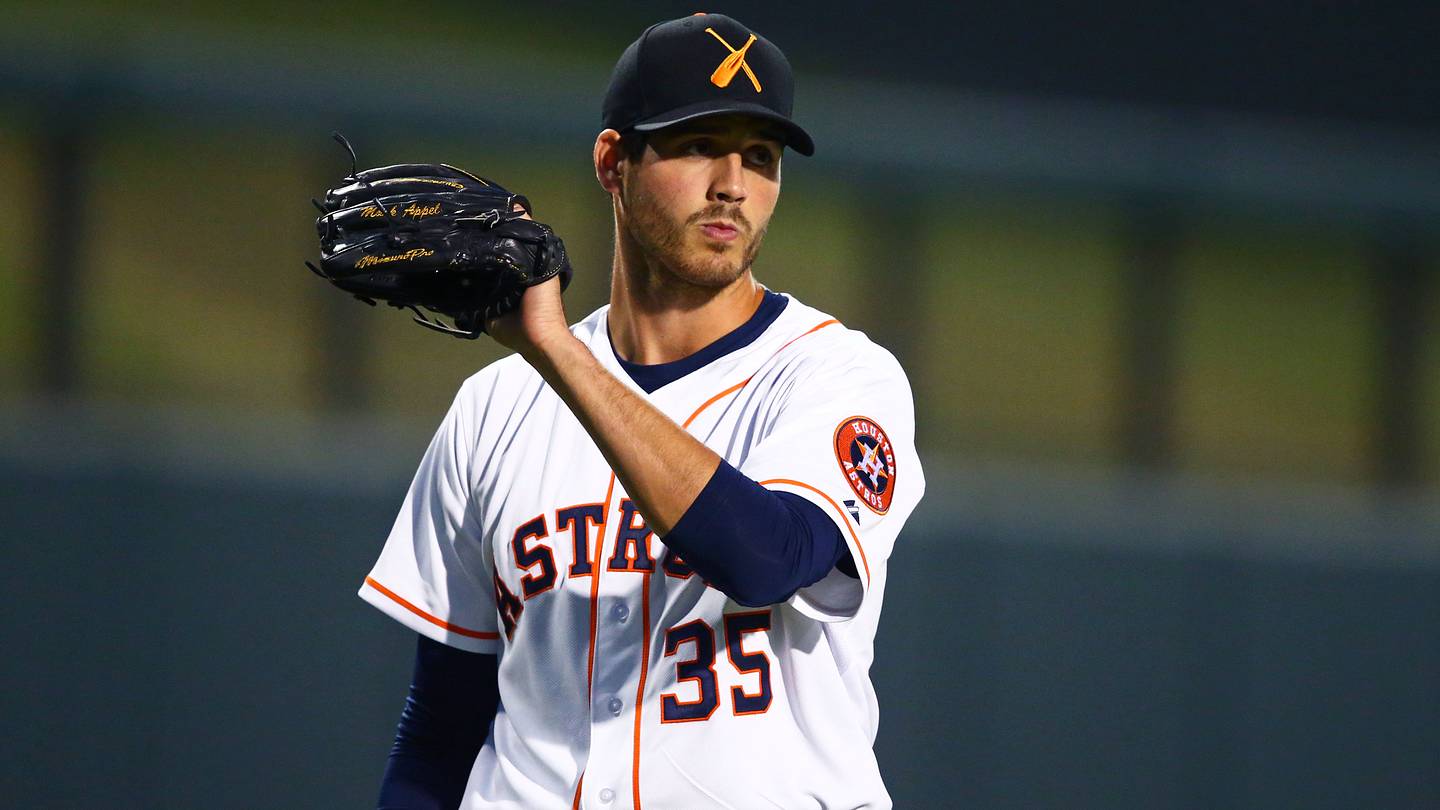
Houston Astros: RHP Mark Appel
- Draft: 2013 (No. 1 overall)
- Highest level: MLB
The aforementioned Aiken debacle could easily be here, but why not highlight a pitcher selected No. 1 overall who actually did sign with Houston in Mark Appel? The Astros made Appel the centerpiece of their prolonged rebuild, and he sure seemed to have ace upside. It never panned out, though, as he struggled mightily in the minor leagues, never making it past Triple-A with Houston before being traded to the Phillies in a deal that returned Ken Giles. Appel would eventually pitch in a few games for the Phillies in 2022, doing so after a short retirement stint — which is impressive. But Houston certainly had higher hopes than what it got from this right-hander.
Kansas City Royals: LHP Asa Lacy

- Draft: 2020 (No. 4 overall)
- Highest level: Double-A
Many evaluators thought the Kansas City Royals had gotten a steal by getting to select Asa Lacy with the No. 4 overall pick in the 2020 MLB Draft. It turned out to be anything but, though. The southpaw had an ERA over 7.00 in 29 Minor League appearances across parts of two seasons. That’s it; injuries derailed him to the point where he hadn’t pitched for several years until the Royals finally gave up and released him this April.
Los Angeles Angels: C Danny Goodwin
- Draft: 1975 (No. 1 overall)
- Highest level: MLB
Danny Goodwin has the unique honor of being selected with the No. 1 overall pick twice. He turned the Chicago White Sox down in 1971 but did sign with the Los Angeles Angels. The Halos would do it all over again if they had a mulligan: Goodwin appeared in just 63 games with the team in parts of three seasons, posting a .656 OPS and -0.1 bWAR. Yes, a player who was selected No. 1 overall twice was worse than replacement level with the team he began his MLB career with. He wasn’t any better with the Twins or Athletics, either.
Los Angeles Dodgers: RHP Bill Bene
- Draft: 1988 (No. 5 overall)
- Highest level: Triple-A
Bill Bene’s stuff was good enough for the Los Angeles Dodgers to make him a top -ive pick in the 1988 MLB Draft, but his command was never good enough to realize that potential. He pitched 445 Minor LEague innings and issued a whopping 489 walks — that’s over one walk per inning. He struck out nearly a batter an inning, but that’s pretty irrelevant when throwing strikes was such a chore for this right-hander. While the Dodgers gave him nine appearances in Triple-A, he never made it to the Majors, which is a major shame for a guy selected as highly as he was.
Miami Marlins: RHP Tyler Kolek
- Draft: 2014 (No. 2 overall)
- Highest level: Single-A
Tyler Kolek had electric stuff, headlined by a fastball that could hit triple digits, but he never developed secondary offerings or improved his command while dealing with injuries. The result was a pitcher who posted a 5.66 ERA in parts of five Minor League seasons while making only 64 appearances and 39 starts. He never made it beyond Single-A as a No. 2 overall selection.
Milwaukee Brewers: 3B Tommy Bianco
- Draft: 1971 (No. 3 overall)
- Highest level: MLB
Tommy Bianco never had such great Minor League numbers despite being selected No. 3 overall in the 1971 MLB Draft by the Milwaukee Brewers, and while he did receive a call-up to the Majors, going 6-for-34 in 18 games of experience isn’t much to write home about — especially for a player who was as highly touted as he was. Future stars like Frank Tanana (three-time All-Star) and Hall of Famer Jim Rice being selected later in the first round only makes this pick look worse for the Brewers.
Minnesota Twins: RHP Adam Johnson
- Draft: 2000 (No. 2 overall)
- Highest level: MLB
The Minnesota Twins made Adam Johnson the first pitcher selected in the 2000 MLB Draft in a decision they’d like to have back. Johnson was never stellar in the Minors, yet he earned a fairly early call-up to the Majors in 2001, just a year after he was drafted. He had an 8.28 ERA in seven appearances, and then allowed eight runs (seven earned) in 1.1 innings across two big-league appearances two years later. That was it. He had an underwhelming Minor League career, and he had a big-league ERA of over 10.00 in nine appearances. That’s not great, especially for a top-two pick.
New York Mets: C Steven Chilcott
- Draft: 1966 (No. 1 overall)
- Highest level: Triple-A
It’s one thing to be a top pick and never fare well in the Majors, and it’s another to not even make it there at all. Yes, injuries were a factor for Steven Chilcott, who was never the same after suffering the first of many shoulder injuries a year after getting drafted. But only playing a handful of games at the Triple-A level for a New York Mets franchise that was not good at all at the time he was drafted is not a good look. They desperately needed this pick to work out, and Chilcott not even getting to the Majors made him one of the biggest draft busts ever.
New York Yankees: LHP Brien Taylor
- Draft: 1991 (No. 1 overall)
- Highest level: Double-A
Speaking of No. 1 overall picks that never made it to the Majors, Brien Taylor never even made it past Double-A. As was the case with Chilcott, injuries impacted him greatly, as his professional career got off to a great start before a shoulder injury suffered in a 1993 bar fight caused him to never quite be the same on the mound. He completely lost his command, and his velocity went with it. Taylor went from one of the most hyped pitching prospects ever to a bust that missed out on contributing for a New York Yankees team that dominated the late 1990s.
Philadelphia Phillies: OF Mickey Moniak

- Draft: 2016 (No. 1 overall)
- Highest level: MLB
Mickey Moniak might be a budding star with the Colorado Rockies, but the Rockies weren’t the team that drafted him. The Philadelphia Phillies were the team that made him the No. 1 overall pick in the 2016 MLB Draft only to watch him hit .129 with -0.8 bWAR in parts of three seasons. They wound up trading him for a couple of months of a diminished Noah Syndergaard at the 2022 trade deadline rather than giving him more time to turn things around. It’s good to see him thriving with the Rockies, but that doesn’t make this a good pick for Philly.
Pittsburgh Pirates: RHP Bryan Bullington
- Draft: 2002 (No. 1 overall)
- Highest level: MLB
The Pittsburgh Pirates selected Bryan Bullington with the No. 1 overall selection of the 2002 MLB Draft because they felt they had a better chance of signing him than some of the other players they were considering. His Minor League career with Pittsburgh wasn’t anything special, and he had a 5.89 ERA in 18.1 innings of work in the Majors across parts of two seasons before eventually being DFA’d. This was doomed from the start.
San Diego Padres: SS/RHP Matt Bush
- Draft: 2004 (No. 1 overall)
- Highest level: MLB
The San Diego Padres selected Matt Bush as a shortstop with the No. 1 overall pick in 2004, one spot ahead of Justin Verlander. He never hit much with San Diego in the Minor League, and his career took a major turn for the worse when he was handed a 51-month prison sentence for hitting a motorcyclist while under the influence. He’d make a comeback with the Rangers as a pitcher and even pitched well in the Majors for them, but his Padres tenure was nothing but a major disappointment.
San Francisco Giants: C Joey Bart

- Draft: 2018 (No. 2 overall)
- Highest level: MLB
Joey Bart was seen as Buster Posey’s heir apparent when the San Francisco Giants used the No. 2 overall selection in the 2018 MLB Draft on him, and it’s safe to say things never worked out. Bart had some pretty good years in the Minors, but that production never translated to the Majors, as his .623 OPS in parts of four seasons would indicate. It looked like he was turning things around as soon as the Giants gave up on him with the Pirates, but he’s turned into nothing more than a backup catcher at best.
Seattle Mariners: LHP Danny Hultzen
- Draft: 2011 (No. 2 overall)
- Highest level: MLB
Danny Hultzen wasn’t quite Gerrit Cole, who went No. 1 overall in the 2011 MLB Draft, but he was an exciting prospect, which is why the Seattle Mariners took him with the next pick. Unfortunately, he could never stay healthy, suffering a couple of major shoulder injuries that impacted his ability to get to the Majors with Seattle. He did wind up throwing 3.1 innings of shutout ball with the Chicago Cubs eight years after he was drafted, but that isn’t exactly what Seattle had in mind when they chose to select him over the likes of Anthony Rendon, Francisco Lindor and George Springer.
St. Louis Cardinals: OF Paul Coleman
- Draft: 1989 (No. 6 overall)
- Highest level: Double-A
The St. Louis Cardinals selected Paul Coleman with the No. 6 overall pick in the 1989 MLB Draft, just one spot ahead of future Hall of Famer Frank Thomas. Woof. Coleman had a .617 OPS in parts of five Minor League seasons in the Cardinals organization before calling it quits. He never got past Double-A. He did make a comeback in indy ball three years after retiring and actually played well, but that 1996 season was ultimately his last in the pro ranks.
Tampa Bay Rays: OF Josh Hamilton
- Draft: 1999 (No. 1 overall)
- Highest level: MLB
Josh Hamilton was a player Tampa Bay Rays fans hoped would be the face of their franchise for years to come. He certainly had the talent for it, and seemed to be on his way to being a star for the Rays before suffering his first of many setbacks. Hamilton was injured in a car crash, and that eventually led to a drug addiction. We saw glimpses of what he could be with the Texas Rangers, where he even won an MVP award, but he never played a big-league game for the Rays — which is not what you want from a No. 1 overall selection.
Texas Rangers: OF Donald Harris
- Draft: 1989 (No. 5 overall)
- Highest level: MLB
Kyler Murray chose the NFL over baseball and likely made the right decision. Donald Harris did the opposite, choosing baseball over the NFL, but he struggled after being selected No. 5 overall in the 1989 MLB Draft — two spots ahead of Frank Thomas. He hit .205 with a .530 OPS in parts of three seasons with the Texas Rangers. He attempted a move back to football in 1992, right in the middle of his short-lived big-league career, but he was cut just three weeks after signing with the Cowboys. He last played in the Majors in 1993 before eventually spending the rest of his baseball career in Triple-A and independent ball.
Toronto Blue Jays: SS Augie Schmidt
- Draft: 1982 (No. 2 overall)
- Highest level: Triple-A
The Toronto Blue Jays made Augie Schmidt the No. 2 overall selection in the 1982 draft, the same draft that consisted of legends like Dwight Gooden, Barry Larkin and … Barry Bonds. It’s one thing to not be as good as those guys, but Schmidt never even made it to the Majors. He got off to a good start right after he was drafted, but progressively got worse as the Jays attempted to move him up in their system. He lasted only three years with Toronto, never making it above Triple-A.
Washington Nationals: OF Elijah Green

- Draft: 2022 (No. 5 overall)
- Highest level: High-A
Perhaps it’s too early to make this proclamation, but Elijah Green is looking like one of the biggest busts in recent memory. The Washington Nationals used a top-five pick on him, and with the tools he has, it made sense. Unfortunately, while he crushed rookie ball, he does not have an OPS above .644 at any other level, which explains why he’s only made it to High-A. He’s still in the Nationals organization, so technically he can still turn it around, but considering he has a .680 OPS with a whopping 45.1 percent strikeout rate as a 22-year-old in High-A, I have my doubts.
More MLB news and analysis:
 Add us as a preferred source on Google