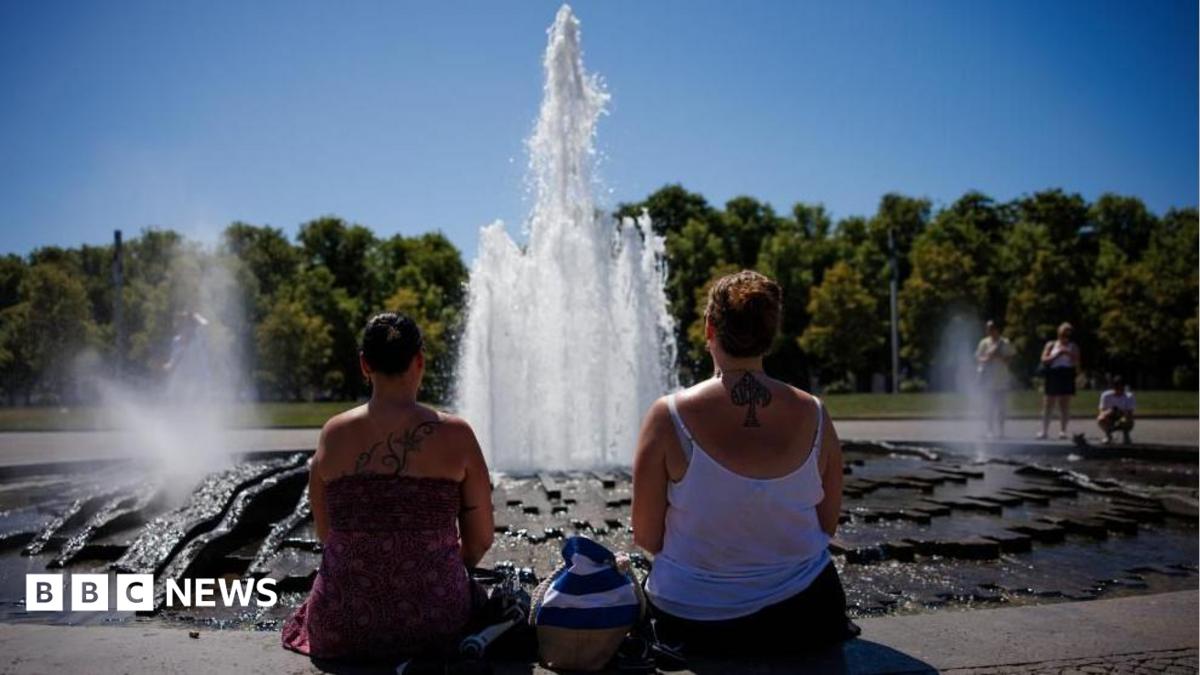

The French health minister has warned that the extreme conditions will result in additional deaths, and an emergency plan has been put in place for all hospitals in the Paris region because of “multiple tensions” in healthcare.
In Marseille, an 18-month-old child died after being found in a car in a state of hyperthermia, in the latest such episode in France in a matter of days. A three-year-old became trapped in a car in Paris on Wednesday, and two young children lost their lives in a car in the southern town of Carpentras on Monday.
The number of deaths by drowning in France since the heatwave began has risen to 55. An estimated two-thirds of them had been swimming in unsupervised areas.
Spain’s MoMo monitoring system, external for reporting temperature-related deaths has counted 327 fatalities between Sunday and Thursday that could be linked to the heat, and most of them have been recorded in the past two days.
The high temperatures have begun to subside in Spain, however a forest fire broke out north-east of Barcelona forcing 16,000 to stay in their homes on Friday morning. A man was arrested on suspicion of arson.
Little relief is expected in much of Europe over the weekend, and a glacier research team in Switzerland has warned that the heatwave is being felt in the mountains too.
The Zurich team says almost all the winter reserves built up on the glaciers are about to run out, most likely on Monday, at which point the glaciers will start melting.
That moment usually takes place in August, but Swiss researchers say the current course of glacial melting is almost as bad as in 2022, the worst year on record, when as much as 6% of the glaciers’ mass was lost.
Correction 27 June: This article has been updated to explain that the Beznau power plant was shut down on Friday, not because the temperature of water from the River Aare was too high to cool the reactors sufficiently, but because of the risk to the environment from water returned to the river after the cooling process.