
Bullet point summary by AI
- Kyle Schwarber is justifying his massive contract with the Phillies by sustaining a historic and elite home run pace well into his thirties.
- He is on pace for 64 home runs with a 56.8% Three True Outcomes rate. By pulling pitches in the air more often, he has masked slight bat speed declines.
- This shows that elite power can age gracefully. Until he hits a physical decline, Philadelphia will keep reaping the immense rewards of his explosive bat.
Keeping Kyle Schwarber was going to be expensive. Philadelphia Phillies President Dave Dombrowski didn’t care. Five years and $150 million for a 33-year-old DH who doesn’t run, doesn’t hit for average and cannot play in the field. Dombrowski stared at the camera and figuratively said again: “I do not care.”
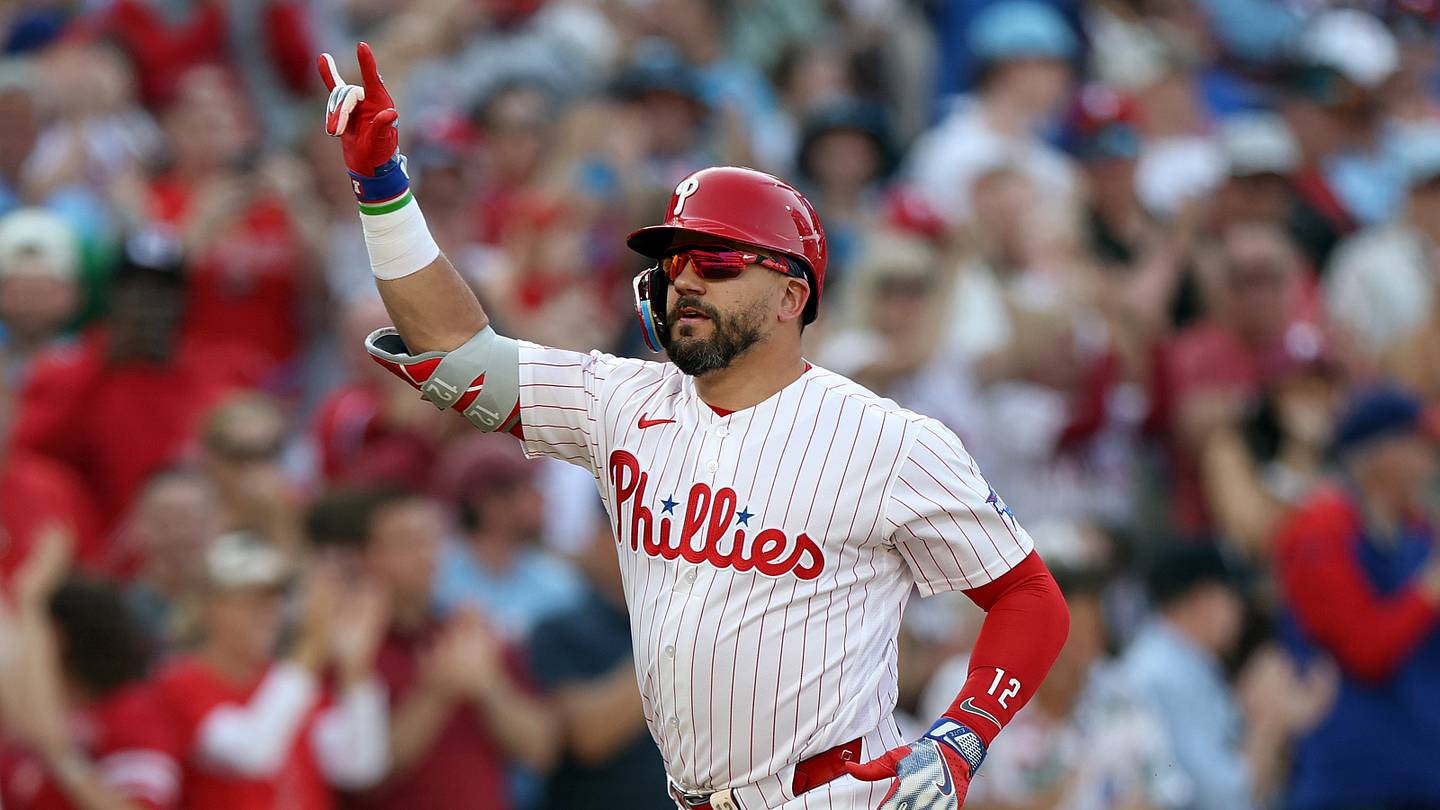
Schwarber has been a marvel this season. On pace for 64 home runs, everyone is having the best time with a contract that wouldn’t pass Theo Epstein’s “nobody ever held a press conference to celebrate the end of a long contract” test. But who cares?! Schwarber is a menacing presence in the batter’s box and is creating runs like a Sabermetrics spoof of Frankenstein in which Bill James creates Kyle Schwarber to hit the ball 500 feet every year until he’s 50. But will the party last forever?
Kyle Schwarber is worth every dollar of his $150 million contract
Obviously, no, but until Major League Baseball adopts a salary cap, it literally does not matter whether Schwarber makes $20 or $20 trillion — they pay him to hit home runs, and he is doing that at a pace we have not seen since Aaron Judge chased the American League record in 2022. While I wouldn’t expect him to top Barry Bonds’ 2001 National League record of 73 for a number of mathematical and pharmaceutical reasons, he’s loading up the best power season we’ve seen in over 20 years. So what explains such a dramatic spike?

Well, nothing, because it isn’t really a dramatic spike. Schwarber hit 56 home runs last year and now seems like a lock to smash 45 or more in four of his last five seasons. That’s … moderately insane, and it’s now looking likely that Schwarber will join the 500 home run club, a feat that seemed impossible when he showed up in Philadelphia for his age-29 season. He now only needs 140 more.
Strikeouts, walks and home runs make Kyle Schwarber special
My favorite stat for Schwarber, though, is his TTO (“three-true outcomes”) percentage, or the number of at-bats that result in either a strikeout, walk or home run, the three truly defense-independent outcomes in baseball. For his part, Schwarber is walking, striking out or hitting a home run on 56.8 percent of his plate appearances — only Munetaka Murakami is higher at a preposterous 59 percent, and both would be the highest single figure since Joey Gallo’s 58.8, during a season in which he only hit 19 home runs and batted .160. As TTO heads will tell you, it does not always mean you are good.
And Schwarber strikes out a ton; almost a third of all his at bats are strikeouts. But it doesn’t hurt the Phillies in the way it would hurt another team. He walks a lot for a power hitter (really for any hitter) and they don’t pay Schwarber to get on first, turn on the burners to maybe swipe a bag or score from first on a single — unlike Lightning McQueen, he is not speed. They pay him to swing the bat, hard, and launch more barrels than any other player in the sport. Swinging a lot means striking out a lot, but it also hopefully means a lot of home runs.

The reason not to give out contracts like that is the simple reality that average exit velocity and bat speed numbers decrease with age; they just do. Since we’ve had bat speed tracking in MLB since 2023, Schwarber’s speed has technically declined from its 2024 peak to now, but we’re talking going from 99th percentile to 97th. This isn’t Rafael Devers, whose bat speed has been inexplicably and precipitously declining since 2023.
Schwarber is pulling the ball better than ever, which bodes well for his future.
What has happened for Schwarber in the past few years, though, is a fascinating trend that exists across Major League hitting: as a player hits their mid-30s, they suddenly start pulling the ball in the air more. This is due to a number of factors, most notably experience hitting and pulling different pitches off of a wide array of pitchers, knowing what to wait for and knowing what you can crush pull-side. But I don’t think Schwarber just “learned” how to hit pull — I think his opponents made a mistake.
In 2023, understandably, opposing teams decided “let’s stop throwing Kyle Schwarber fastballs,” dropping that number from 56 percent down to 44 and giving him many more breaking balls. But unless you can really execute on those pitches, Schwarber is going to take his mammoth raw power and shove it directly into the hanging baseball you’ve just presented him. That is my hypothesis for pull-power Kyle Schwarber, who is deleting baseballs with that approach in 2026.
When will the age cliff reduce his pop? He’s not exactly a five-tool player, so any decrease in power will have major drawbacks that the Phillies will feel. But I have literally no reason to project that will happen — let’s all just enjoy the Schwarbombs while we still have them!
More MLB news and analysis:
 Add us as a preferred source on Google