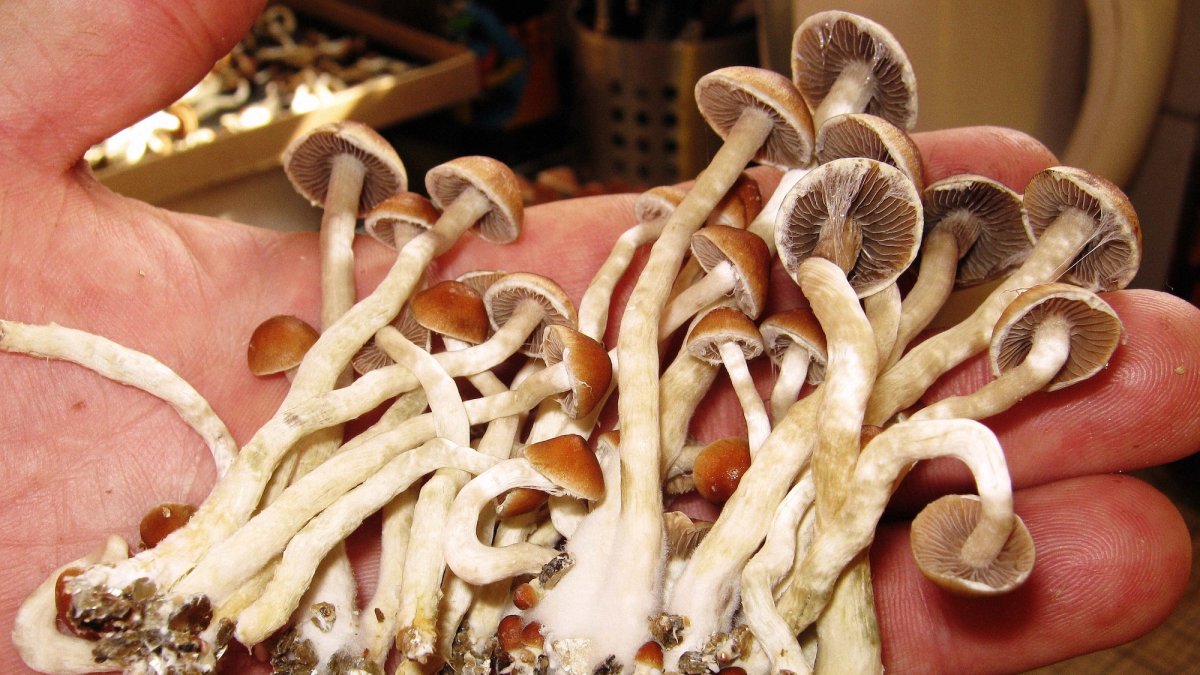

Psilocybin is the psychoactive compound that puts the “magic” in magic mushrooms. Ingest enough of a fungus like Psilocybe cubensis, and users are liable to experience sensory hallucinations, euphoria, and even altered perceptions of time. Mounting research also suggests that smaller, microdosed amounts may offer promising alternative therapeutic options for treating PTSD, depression, and even alcoholism.
But what happens when you give fish the same psychoactive ingredient? It may sound like an odd, even pointless experiment, but biological neuroscientists think the results could inform future medical and psychiatric treatments. Their evidence laid out in a study published today in the journal Frontiers in Behavioral Neuroscience suggests small levels of psilocybin ease anxiety or aggression. Or, at the very least, it calms down a notoriously mean species of fish.
The mean fish in question is the mangrove rivulus (Kryptolebias marmoratus). It is a remarkable creature found along the coast of Florida all the way to Brazil.The 1.5 to three inch amphibious fish has evolved to not only thrive in brackish waters, but survive on land for as long as two months. They’re also extremely aggressive and territorial, making them suitable for certain social and behavioral studies. And because the mangrove rivulus self-fertilizes and produces genetically identical embryos, they offer researchers conveniently uniform models.
To test how psilocybin affects the traditionally confrontational fish, a team from Nova Scotia’s Acadia University and the University of British Columbia bred three genetically distinct lines of laboratory rivulus. One group was exposed to the psychoactive compound, another essentially served as a target for their aggression, and a third was employed separately to assess psilocybin absorption and bodily concentration.
Researchers first observed the standard interactions between two fish separated by a mesh barrier in a tank. These frequently include high-energy “swimming bursts” to intimidate each other without making physical contact, as well as less energy intensive, head-on displays of hostility. On the following day, the team placed one of the rivulus into a water tank that included dissolved psilocybin for 20 minutes. Finally, they transported the now-dosed fish back into the tank with its original foe and watched their reunion.
The team’s findings offer the first direct evidence that psilocybin can selectively reduce the escalating aggression in the fish, without dampening their social interactions. Rivulus with psilocybin in their system significantly reduced their tendency to perform swimming bursts, but still participated in easier head-on displays. Basically, the fish calmed down a bit—but they also got very lazy.
“Psilocybin’s calming effect appears to selectively reduce energetically costly, escalated behaviors while lower‑energy social display behaviors remained largely unchanged,” study co-author and biologist Dayna Forsyth said in a statement. “This suggests that this compound can selectively dampen escalated social conflict rather than shutting down behavior altogether.”
That’s great for the mangrove rivulus, but what about humans? While the experiment focused on a single dose of psilocybin under short time constraints, the team’s findings may kickstart further explorations of the psychoactive compound’s uses in therapeutic treatments. In particular, knowing what social behaviors are affected by psilocybin versus the behaviors that remain unchanged can help researchers hone the scope of their future work.
“These are questions that are difficult or impossible to answer directly in humans,” added University of British Columbia biologist and study c-oauthor Suzie Curie.

2025 PopSci Best of What’s New