
On Monday afternoon, the Toronto Maple Leafs introduced their new front office leadership group to the media and fans. General Manager John Chayka and Senior Executive Advisor, Hockey Operations Mats Sundin faced a barrage of questions alongside MLSE President and CEO Keith Pelley.
There was a lot of ground to cover and, in hindsight, it occurred to me that nobody really asked what the Leafs’ strategy could be if they won Tuesday’s draft lottery.
The very next day the Leafs got lucky and landed the first overall draft pick at the lottery, leaving Leafs Nation buzzing over the incredible result. Toronto now has an opportunity to draft a top tier prospect who could have significant impact on the trajectory of the franchise for years to come.
But this is not a year where there is a single, clear-cut prospect at the top of the draft like it was when Toronto last picked first overall in 2016 and came away with Auston Matthews. The Leafs will have options to consider. So in today’s piece, I’ll present what those options are — Gavin McKenna or Ivar Stenberg — as well as include insight into the process of possibly trading down from the top slot to acquire more assets.
The Leafs will select who they believe to be the best player in the draft class. They won’t approach the draft looking to simply fill a positional need. Toronto could use a top pairing, transitional defenceman but the fact of the matter is the top three available prospects are all forwards.
The case for drafting Ivar Stenberg first overall
Stenberg, a 5-foot-11, 183-pound left-shot winger, produced 11G-22A playing in Sweden’s top pro league this year. His offensive output was good enough to make him the third-highest scoring draft eligible player in the history of the SHL. Only Daniel and Henrik Sedin produced more offence than Stenberg did at the pro level in their draft year. Stenberg averaged 16 minutes per game in ice time with Frolunda, with all of his shifts coming at even strength and on the power play.
What makes Stenberg special is the fact he can be trusted in a variety of roles. He has an ‘A’ and ‘B’ game. Coaches can count on Stenberg to buckle down defensively. He didn’t kill penalties at the pro level this year, but he definitely has the awareness to be thrust into the role if required. He’s elite offensively — it’s his primary element — but his hockey sense and overall accountability in all three zones is what stands out in addition to his top-line offensive upside.
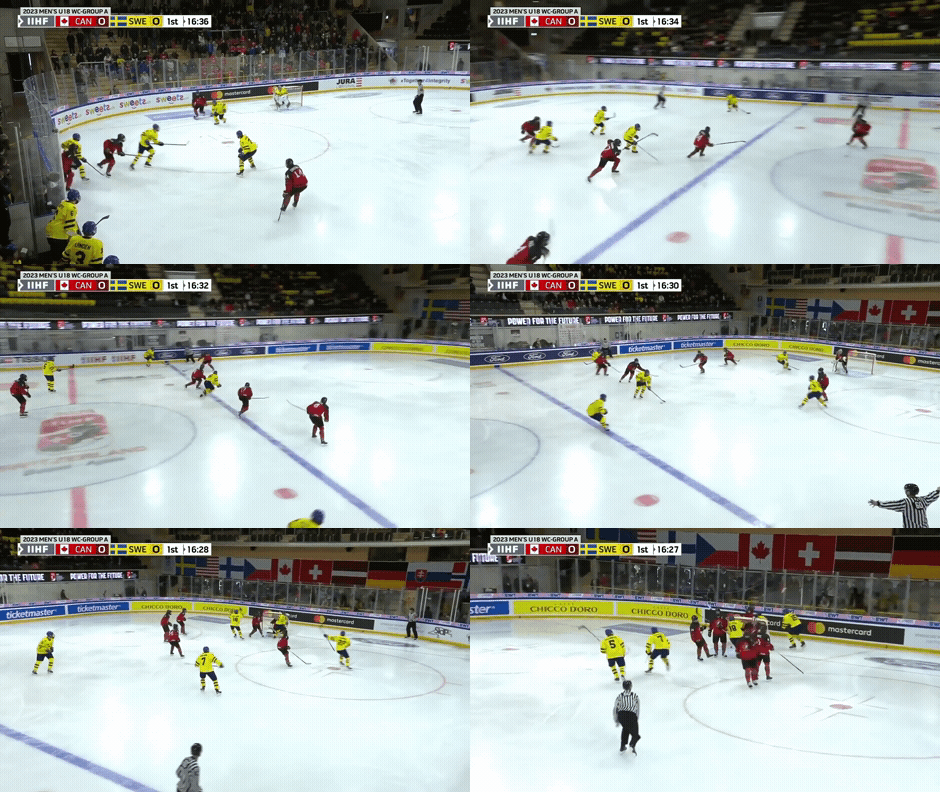
Here are some examples of what I have seen from Stenberg over the course of his pre-draft development.
The first clip is from the 2023 U18 World Championship that I attended in Germany. Stenberg was only 15 years old at the time. Notice how he exits the offensive zone with speed on the left side and then attacks his opponent through the middle of the ice. He protects the puck and fires a shot against the grain, through traffic, for the goal.
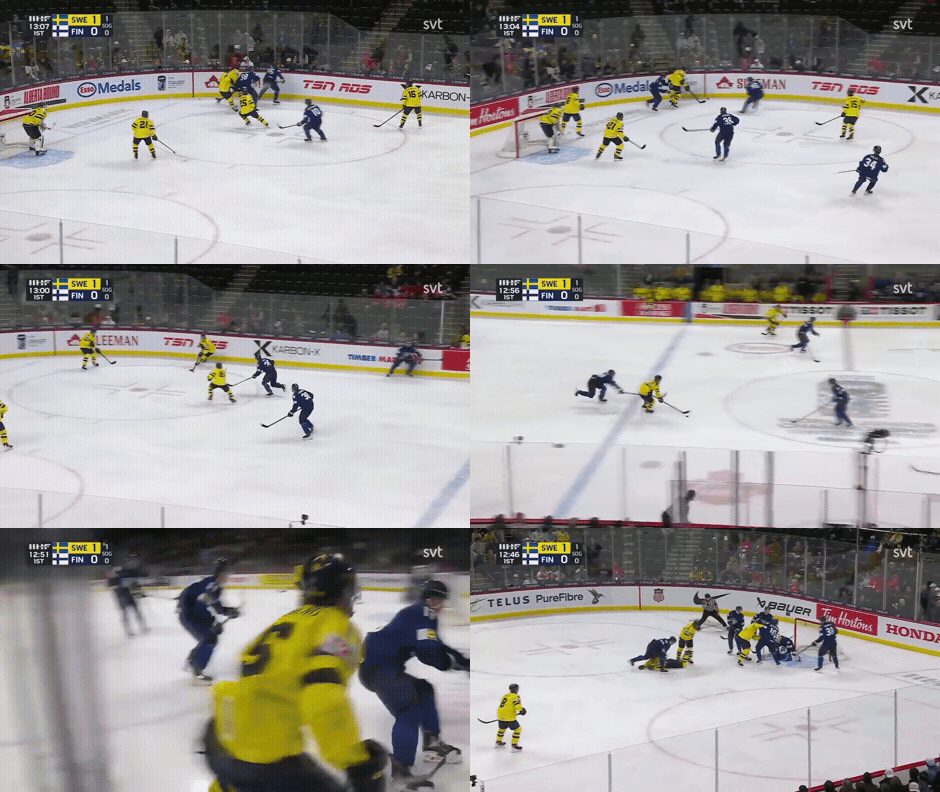
The second clip displays how Stenberg protects the puck along the boards in the defensive zone before exiting on his own and transitioning the play up ice with speed and skill. By the end of the sequence, he has eluded five Finnish players in total and the puck ends up in a high danger scoring area out front Finland’s crease:
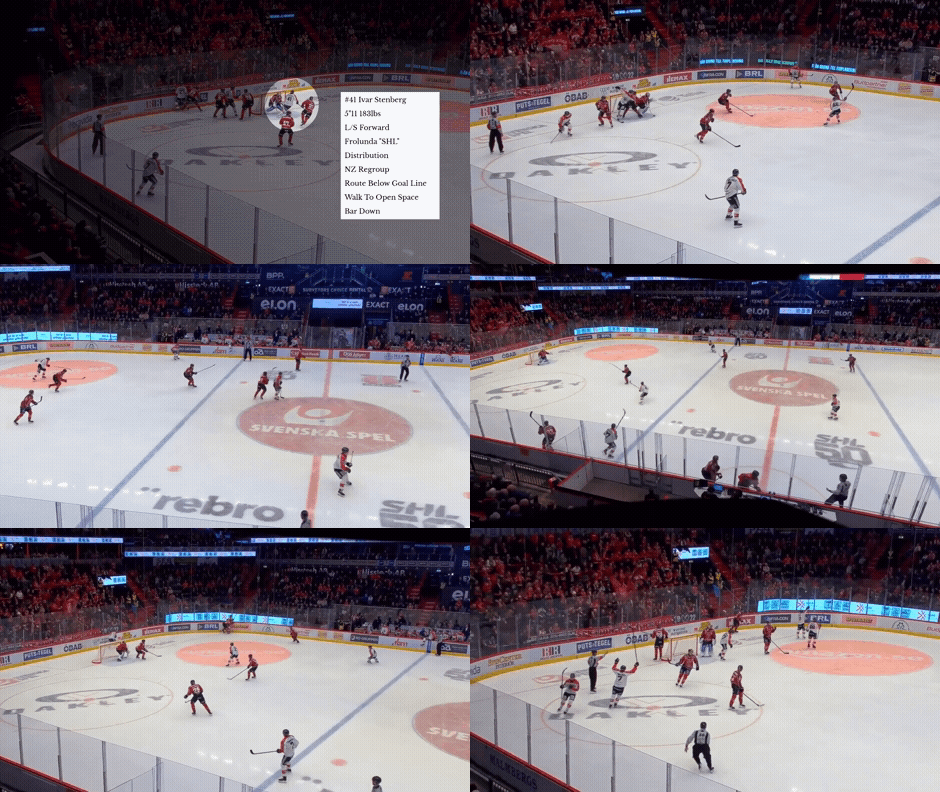
The last clip provides a glimpse into how Stenberg reads the ice. He works through the neutral zone, finds open ice below the goal line and walks to the crease after the puck is bumped to him along the boards.

The case for drafting Gavin McKenna first overall
McKenna, a 6-foot, 170-pound left-shot winger, is the most dynamic forward in the draft class. He craves having the puck on his stick and has the skill and vision to escape checks in small areas and make plays in the offensive zone. He’s elusive and hard to check.
McKenna’s second half of the season at the NCAA level produced fantastic results offensively. He ended his freshman season at Penn State with 15G-36A in 35 games, but he contributed 11G-22A over his final 18 games. McKenna averaged over 22 minutes per game of ice time with the bulk of his shifts coming at even strength and the power play. His defensive detail improved over the course of the season, but he still has work to do off the puck. His minus-7 rating, in relation to his offence and number of games played, is something that stands out for me compared to Stenberg.
Although I have concerns about McKenna’s commitment defensively, I’m fully aware that defending is a choice. It’s impossible to teach a player to produce offence like McKenna does, but defending is a part of the game that can absolutely be coached into a prospect. If McKenna’s off-puck commitment improves to consistently average, or slightly above average, I’m definitely open-minded to the conversation that he deserves to be the top-rated prospect over Stenberg.
Here are some examples of what I’ve seen from McKenna in his pre-draft development:
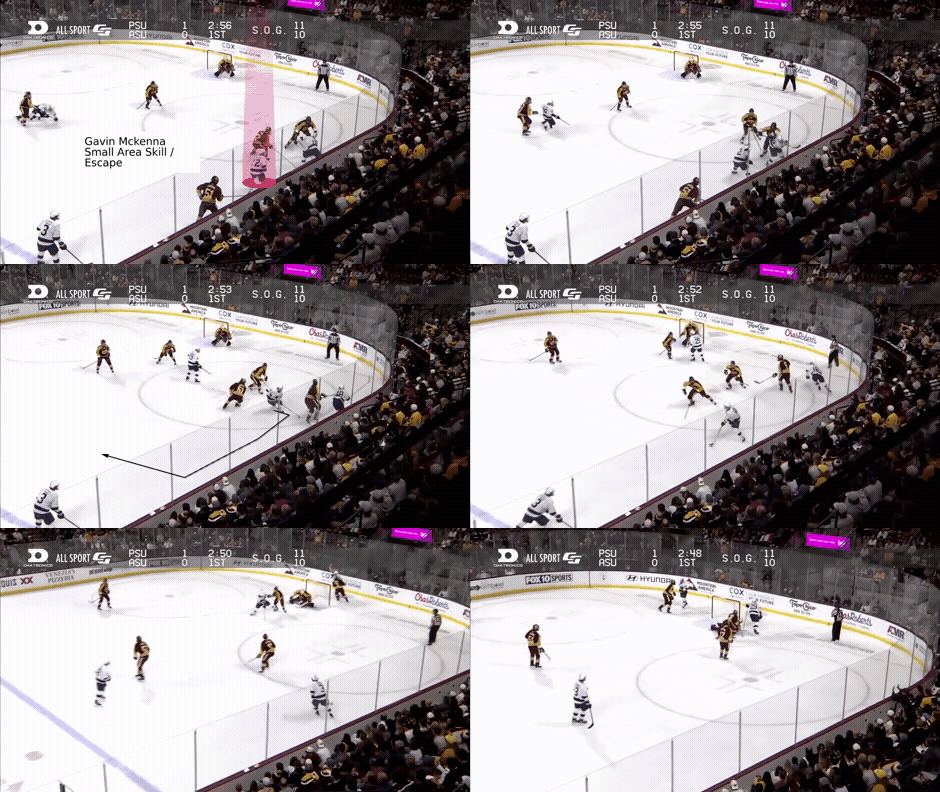
The first clip displays the small area escapability that McKenna possesses. Three Arizona State players had an opportunity to check McKenna off the puck, but he escapes to direct it on net. He made something out of nothing in this sequence:
There’s always some risk/reward included in elite offensive players. I understand turnovers will happen when the player is attempting to make plays. Having said that, turning the puck over in neutral ice at the NHL level quickly turns into goals against.
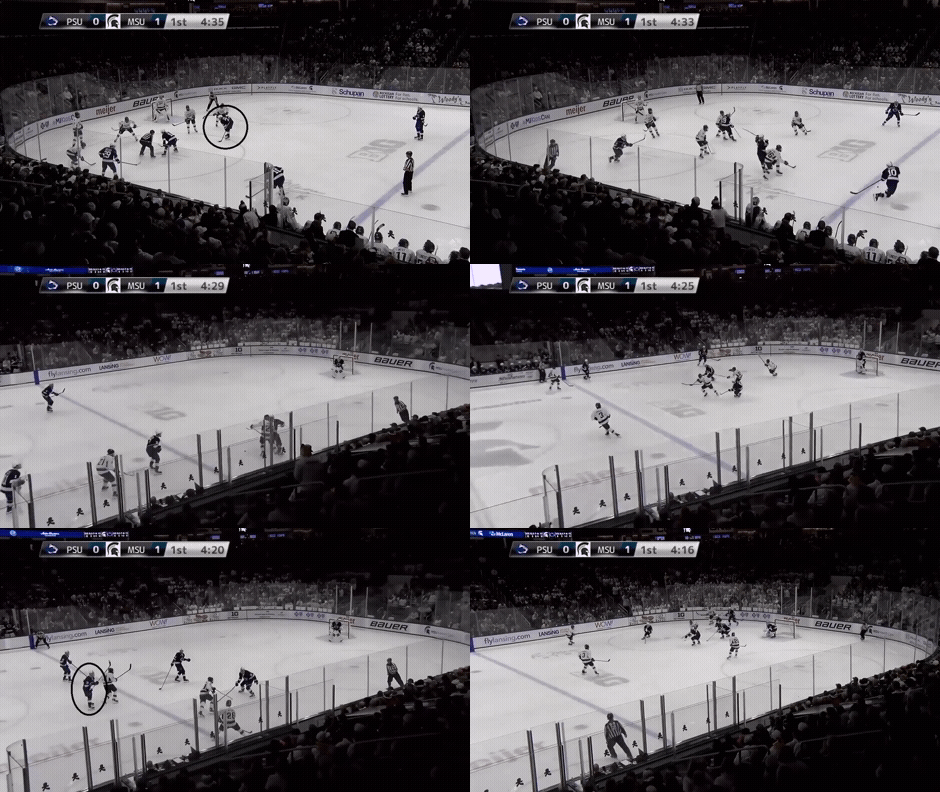
In the next clip McKenna shoulder-checks in the neutral zone to identify who might be pressing up ice from Michigan State. He ends up with the puck on his stick and exits the Penn State zone before saucing a back-hand pass to nobody in neutral ice. Notice how he is straight-legged regrouping into his zone. The turnover didn’t end up costing Penn State a goal against, but it’s an area of McKenna’s game that continues to require attention to more detail:
When I identify defensive awareness as being a choice, the last clip displays how McKenna is evolving.
He ends up above the play after Penn State loses possession in Wisconsin’s zone. He’s in perfect position to knock down a puck and attack off the regroup. It’s one of the most positive sequences I noticed from McKenna at the college level this year and provides me lots to think about when comparing him to Stenberg on projection:
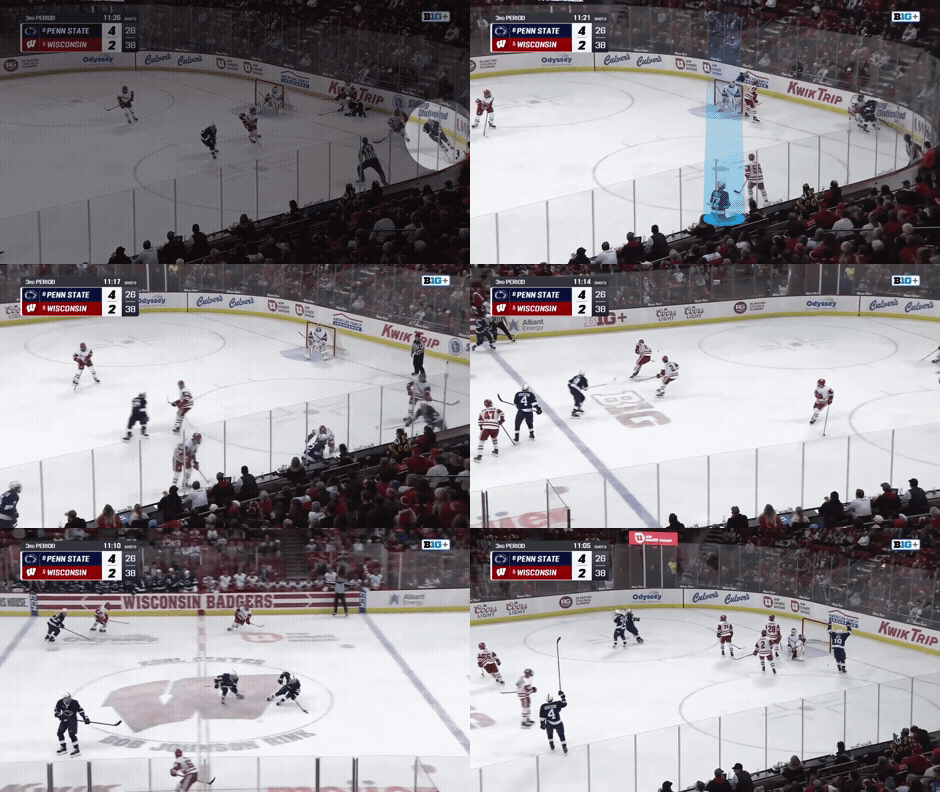
Should the Leafs consider trading back?
If I’m running the Leafs draft table, I would absolutely gather all the available information in regards to trading back from the top draft position. However, the only player I would consider doing it for is Brantford Bulldogs centre Caleb Malhotra.
I have Malhotra rated as the top available centre in the class. Teams that strategize building through the draft will generally mention they prefer to add centres and right-shot defencemen and Malhotra fits that thought process. The right-shot defencemen available in this draft (Keaton Verhoeff, Chase Reid) fall below Malhotra in my rankings, thus why I land on Malhotra as the only strategic discussion I would engage in.
The Vancouver Canucks currently own the third slot in the draft. Would it make sense for the Leafs to move back to draft Malhotra and pick up an extra second-round pick as part of the return?

I would have to attempt to find out who San Jose covets at second overall. At the end of the day, even if San Jose were to draft Malhotra — and assuming Vancouver selects either McKenna or Stenberg — I would still end up with a valuable commodity in the process.
As much as I value Malhotra I have to be realistic about the potential historical output of the first-overall draft slot compared to the third-overall.
If, for example, Vancouver were to trade Toronto the third overall pick and include the 33rd overall selection as part of the return to move up to the top spot, the Leafs would end up on the short-end of the deal.
Since the year 2000, the first overall draft slot has contributed an average of 514 games played and produced 464 points.
Over that same span, the third and 33rd overall slots have combined to contribute an average of 580 games played and 341 points. Breaking down the value of the “trade back” strategy introduces what the Leafs were looking for from an analytics perspective but it’s not something that I would look to implement despite listening to and considering the strategy.