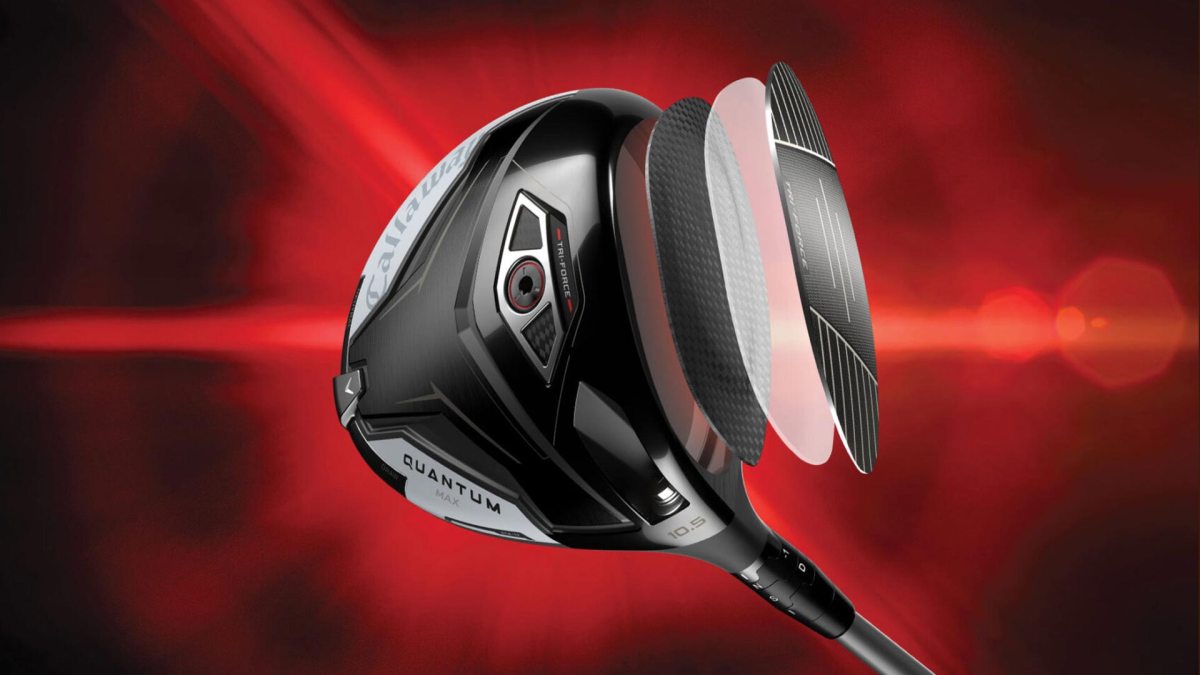
Callaway’s new golf driver face combines titanium, carbon fiber, and a military-grade polymer found in an unlikely way

Golf driver faces have been almost exclusively titanium for more than three decades, with some detours into carbon fiber. Callaway tried one of those detours itself with the all-composite C4 in the early 2000s. Its new Quantum drivers take a different approach to the problem: keep the titanium, add the carbon, and bond the two with a polymer the company describes as “military-grade.” The layered build, which Callaway is calling the Tri-Force Face, debuts across all five of its flagship Quantum driver heads this season.
The titanium-carbon trade-off
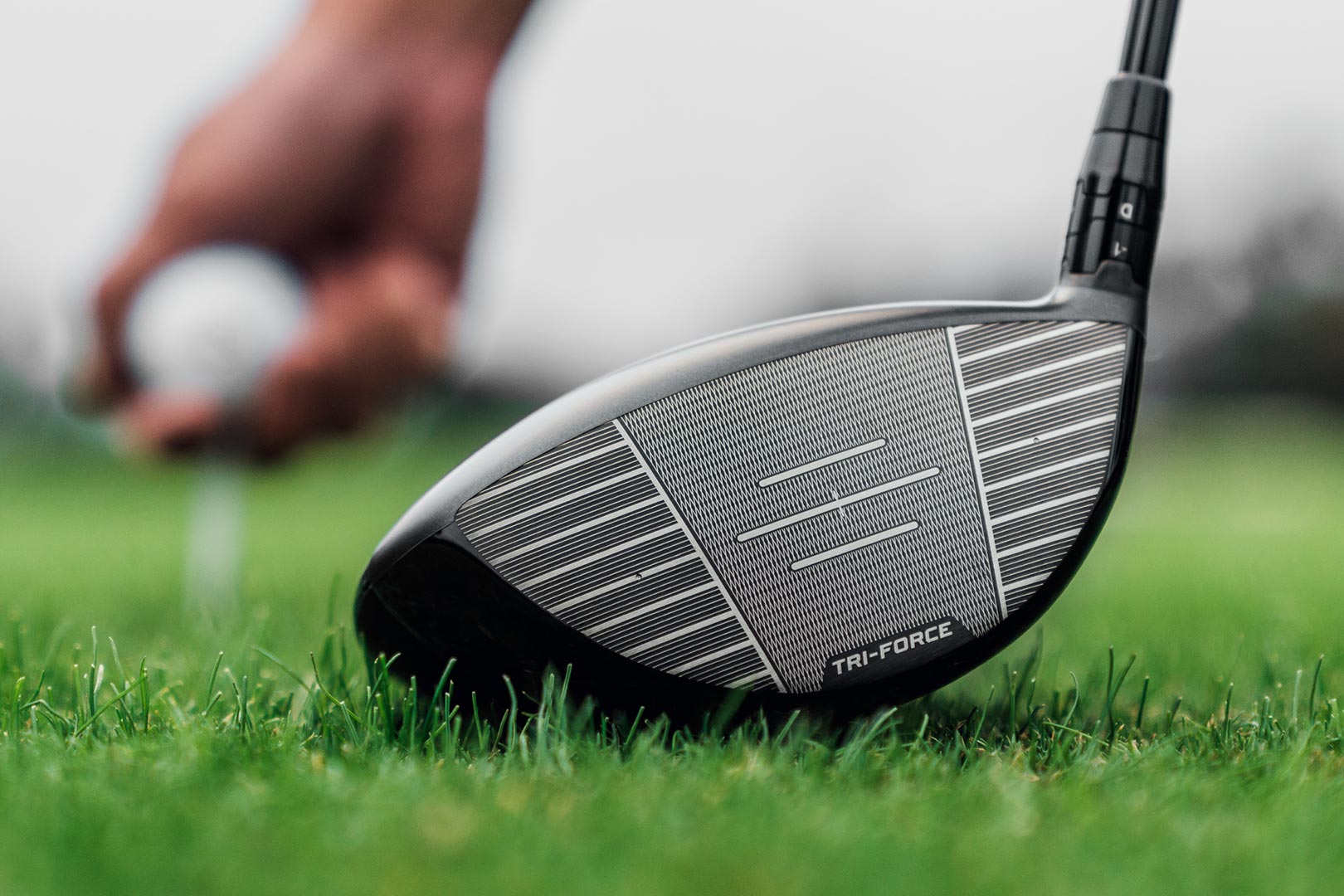
Titanium has been the industry standard for driver faces for years and for good reason. At impact, the face has to flex inward and snap back fast enough to launch the ball before contact ends. Golf’s governing agency, the USGA, caps how long the ball can stay on the face using a measurement called Characteristic Time, or CT. It’s one of the biggest technical constraints that keeps drivers in check for competitive and even casual golf. Titanium pairs high strength, low density, and a springy elastic recovery in a way that makes pushing right up to that limit easier than almost any other workable metal.
Carbon fiber looks like the obvious upgrade on paper. It’s lighter and any weight saved on the face is weight an engineer can redeploy low and back in the head for forgiveness. Engineers can also tune the material to a greater degree than they can with most metals. The trade-offs are real, though. Carbon’s woven structure is strong in tension, when the fibers are being stretched, but weak in compression, where the fibers want to crush and delaminate. That’s exactly what a driver face has to handle on every strike, and it raises long-term durability questions that titanium just doesn’t have.
That trade-off is what got Brian Williams’s R&D team thinking about the problem differently. Williams, who has run R&D at Callaway since late 2022 after 23 years at the company, said his team reframed what was happening at impact. The face isn’t just flexing. The outside of the face is compressing inward as it deflects, and the inside stretches in tension at the same time. The logical solution was to put each material in a position to play to its strength.
The material sandwich method spawned years ago from the search for a perfect singular material. “We needed a material that’s somewhere in the middle of how titanium operates under compression and how carbon fiber operates under tension,” Williams said. Titanium handles the compression on the strike side while carbon fiber handles the tension on the back.
The titanium hitting layer at the front provides the desired augmentation when it comes to ball speed. Because it’s only one piece of a structural sandwich and not bearing the whole load, Callaway was able to draw it 14 percent thinner than its previous driver face, and 25 percent thinner on the slice-fighting Max D model. The carbon fiber underneath is the chassis, adding stiffness without weight and absorbing the tension load on the back of the face. The polymer mesh in between is the closely held secret that makes it all possible.
A polymer from a military white paper
The polymer search started as a quality fix for the long drive circuit. Callaway supplies clubs to long drive competitors. Long drive competitors who you probably see crushing golf balls on your Tik Tok feed deform driver faces inside a single round of competition. The R&D team wanted to make those heads last longer without adding weight that would cost ball speed. While researching strength-additive coatings, an engineer pulled up a white paper on a polymer being used somewhere unexpected.
It wasn’t designed for golf clubs at all. “It was being used in military applications, in makeshift bunkers,” Williams said. “This polymer could be applied to the inside and it would prevent shrapnel. It would keep materials held together. That could be interesting, because when a driver face fails it starts to crack from the inside.”
The team coated the inside of long-drive heads with the polymer and the heads stopped failing without losing speed. From there the question became how to use the same material to bond two stiffly mismatched materials in a consumer driver face.
Williams describes the application as low-tech but specific. “It’s more than just an adhesive. It does act in an adhesive fashion,” he said. “It has a viscosity that’s kind of like honey, very sticky. It’s applied to the rear of our driver face and then we press on carbon fiber on the back of it.”
The viscosity matters because the layers can’t be glued together rigidly. If the bond is too stiff, the three materials want to flex at different rates and you get what Williams calls a “slow” face. The polymer mesh has to transfer energy between the layers without locking them in place.
AI face geometry
All of that sits under an AI-shaped face geometry. Callaway has been refining the pipeline since the original Flash Face on the Epic in 2019, and the Tri-Force version of the model accounts for how titanium, carbon, and polymer each behave at every point on the face. The result is a face whose thickness and flex pattern are tuned locally rather than designed as if the whole surface were one material.
“We use AI and it’s creating these really non-intuitive topographies for our face to get really unique deflection properties,” Williams said. “It’s not a constant thickness. It’s not a simplified variable face thickness like most of the golf faces out there. It’s this really complex geometry, and that’s giving us something that’s really unique.”
In robot tests, Williams said, high-face strikes that would normally dive out of the air are launching with enough spin to hold their line. Heel strikes that would normally cut hard right are washing out with less side spin than a typical driver face delivers.
The Quantum lineup
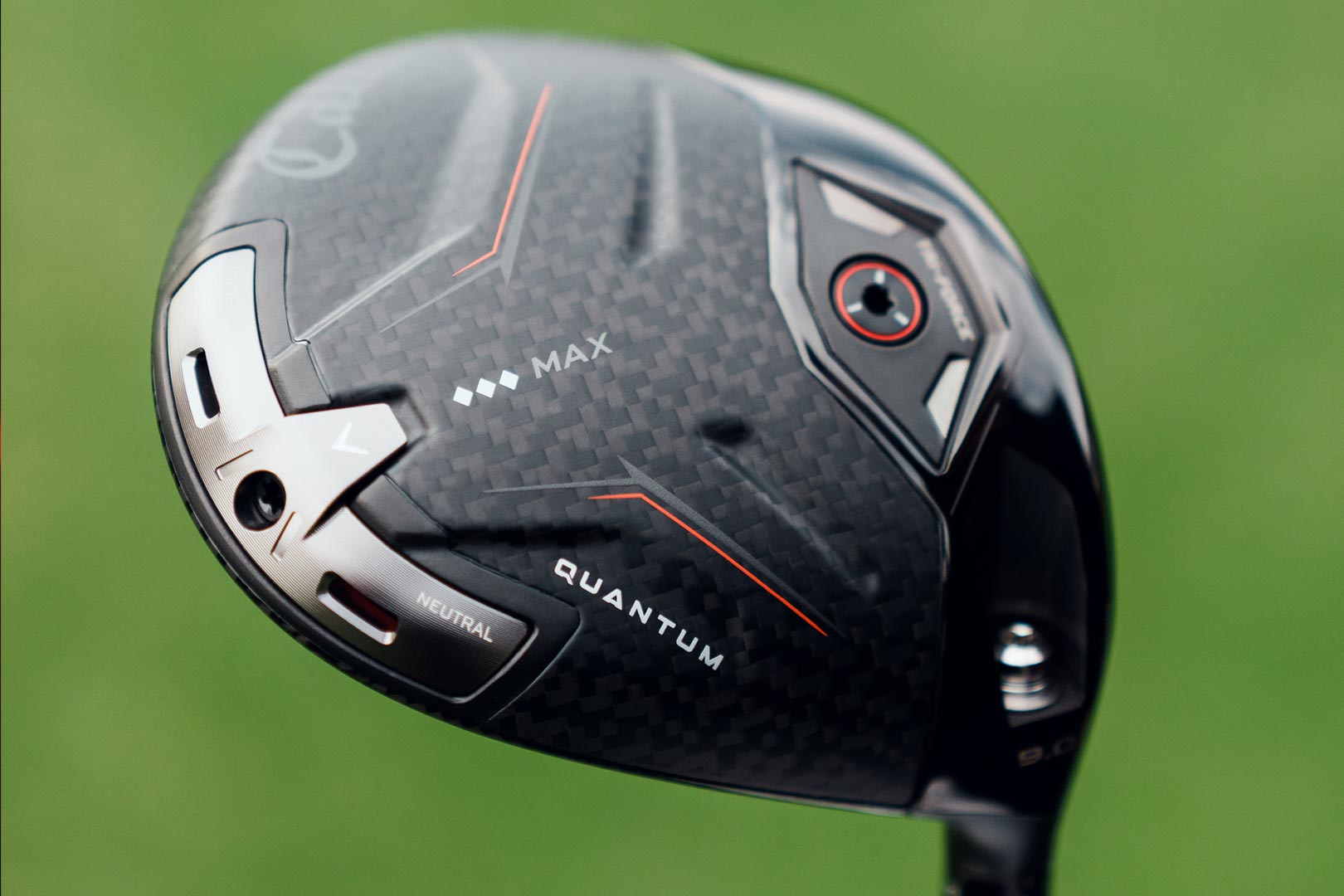
Tri-Force Face is shared across all five Quantum driver heads, and the rest of the lineup is shaped to fit different players. The Max is the volume model, a 460cc head with neutral CG and OptiFit hosel adjustability. The Max Fast trades heavier shaft options for lighter components and a 360° Carbon Chassis aimed at moderate swing speeds. The Max D adds heel weighting to fight a slice. The Triple Diamond is the Tour-aimed 450cc head, lower-spin and more workable, with a carbon-fiber sole and adjustable fade weighting. The Triple Diamond Max keeps the Tour-spin behavior but expands to 460cc for added stability, and Williams said it’s been the lineup’s hardest model to keep on retail shelves.
Quantum drivers reached U.S. retail on February 13, 2026, with prices starting at $649.99 and topping out with the Triple Diamond and Triple Diamond Max.

2025 PopSci Best of What’s New