
From ROMP!: A Journey Through the Natural History of Otters and Why They Matter by Heide Island, PhD, to be published on 4/28/26 by Avery, an imprint of Penguin Publishing Group, a division of Penguin Random House, LLC. Copyright 2026 © by Heide Island.
From behind a stand of frozen lupine, Patches, Crest, and Slash emerge onto the wetland. Moonshine reflects off the newly fallen snow, illuminating the predawn hour with a supernatural brightness. The three female otters surf the snow, their forward momentum pulling them across the slick surface like kids on a Slip ’N Slide: lope-lope-slide, lope-lope-slide. They halt beside a corrugated metal culvert, side by side, until Patches lurches forward and leaps onto the bank of Admirals Lake. Her landing fractures the frozen lakeshore, stamping an otter-sized divot. The two girls follow behind her, each landing with a loud crunch, leaving star-shaped bull’s-eyes in the ice. The otters are out early, exploiting the cold; an icy lake makes for sluggish fish.
Patches points her nose toward a stand of bare willow cane and releases a rasping hiss. Another romp of five otters cautiously bumbles out from behind a cleaver of stiffened goosegrass, each scenting the air. I don’t recognize these new otters. Their coats are lighter in color, and the smallest has a pronounced limp favoring its right hind leg, though there’s no blood trail in the snow.
From my vantage point about fifty feet away, I wait to see what the otters will do, trying not to make any noise. But these unfamiliar otters must pose a more immediate threat to each other than the human standing nearby. They pay me little mind.
In a flash, a sixth otter I have not seen leaps out from behind the newcomers. He releases a series of chirps, passing all five in a rush. Without hesitation, he bounds at Patches and her girls. His vocalizations transition to a buzzing hum. Crest and Slash scamper forward, chuffing and purring. This is not attack behavior. This is a solicitation to play.
The three otters meet in a tackle, a jumble of tails and feet, chuckles and chirps. Patches, unperturbed, directs a passing glance toward the newcomers and begins to groom her fur. The otter must be Swoosh, but his Nike logo muzzle mark is fading, as often happens when river otters reach maturity. I’m feeling celebratory, too, as it’s been a few months since I last saw him and I thought perhaps he’d left the cove. His young adult coloring has darkened, filling in most of the wavelike band I used to identify him in the fall.
Slash, her dark stripe still prominent on her face, tumbles into Swoosh. Swoosh snorts and nips at the air above Slash’s head just as Crest straddles Slash’s back sidesaddle. Slash rolls over, displacing her sister, who stumbles into one of the smaller newcomers, who rolls into a sapling, causing the snow load to fall to the ground in a thud. Swoosh and the girls move their wrestling alongside Patches until Swoosh, realizing he’s beside his mother, stops his horseplay and gently headbutts her muzzle. Patches stops grooming and leans into him. Like two cats, they nuzzle and rub cheeks. The girls let him go. They’re in their own world, wriggling on their backs and making otter-shaped snow angels.
The new otters, still observing the reunion from the sidelines, are more relaxed. One of the bigger newcomers eases over to Swoosh and throws himself on his back, landing on Swoosh’s tail. I’m not sure about the sexes of these five newcomer otters, but given their behavior, I suspect they’re all bachelors who have formed a temporary social group of young males, a phenomenon occasionally observed among marine-foraging river otters. These social coalitions offer advantages to young male otters, especially soon after they’ve been evicted from their family groups, when their fishing skills are still in the rookie range. In a social group, male river otters may cooperatively forage, maximizing their success in capturing larger and higher-quality fish. These Lost Boys have weathered storms, surf, and now snow.
Crest and Slash clamber onto the lake, then back again, almost as if testing the structural stability of the ice. The Lost Boys join in, nipping, rolling, tackling. And then, all at once, they dance—the scat dance of marching, scratching, digging, marking, and sniffing.
This is otter play, one of the many metrics used to gauge animal health and intelligence. And if play hints at health, these otters have it in spades.
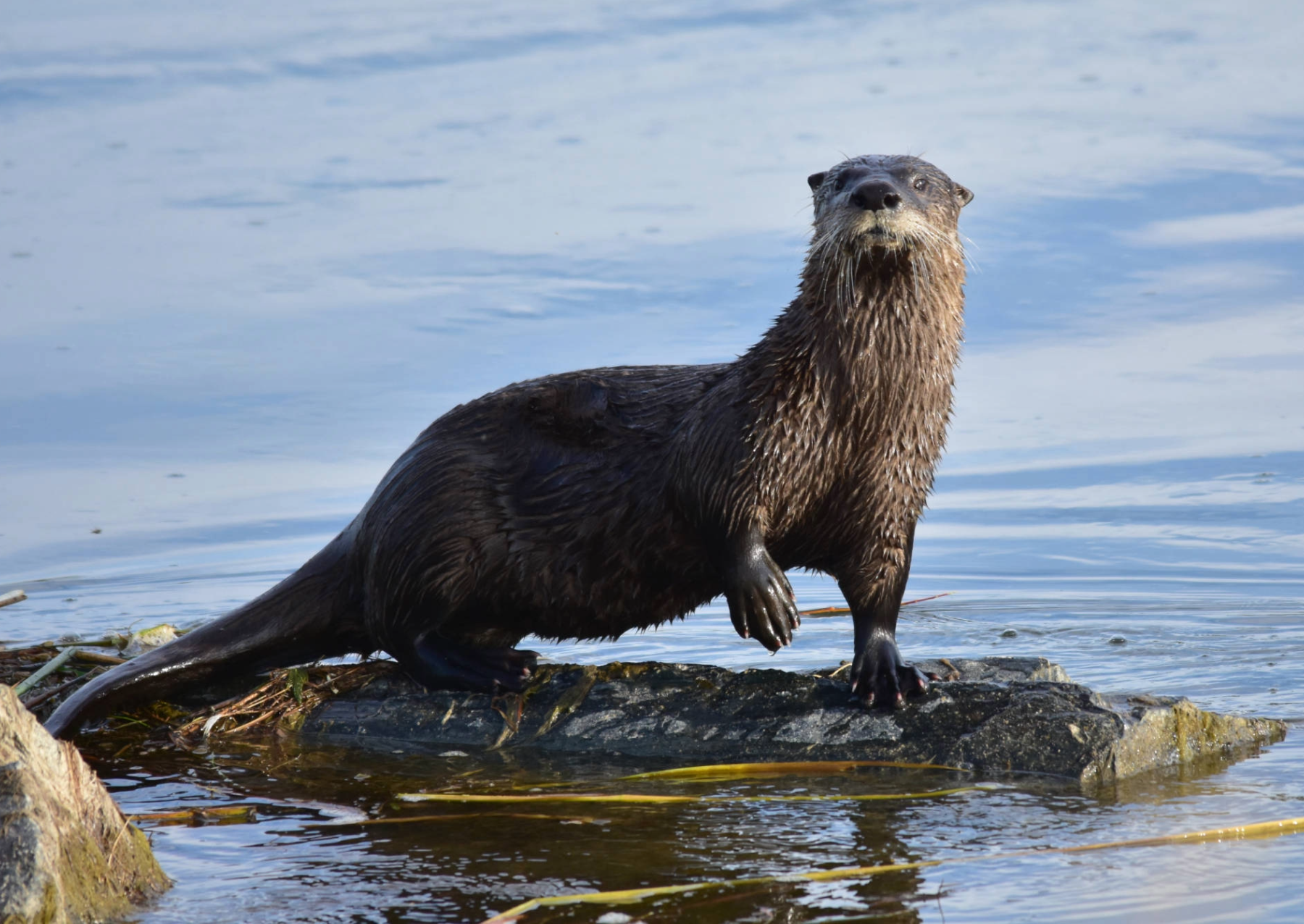
Otters and play are closely linked in our imaginations. Whether they’re sliding in the snow, juggling rocks, grappling with and chasing each other, or pounding abalone shells with stones, everything otters do seems somehow playful. Even otter pooping is referred to as a “dance,” and of course, we call a group of them a “romp.”
But otters are not only playful. And when we think of all otter behavior in those terms, we forget they’re complex carnivores, part of the same family of accomplished predators as the weasel, badger, and wolverine. They protect their young, hunt, fish, and forage. When threatened, they can attack dogs or humans; one sea otter in Santa Cruz, California, became famous for aggressively stealing the surfboards of unsuspecting surfers. There are even accounts of Eurasian and giant otters killing and cannibalizing other otters.
It’s easy for us to misunderstand otters’ behavior as playful because of their neotenous, or baby-like, features. Their large foreheads, eyes, and pupils, paired with the soft, downy fuzz of their round faces, engage our parenting and nurturing instincts. However, to understand the true nature of otter behavior, scientists and enthusiasts alike must take care not to interpret other animals’ experiences through a human lens. Anthropomorphism, the attribution of human characteristics or behavior to non-human animals, constrains what we can truly observe and learn. This is a challenge for everyone, including wildlife scientists.
Play is especially difficult not to anthropomorphize because it’s entrenched in the human experience; we’re so obsessed with it that we’ve built multibillion-dollar industries around it in the form of sports and video games. Play is also one of those behaviors, like love, that are hard to define, but we feel we know it when we see it. Appearances can be deceiving, though, when we’re looking at animals very different from ourselves.
On the other hand, we’d be foolish to completely ignore play behavior or dismiss it as “marshmallow science,” as ethologists did for many years. An early trailblazer who helped reverse this trend was ethologist Robert Fagan, author of Animal Play Behavior, who found that play among juvenile brown bears was correlated with longer and healthier lives. Marc Bekoff, another animal play pioneer, who researches dogs, coyotes, and wolves, concluded that play is practice, improving the skills needed for other biologically relevant behav-iors.
According to Jaak Panksepp, a prominent neuroscientist, play is aerobics for the brain. Panksepp identified seven primal brain circuits that motivate purposeful behavior; play is front and center, as are care, lust, panic, fear, rage, and seeking (i.e., curiosity). But the neural mechanisms for rough-and-tumble play are critically important, not only for development of social skills but also for social joy. This suggests that play is part of a broader cognitive framework involving social intelligence, an animal’s ability to learn, solve problems, and adapt to novel circumstances relevant to their social world.
So how do we know that what we see as otter play is really play behavior? And is that behavior something that all otters do? Or is it malleable, changing with the context, the species, or the individual?
In 1973, Nikolaas Tinbergen shared the Nobel Prize in Physiology or Medicine with Karl von Frisch and Konrad Lorenz for their joint contributions to the “organization and elicitation of individual and social behavior patterns.” While von Frisch discovered the “waggle dance” honeybees use to communicate the location of flowers and Lorenz studied avian imprinting in geese, Tinbergen’s investigations led to his famous “four questions” for understanding animal behavior. These questions ask about a given behavior’s (1) function, (2) development, (3) mechanism, and (4) evolution.
When looking at otter play, we might apply those questions like this:
- Why do otters perform a particular play behavior?
- How does the play behavior develop over the otter’s lifetime?
- What causes the otters’ play behavior to occur?
- How did the play behavior evolve over time?
These lines of inquiry help us think about the ultimate reasons for otter play. Does it confer some adaptive advantage? Is it practice for hunting or mating, as the practice hypothesis of play suggests? Does it train otters in social competency, as the socialization hypothesis of play suggests?
Hans Kruuk’s book Otters: Ecology, Behaviour, and Conservation—probably the most well-worn book in my library—is the academic authority on all the world’s otters, but despite the animals’ playful reputation, it doesn’t have a single chapter dedicated to play. In the early 2000s, when it was published, there were too few peer-reviewed studies on otter play to justify a devoted chapter. Even now, two decades later, there are fewer than twenty published articles dedicated to understanding the very behavior otters are most celebrated for.
It’s impossible to nail down a universal, comprehensive definition of play because it can vary so widely based on factors like anatomy and environment. For example, an otter and an octopus have very different bodies and habitats—the way the former plays might look nothing like the way the latter plays, yet both may be exhibiting forms of play. Social behavior can be quite different even between closely related species. For example, some otter species are highly social, others less so. If some otters engage in social play, that doesn’t mean otters engaged in solitary or object play aren’t also playing.
Fortunately, ethologist Gordon Burghardt established five criteria, similar to Tinbergen’s four questions, as a baseline for establishing if behavior is play:
- “The performance of the behavior is not fully functional in the form or context in which itis expressed; that is, it includes elements, or is directed toward stimuli, that do not contribute to current survival.”
- “The behavior is spontaneous, voluntary, intentional, pleasurable, rewarding, reinforcing, or autotelic (‘done for its own sake’).”
- “Play . . . differs from the ‘serious’ performance of ethotypic behavior structurally [in form] or temporally [i.e., timing] in at least one respect,” such as being “incomplete . . . exaggerated, awkward, or precocious.”
- “The behavior is performed repeatedly in a similar, but not rigidly stereotyped, form during at least part of the animal’s ontogeny [e.g., rocking or pacing].”
- “The behavior is initiated when an animal is adequately fed, healthy, and free from stress (e.g., predator threat, harsh microclimate, social instability), or intense competing systems (e.g., feeding, mating, predator avoidance).”
Additionally, play is more likely to evolve among animals with greater parental care, because when parents provide resources the young would otherwise have to provide for themselves, they have more downtime to horse around. Most animal experts have adopted these five criteria because they can be identified in any species or behavior system.
Common examples of otter play include behavior that mimics foraging (e.g., biting and grabbing), fighting (e.g., wrestling and posturing), fleeing (e.g., rolling and tumbling), and even courtship (e.g., mounting). Each behavior may improve the otter’s success in the biologically relevant situation. Social play is also thought to nurture attachments and connections within a community or between animal pairs, and to encourage the development of social competency, teaching animals across species to read behavioral signals and respond in a way that limits conflict and increases survivability. Social play can occur between two or more otters, or even between an otter and a different animal, like a dog.
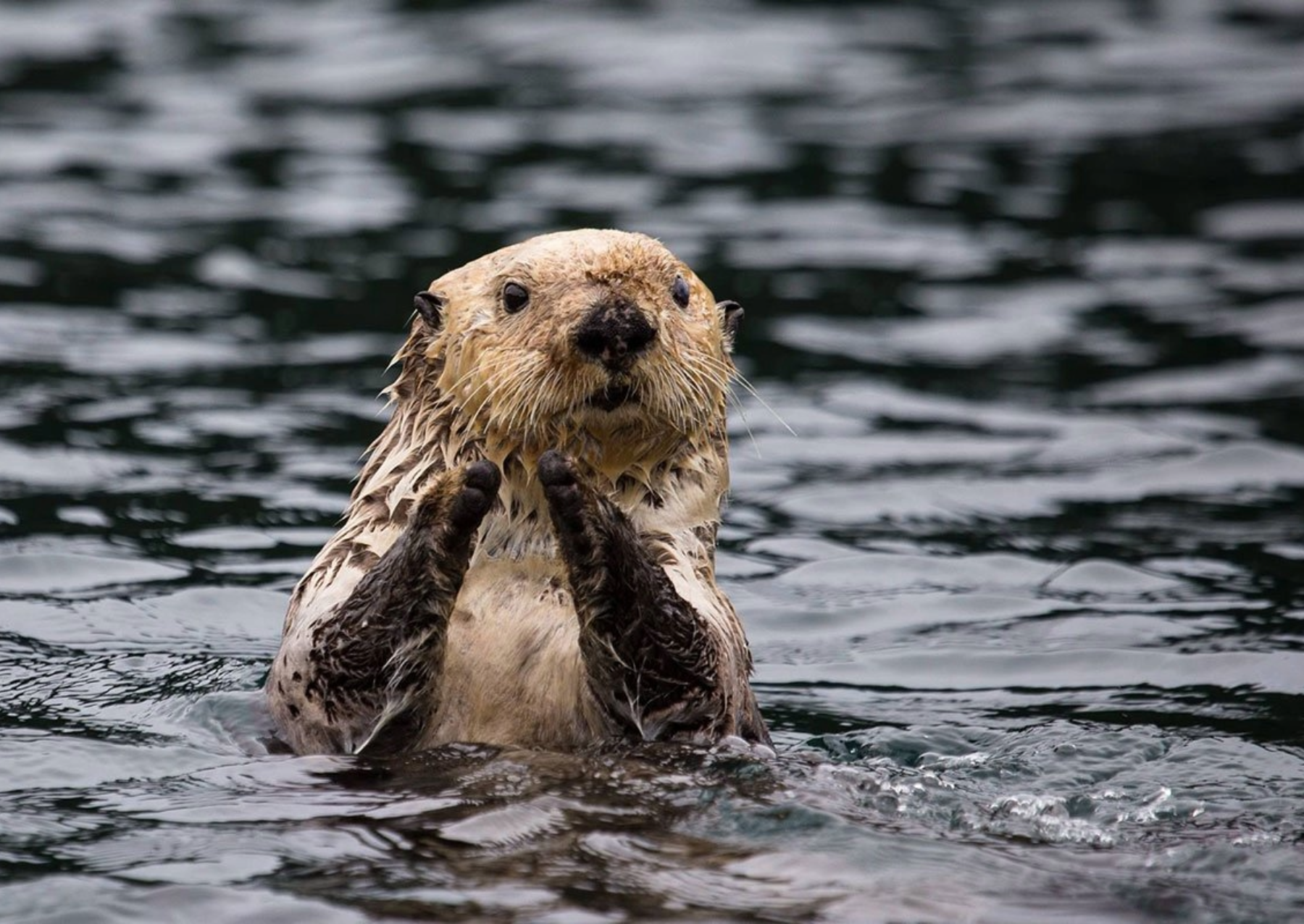
In the northwest corner of the Olympic Peninsula, 135 miles from Seattle, is Clallam Bay, one of Shawn Larson’s sea otter survey sites near the Neah Bay Makah Indian Reservation. This remote area of northwest Washington is rich in food, which is one of the reasons why, in 1969 and 1970, fifty-nine sea otters were reintroduced there from Amchitka Island, Alaska. The otters Larson and her collaborators research today are the descendants of the original survivors of those translocations. I first met Larson, the senior conservation research manager at the Seattle Aquarium, years ago during one of the aquarium’s biennial sea otter conservation meetings, a conference Shawn has organized since the late 1990s.
Today, a sunny afternoon in October 2024, we stand side by side on the rocky riprap of a viewing area along the highway. Using high-powered telescopes, we observe a social group of juvenile male northern sea otters playing in the kelp. With her trademark energy and enthusiasm, Larson offers her spot at the telescope to a passing tourist, who explains she came all the way from Australia hoping to spot the sea otters, only to realize that she didn’t have the necessary equipment. Larson explains that young sea otters are easy to identify by their dark faces, which become blond or grizzled as they age.
Whidbey’s ocean foraging river otters are always within meters of shore, and there are many areas in California, like Monterey, where you can sip a glass of wine and watch a sea otter or two swim beneath a nearby pier. This is not the case for Washington sea otters. Nearshore kelp beds, where sea otters spend most of their time, can be 1 to 2 kilometers (roughly a mile) from land-based observers, especially at low tide. In 2022, the Washington state sea otter survey—an annual collaborative effort between biologists, volunteers, state and federal agencies, and the Quinault Indian Nation—observed some sea otters up to four miles offshore. On the upside, sea otters’ fidelity to foraging areas means you usually know where they’ll be. As long as you have the right equipment and the weather is fair, there’s a good chance of collecting data. And unlike with Whidbey’s river otters, you can get up at a civilized hour, since observing sea otters from a distance requires daylight.
Larson and her colleagues visit one or more of the twenty-nine sea otter sites along the Olympic Peninsula each month. For two days, they record dive intervals, foraging success, food type, and other relevant information in an ethogram, a data sheet used among animal scientists to inventory behavior. This afternoon, Clallam Bay harbors a bachelor pad full of juvenile males. Young male sea otters leave their natal area when they’re around six months old, which means they still have about four years before they reach reproductive age. During their nonbreeding or juvenile independence, males form bachelor groups outside of the territorial breeding areas of sexually mature males.
There are, by our count, eleven boys in the bay today. This is a modest bachelor raft, the collective noun used for sea otters, just as romp is used for groups of terrestrial otters (and tangle is used for terrestrial otters when they’re mating or socializing in water). Larger rafts, like the so-called Jetty Road Boys near Monterey, can reach 100 sea otters. But in August 2019, the Jetty Road Boys “suddenly dispersed” and did not return. Why? Gena Bentall, marine biologist and founder of the nonprofit program Sea Otter Savvy, posits an array of factors that may—individually or in combination—cause sea otters to abandon a location, including poor prey availability, predator avoidance, human disturbance, and a changing environment. In the case of the Jetty Road raft, the specific reasons are uncertain, but Bentall theorizes that the initial dispersal may have been caused by a single male driving off the others in an attempt to establish a territory.
Among the dark faces in Clallam Bay, there is no dominant territorial male, just the jocular frolicking of ten juveniles and one white-faced old guy, merrily chomping on butter clams and urchins, aged out of competing for female attention. The younger males also pause their playing and take a snack break, munching on tube worms, their heads and shoulders remaining stationary while their trunks swivel as though attached to ball bearings. Heads and hands above water, they logroll, occasionally pulling a new morsel from their armpit pockets. Yet another unique sea otter adaptation, these long folds of skin are the perfect place to stash food and implements for opening stubborn shells.
Suddenly, play spreads through the group, and the clowning recommences as if on cue. A male otter curls into a forward dive, emerging seconds later to yank the flipper of a distracted playmate and pull him under the waves. Another otter, a few feet away, torpedoes out of the water, landing on the torso of the flipper tugger. The senior sea otter, still on his back, grooms by scrubbing his cheeks with his paws. His flippers also rub against one another, slowly propelling him out of the melee. Somehow, I missed the communicatory signal that said, “Let’s get back to playing.” But it was there.
Consider your dog. It might invite you to play with a “play bow,” head lowered, forelimbs extended, tail wagging in the air. It may even run at you, then pivot and run away, as if to say, “Chase me!” Play begins if the dog’s play target (canine, human, or otherwise) reciprocates with a similar stance or behavioral patterns. After a few minutes of playing, the dog might repeat the play bow. Ethologist Marc Bekoff, who has extensively studied social signaling in dogs, refers to this as the maintenance of play behavior, a way of communicating, “I still want to play with you.”
Among river otters, social play is signaled through scent, the absence of stress hormones, and play posture. During play, playmates may temporarily stop to scent each other. To us, this might look like distraction—like they’re interrupting their play bout because they smelled something compelling. But for animals, this is deliberate play management, the equivalent of dogs continuing to play-bow every few minutes. They scent and nuzzle; one otter rolls onto its back, belly-up in submission: “I still want to play with you. Do you still want to play with me?” Social play-fighting among Asian small-clawed otters is frequently signaled through a relaxed posture and open-mouthed face, without the typical flattening of ears that happens during an aggressive fight. This is called a “play face” and is well documented in primates as well, especially bonobos and chimpanzees.
I never tire of observing otters. It doesn’t matter the species. Larson and I have been here for two hours, easily an hour and a half longer than I would ever get with the quick in-and-out efficiency of foraging river otters. Getting this much time in a single otter observation almost feels indulgent. I realize I’m in the throes of a giggle—and so are Larson and her two research trainees. It doesn’t matter how accustomed we are to observing animals in the field, the sea otter boys’ antics have infected us with their joy. And that’s one of the notable things about social play: It’s contagious.
But not all play involves a playmate. Solitary play may occur with others around, but it does not directly include them. It might involve running, jumping, or sliding (which are called locomotor play), or playing with food, a rock, or some other item (which is known as object play). When your dog gets “the zoomies” and runs frenetically around the house, that’s an example of solitary play, though it may turn into social play if another dog (or human) joins in.
When otters bodysurf down snow-covered trails or muddy hills, are they engaging in locomotor play, or is it just the quickest way to get where they need to go? It certainly looks playful, and it has been characterized that way since at least 1828, when naturalist John Godman gave this account:
Their favourite sport is sliding, and for this purpose in winter the highest ridge of snow is selected, to the top of which the otters scramble, where, lying on the belly, with the fore feet bent backwards, they give themselves an impulse with their hindlegs and swiftly glide head foremost down the declivity, sometimes for the distance of twenty yards. This sport they continue, apparently with the keenest enjoyment, until fatigue or hunger induces them to desist.
More recently, researchers’ trail cameras in Pennsylvania’s Ohiopyle State Park caught footage of three river otters sledding in much the same way Godman described. The otters slid down a snow-covered embankment sixteen times consecutively over five minutes. Over and over, they climbed back to the top and coasted back down on their bellies. The researchers argued that this sledding was not simply moving from point A to B with as little energy as possible. They actually expended extra energy; it’s not exactly efficient to spend five minutes running up and down a hill without acquiring food, finding a reproductive partner, evading predators, or otherwise supporting critical biological needs. Sometimes the simplest explanation is the correct one: Playing in the snow is fun for otters.
Even though the Ohiopyle otters slid down the hill individually, they soon shifted to playing together, wrestling and chasing each other. This illustrates the blurriness of play designations. What starts as solitary play can morph into social play and back again.
Otters may also play with playthings, like the Asian small-clawed otters who “ juggle” rocks. This object play emerges among juveniles around weaning at four months of age. Though less common among other species, rock handling has been observed among eleven of the fourteen global otter species. It’s not quite juggling in the way a circus performer would toss pins in the air. Rather, the otter handles a rock or stone close to the body, quickly passing it between the forepaws, armpit, and/or mouth. Of course, it can be difficult not to anthropomorphize rock juggling, right down to its very name. Is it actually a play behavior, or does it just seem that way to us humans?
To learn more, researchers at the University of Exeter studied groups of otters at zoos and wildlife parks in the United Kingdom. They enlisted four groups of Asian small-clawed otters, the most well-known rock handlers, and two groups of smooth-coated otters, which also juggle rocks, but not as frequently. The scientists hypothesized that rock handling was related to food handling, so they predicted that the Asian small-clawed otters with their handoriented, invertebrate-eating diet would engage in more rock juggling than the mouth oriented, fish-eating smooth-coated otters. They also predicted that younger otters would juggle more than adults (based on the practice hypothesis of play) and that there would be more male jugglers than female (based on field observations and the overrepresentation of play among male otters). Finally, they predicted that if rock juggling was indeed an artifact of food handling, it would occur more often if time between feedings were longer, acting as a motor distraction when food was anticipated but not immediately forthcoming.
The researchers designed three novel food puzzles to test the otters’ skills at extractive foraging, putting meat in screwtop medicine bottles, in green tennis balls with crosshatches cut into them, and between paired bricks. Their results were surprising. Despite the differences in feeding styles and rock juggling frequency, Asian small-clawed and smooth-coated otters were equally adept at extracting meat from food puzzles; the Asian small-clawed otters had no advantage. Equally surprising, the adults juggled more than the juveniles, and the females juggled more than the males. The scientists did predict one thing correctly: All otters rock-handled significantly more before feeding than when they were satiated, supporting the hypothesis that perhaps rock juggling is associated with the anticipation of food. But is it play behavior? It’s impossible to say definitively, and this ambiguity is characteristic of studying play in otters.
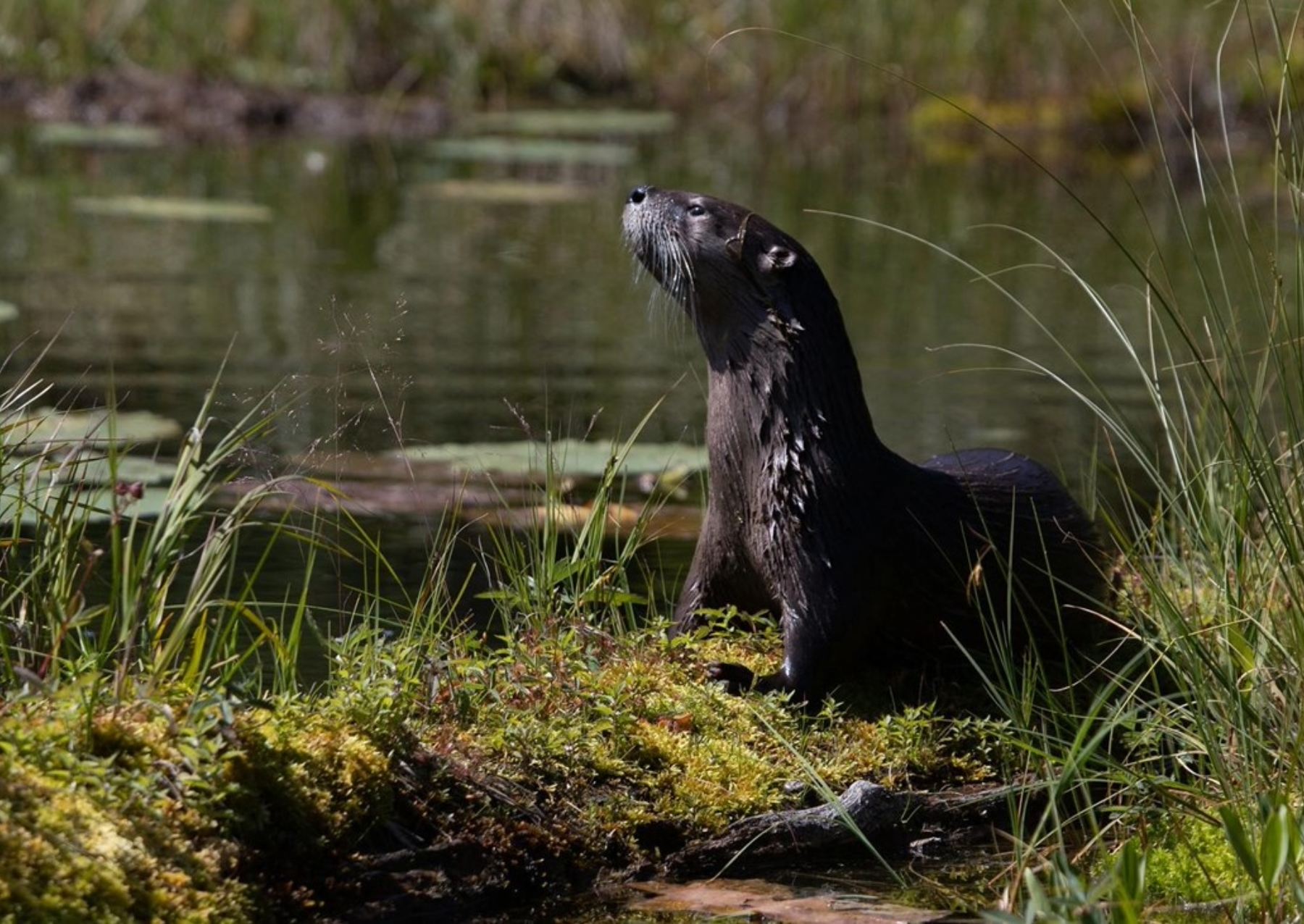
In human-care facilities like zoos and aquariums, there are fewer “do-or-die” stressors than in the wild. Otters and other animals need not worry so much about finding food, avoiding predators, or surviving disease, like they would in their natural habitat. However, what they do experience is anxiety—not acute fight-or-flight stress, but rather prolonged anxiety induced by under- or over-stimulation.
Understimulation occurs when animals are not free to exercise their species typical behaviors, like managing territory, migrating, finding food, parenting, mating, etc. This is especially true for isolated social species. (During the isolation of the global COVID-19 pandemic in 2020, humans, a social animal, experienced the highest historic rates of clinical depression and anxiety diagnoses.) Overstimulation, in contrast, occurs when there is too much sensory input, as is often the case in zoos—too much noise, too many people, and no way to escape it all and get some peace and quiet. The consequence of this anxiety is abnormal repetitive behaviors (ARBs), which act as a form of self-soothing. If you’ve ever chewed your nails, twiddled your thumbs, or jiggled your leg, you’ve engaged in an ARB. You may have seen ARBs among animals in a captive environment in the form of a big cat pacing back and forth or a gorilla over grooming.
ARBs aren’t always a big problem among zoo- or aquarium-housed animals. They can be simple reactions to feeling bored or anxious in the moment. In fact, they often occur just before a scheduled feeding, acting as more of an anticipatory behavior than a stress response. But prolonged boredom or overstimulation, limited space, lack of social interaction, or poor conditions can turn benign forms of self-regulation into neurological changes that can cause harm, like when parrots pluck out their own feathers.
This is why play is such a critical component of wellness for otters and other animals in captivity. In fact, there are cortical and neural connections within the brain that mediate play behavior, in terms of both the motivation to play and the process of socialization and attachment. In a study of play among rats, neuroscientists found that “rats that play as juveniles are more socially competent as adults.” Conscientious zoos and aquariums provide opportunities for otters to exercise their creativity, curiosity, and problem-solving skills, alone (solitary play), with other otters (social play), and with toys and games (object play), mimicking experiences they might have in the wild.’
One example is the Oregon Coast Aquarium (OCA) in Newport, a conservation- and education-based non-profit with half a million annual visitors. Like the Clallam Bay Boys that Shawn Larson and I watched through telescopes, the three sea otters at the aquarium are a bachelor raft. In 2023, they became part of a comparative longitudinal study that I began in 2016 with the male and female sea otters at the Oregon Zoo. The study expanded to include the exclusively female sea otters at the Monterey Bay Aquarium during 2020, when web cameras allowed us to continue to observe captive otter behavior during lockdown. Together, these three groups let my students and me evaluate if behavioral wellness indicators differed between rafts of otters that were mixed-sex (Oregon Zoo), all-female (Monterey Bay Aquarium), and all-male (OCA).
The OCA Boys showed virtually no ARBs during our observation times, and they engaged in the most play of any of the three groups. Sex was not the only disparate variable, but given that all three groups were similar in terms of age and enrichment activities, and all were rescued populations, sex may help explain their behavioral differences. In the wild, preadult male sea otters may have more time to play. The formation of bachelor groups confers safety in numbers, particularly when the otters are nearshore. If their main concern is feeding and they don’t have to worry too much about safety or mating, then they have time to play between foraging and sleeping.
The enrichment offered to all three sea otter communities included creative toys and games to exercise the otters’ brains and bodies. Eddie, an elderly male sea otter in the mixed-sex group at the Oregon Zoo, was even trained to “shoot hoops” to help combat arthritis in his elbows and shoulders. This capitalized on a natural behavior of sea otters called the “spy hop,” in which they elevate their shoulders above the water’s surface to improve their view or to investigate something they can’t see while on their backs. Eddie’s miniature basketball hoop was set up in a behind-the-scenes training pool, around 40 to 60 centimeters above the water’s surface—just low enough for an aging otter to raise his shoulders above the water and extend his front limbs to sink a small plastic ball through it.
A series of videos showing this physical therapy made Eddie quite famous for his dunking skills, so much so that the local NBA team, the Portland Trail Blazers, gave him an upgraded hoop with their logo on it. After he died in 2018, another otter, Juno, was also trained to engage with the basketball hoop. She added her own “spin” on it by occasionally twirling as she dunked. Although there is no way to know definitively if an otter enjoys shooting hoops, Eddie’s and Juno’s willingness to spend some of their “activity budget” on it is a good sign of their engagement. They’re certainly doing their part to uphold otters’ playful reputation.
Excerpted with permission from ROMP!: A Journey Through the Natural History of Otters and Why They Matter by Heide Island.
Heide Island, PhD, is a professor of biological psychology and behavioral ecology at Pacific University and a member of the International Union for Conservation of Nature’s Otter Specialist Group. Her research on the welfare of captive and wild otter populations in the Pacific Northwest, including her longitudinal study of Whidbey Island’s otters, has been published in peer-reviewed journals and presented at conferences. She splits her time between a cabin on Whidbey Island, Washington, and a farm in McMinnville, Oregon, with her husband, Tom, and their dogs, cats, chickens, ducks, and honeybees.

2025 PopSci Best of What’s New