The NCAA Tournament bracket is set and several weeks of premium basketball await. For NBA Draft scouts, this is where a lot of the sausage gets made: when opinions crystalize and prospects rise to the moment or fall short of it. There are still months of pre-draft analysis and deliberation ahead, but March Madness has an undeniable impact on how the board falls in June.
So, let’s dive into the tournament’s top-four seeds — the 16 best teams in the country, per the selection committee — and spotlight the prospects fans at home should get familiar with.
East Region

Duke Blue Devils: Cameron Boozer
No surprise here, as Duke‘s Cameron Boozer is the best player in college basketball at 18 years old. He struggled in the ACC Championship Game, but that was maybe the only ‘bad’ performance of the year for Boozer. His physicality and IQ at such a young age has made him not only the foundation of the No. 1 overall seed, but a potential top pick in June’s NBA Draft. Boozer scores efficiently at all three levels, he processes the floor at warp speed, and he’s too damn strong for the majority of college defenders. Special player.
Connecticut Huskies: Braylon Mullins
After an extended absence to begin the year, Braylon Mullins has folded neatly into the fabric of Dan Hurley’s UConn offense. There have been natural speed bumps, but the freshman consistently pops on the screen with his relentless off-ball movement and challenging shot-making. Mullins is an excellent connector and play-finisher, a smart and savvy operator who doesn’t need to dominate touches to sway the outcome of a game. He’s more than just a shooter, too. Mullins competes hard on defense, despite a thin frame, and he’s bursty enough to beat closeouts and score at the rim.
Michigan State Spartans: Jeremy Fears Jr.
Jeremy Fears Jr. is the Grayson Allen of this year’s tournament: an immensely valuable veteran guard who every opposing fan hates with the fire of a thousand suns. Fears can generate some negative discourse with his defensive intensity, which sometimes borders on dangerous. But he’s also the best passer in the country, with enough shot-making juice to potentially break through as a second-round pick or undrafted free agent at the next level. The frame and efficiency concerns are real, but guards with Fears’ competitive spirit and basketball IQ don’t grow on trees.
Kansas Jayhawks: Darryn Peterson
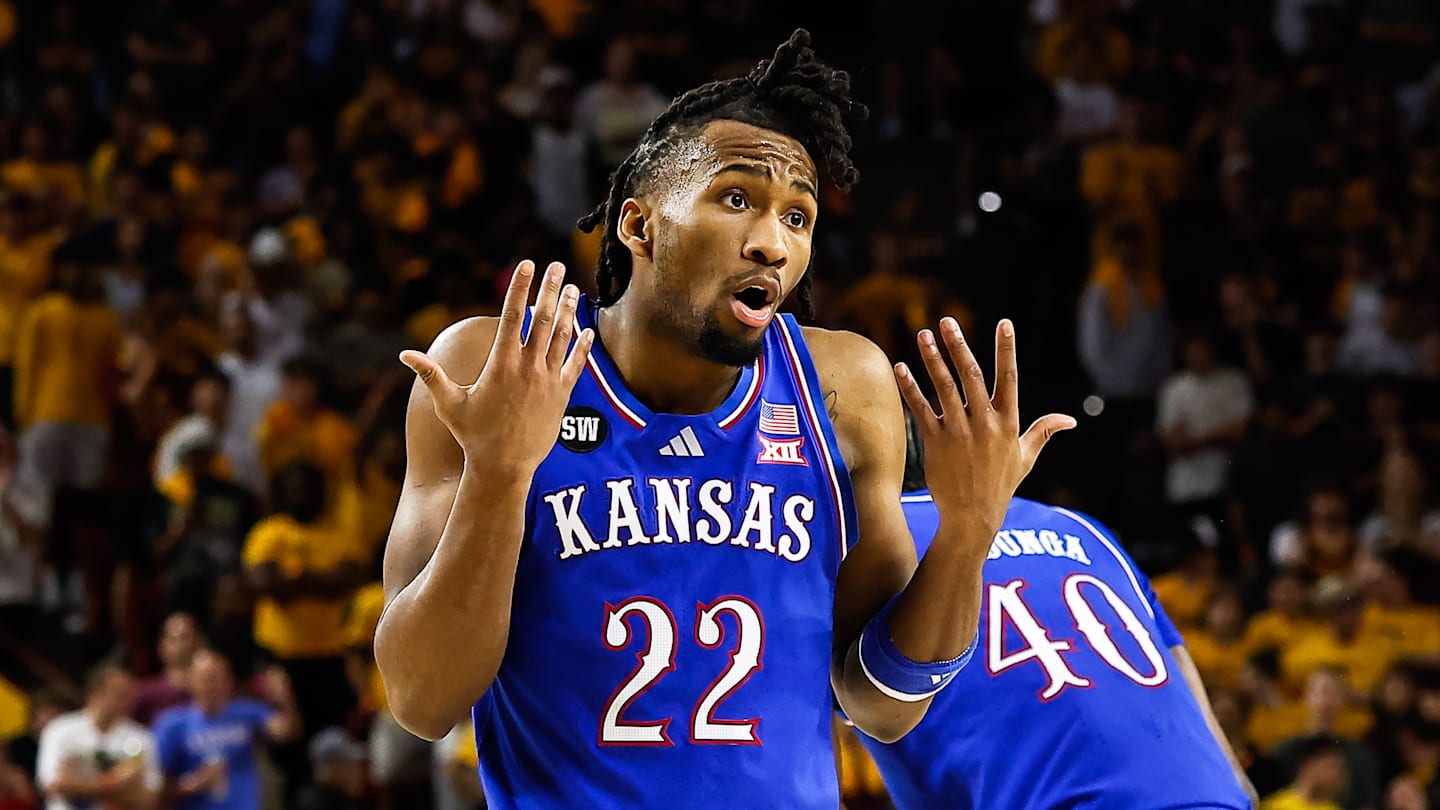
The cramping issues have cast a dark cloud over a mostly special freshman season for Darryn Peterson, who continues to produce at prodigious rates when he’s available. Peterson is still a strong candidate to go No. 1 overall on draft night. He’s the most naturally gifted guard prospect in a decade-plus. Long and twitchy; hyper-efficient off the ball, but equally dynamic as a slasher and pull-up shooter. He competes on defense. He’s a better passer than the numbers suggest. Teams will want full medical evaluations and a chance to speak one-on-one, but there’s no reason to believe Peterson can’t ascend to superstardom in the NBA.
West Region

Arizona Wildcats: Brayden Burries
Brayden Burries began the season on uneven footing, but he quickly rounded into form and became the driving force behind one of the best teams in college basketball. He does so many small things for a guard: a stout defender, a prolific off-ball scorer, and a more talented iso threat than he has had the chance to showcase with the Wildcats. Burries is still a bit undersized and not quite a point guard, but he’s a special ballplayer who has a chance to really flesh out his résumé on the March Madness stage.
Purdue Boilermakers: Braden Smith
Braden Smith led Purdue to an upset victory in the Big Ten Championship Game, a fitting achievement at the tail end of an illustrious career. The Boilermakers sputtered down the stretch of the regular season, but righted the ship in the conference tournament. Smith is the engine behind one of college basketball’s smoothest offenses — a pick-and-roll savant who slices and dices opposing defenses with surgical precision. He’s a knockdown shooter, and although he’s undersized, few projected second-round picks check as many of the intangible boxes. Smith knows how to play; he knows how to win.
Gonzaga Bulldogs: Mario Saint-Supery
Mario Saint-Supery is a strong candidate to return to school and solidify his stock as a sophomore, but a strong tournament run for the Zags could flip the script. He doesn’t apply much pressure on the rim, but he’s a prolific and efficient perimeter shooter, with impressively advanced playmaking chops for a freshman. The Spaniard has seen an uptick in playing time of late. Even when he’s not scoring, he’s impacting the game with his poise, vision and underrated activity on the defensive end.
Arkansas Razorbacks: Darius Acuff Jr.
Not exactly a shocker. Darius Acuff Jr. has become a cult hero of sorts at Arkansas, leading the Razorbacks to their second SEC championship in program history. There are definitie concerns when projecting toward the next level: he’s a poor defender and a smaller guard who doesn’t always get all the way to the rim. And yet, how can you watch him and not come away thinking he’s a future star? Acuff has grown exponentially as a playmaker, even over the course of just this season. He’s never sped up, never out of sync in high-pressure moments. An electric shot-maker and a prolific setup man, Acuff could lead the Hogs on a deep and thrilling run this March.
South Region

Florida Gators: Thomas Haugh
Thomas Haugh became an unsung hero of Florida’s title run last season. Now he’s back in a more front-and-center role, with the Gators picking up steam at the right time. Haugh checks so many boxes for an NBA role player. He’s an athletic 6-foot-9 wing who can shoot, straight-line drive and defend multiple positions at a high level. Though not an engine, Haugh’s ability to fit in and excel in a streamlined role is exactly what contenders are looking for at the next level. He competes hard and leaves an impression on every game. Do not be the least bit shocked if the Gators go another another deep run with Haugh in the spotlight.
Houston Cougars: Kingston Flemings
Kingston Flemings arrived at Houston as a four-star recruit whom many viewed as a potential two- or three-year college player. It didn’t take long for it to become clear that Flemings isn’t just a one-and-done prospect: he’s the best point guard in a loaded class at his position. Flemings’ speed, twitch and processing speed is a dangerous combination. He creates advantages at will and takes advantage of them, slinging dimes out of pick-and-rolls or bowling to the rim, where he can finish with impressive veritcal pop.
Illinois Fighting Illini: Keaton Wagler
Keaton Wagler was the 150th-ranked recruit in his class. A miracle season at Illinois, however, has put him squarely in the lottery conversation. There is valid trepidation around Wagler’s defensive shortcomings and lack of physicality, but big guards who can shoot the leather off a basketball and set the table tend to garner favor in NBA circles. Wagler offsets a lack of burst and strength with incredible craft; he’s able to mix speed and put his defenders in a spin cycle, creating fissures and extending those advantages with an incredible eye for open teammates. It helps that he can scale up or down as needed, emerging as an impossibly prolific and dynamic shot-maker, on- or off-ball. Feel is one of the best star indicators there is, and Wagler has it in spades.
Nebraska Cornhuskers: Pryce Sandfort
Nebraksa won 20 straight games to open the season, emerging as a surprise contender. Pryce Sandfort is a big reason why. His brother Payton is on a two-way contract with OKC, but the younger Sandfort has carved out NBA interest of his own — primarily on the strength of his electric 3-point shooting, converting 40.1 percent of almost nine attempts per game as a junior. There’s a good chance Sandfort runs it back as a senior with first round aspirations, but there is significant momentum to capitalize on if he chooses. Sandfort has his limitations as a defender and he’s not a major off-ball threat, but size and movement shooting are traits NBA teams will happily bank on.
Midwest Region

Michigan Wolverines: Yaxel Lendeborg
There are a couple first round talents on this Michigan roster, but Yaxel Lendeborg has risen above the crowd in his age-23 season. There is natural skepticism with a lot of older prospects, but Lendeborg was on radars for a while at UAB. As a fifth-year grad transfer, he has now anchored an elite Michigan team on both ends. Lendeborg is a physical, versatile defensive weapon, sporting incredible footwork, agility and anticipation skills. He’s also a malleable offensive contributor, able to hit spot-up 3s, attack closeouts, operate as a hub at the elbow, or punish mismatches in the paint. His feel and two-way skill set should plug-and-play with just about any team at the next level. He’s one of the best players in college hoops, with a chance to cement his legacy in March.
Iowa State Cyclones: Joshua Jefferson
Joshua Jefferson has gradually expanded his skill set over the years, emerging as one of the most varied and productive forwards in college basketball as a senior. This Iowa State team is extremely dangerous, with Jefferson often being the sun around which everything else orbits. He attacks the lane with long, off-beat strides, weaponizing impressive power and touch at the rim. He’s shooting more 3s more efficiently than ever, and he’s a slick movement passer. NBA teams will be able to get creative with how Jefferson is deployed across a variety of lineups. The optionality, the versatility, are traits scouts tend to fall in love with. Don’t be shocked when the Cyclones go on a deep run and Jefferson’s stock soars.
Virginia Cavaliers: Johann Grünloh
Virginia has less clear-cut NBA talent than other top contenders, but Ryan Odom’s team plays such a refined brand of basketball on both ends. The Cavaliers’ offense has perked up under Odom, but the Cavs still hang their hat on defense at the end of the day. Johann Grünloh, who arrived in Charlottesville after making significant noise overseas, is a real anchor point. He’s one of the best rim-protecting freshmen in the country, averaging 2.2 blocks in 21.1 minutes. Grünloh can also space out to the 3-point line and do the standard screen-setting, rim-running big man things that typically translate to the next level. He’s probably a year away from the draft, in all honesty, but if the Cavaliers find a spark in March, that could change.
Alabama Crimson Tide: Labaron Philon Jr.
Labaron Philon was on the first round bubble as a freshman. He decided to return to school at the last second and it has paid off resoundingly. This is an impossibly deep guard class, but Philon should stand out with his remarkable rate of improvement. He has added critical lower-body strength, now able to withstand contact on drives and finish among the trees. Philon has also ratcheted up his pull-up shooting, to complement shifty handles, sharp pick-and-roll playmaking, and some of the best in-between, floater touch in the country. He also happens to compete hard and generate turnovers on defense. There’s a lot to like here, and Alabama once again has the talent for a deep run.