

A newborn can’t be that complicated, right? We know how conception works, gender is random, and we understand that various influences after birth can shape an infant’s development. However, the truth is more bizarre and varied than these factors. Factors like the fact that if mothers spend more time in the sun, they may give birth to taller children. Or that if they’re hungry or living during a famine, they will be more likely to give birth to a daughter. And that’s not even taking into consideration the impact that AI and robotics are having, allowing us to create human embryos remotely. Here are ten unsettling facts about babies that will flip everything you thought you knew on its head.
The IVF club is bigger than you thought
Since 1978, it’s been a popular fertility option for those who find it difficult to get pregnant naturally. The tech might be old, but it’s very effective—so much so that a “test tube” baby is born every 35 seconds. Over 13 million people across 101 countries have been born via IVF, and that’s not even counting the countries that don’t report IVF statistics or places like Australia, where the IVF registry didn’t exist until the early 1980s. This means that more than 4 million additional births could be missing from that final tally.
Winter babies start crawling earlier
Apparently, if you’re born in the cold weather months, you were probably a crawling champ. A 2014 study from Israel’s University of Haifa split 47 babies into two groups. One was born in winter/spring, while the other was born in summer/autumn. Parents were instructed to report on milestones, and combined with professional assessment in the homes, the study found that kids born in winter began crawling up to 5 weeks earlier. Experiments in Japan and Colorado yielded similar results, although in Canada, there wasn’t a major difference, perhaps because home temperatures stay the same due to indoor heating, and the seasons don’t contrast as much as in the other countries.
Summer babies are healthier
One 2015 study in the UK found that among 500,000 people, summer babies had a heavier weight and grew taller into adulthood than winter babies. The study also found that girls began puberty later, which is a sign of good health. We don’t know exactly why summer is the best time to deliver a baby, but some experts theorize about “the sunlight effect,” hypothesizing that mothers who get more sunlight in their second trimester absorb more vitamin D, which may help with the baby’s development in the womb.
The first remotely created baby
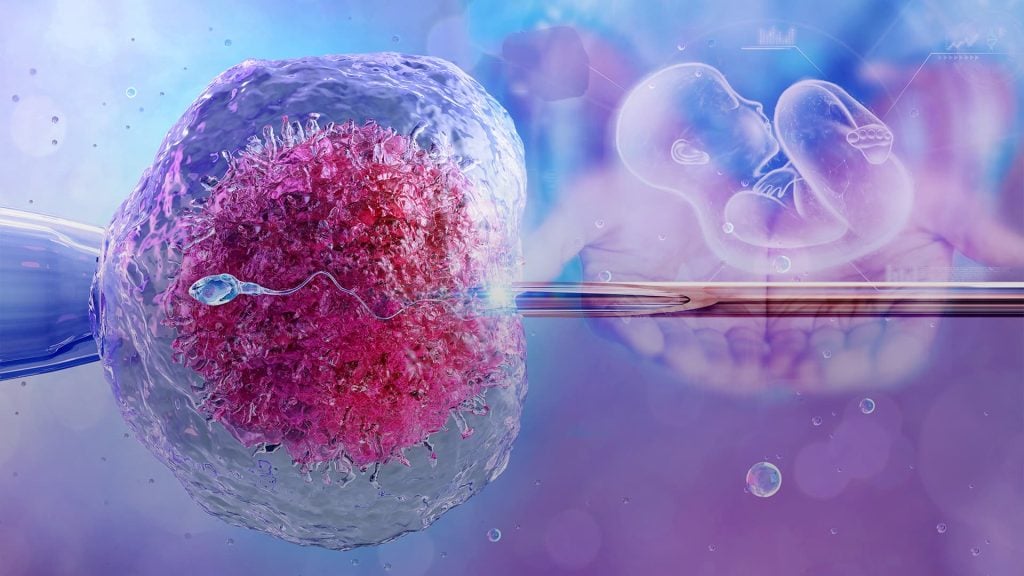
In the search to improve reproductive technology, scientists have developed an incredible new tool to remotely operate IVF (i.e., it can be controlled in one country and performed in another). The goal of this is to automate one process required in IVF, it’s an ultra-delicate 23-step procedure that aims to inject a single sperm into an egg. This operation frequently damages and destroys eggs, but automation will hopefully end that. It can also reduce the time-consuming nature of the task when completed manually. In 2025, the first baby was born with this automated treatment.